Last updated: August 20, 2026
Hot tent camping is the one setup where a cold weekend stops being something you endure. A small wood stove in a canvas tent will dry boots, take the chill off before anyone gets in a sleeping bag, and turn a November trip into something you look forward to instead of survive.
It is also the setup with the most parts to get right. The stove is only one of them. The tent has to be built for it, the chimney has to draw, the jack has to seal, and the whole thing has to work when it is dark and windy and the ground is frozen. This guide covers what to look for in a stove, what has to be true about your tent first, and the setup details that separate a warm night from a smoky one.
This article contains affiliate links. If you buy through them, we may earn a commission at no extra cost to you. Learn more.
Quick Answer
What do you need for a wood stove in a tent?
- A canvas or polycotton tent with a stove jack. A nylon dome tent is not a candidate, at any price.
- A stove sized by firebox volume, with enough chimney sections to clear the roofline and draw properly.
- A spark arrestor, a noncombustible base under the stove, and a plan for how the pipe passes through the jack.
- A battery carbon monoxide alarm at sleeping height, every night, without exception.
Bottom line: the tent decides whether you can hot tent at all, and the chimney decides whether it works well.
What Has to Be True Before You Buy a Stove
A tent stove needs a tent designed to accept one. That means canvas or polycotton fabric and a stove jack, which is a heat resistant port, usually silicone coated, that the chimney passes through. Nylon and polyester tents do not qualify. They melt near a hot pipe and no accessory changes that.
The second requirement is space. A stove needs clearance from fabric and gear on every side, a stable and noncombustible base underneath, and a walking lane so nobody brushes it on the way out at night. In a small tent that clearance eats a surprising share of the floor, which is why hot tenters usually size up a tent rather than down a stove.
How Tent Stoves Are Sized
Tent stoves are described by firebox volume rather than by BTU, because output depends on what you burn and how you run the air controls. Winnerwell, for example, publishes 800 cubic inches for its medium Nomad and Woodlander bodies and 1,500 cubic inches for the large Nomad View. Bigger fireboxes take longer logs and hold a fire longer between reloads.
That last point matters more than raw output. A small firebox with short splits needs feeding every hour or so, which is fine when you are awake and miserable at three in the morning. If your trips are cold and long, the larger box buys sleep.
Stoves by Situation
What suits you depends on how you travel and how cold it gets. Car campers with a canvas wall tent can carry weight and want a body that holds a fire. People moving a lightweight hot tent on a sled or in a canoe trade firebox size for a stove that folds flat. Here is how the categories break down.
The Standard Canvas Tent Setup
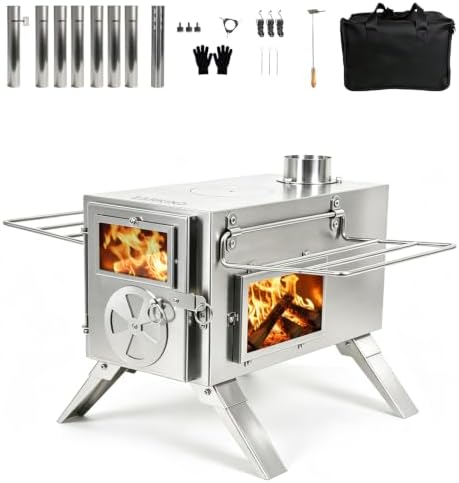
A stainless steel box stove with a mid size firebox is the mainstream choice, sold as a kit with chimney sections, a spark arrestor and an ash tool. Winnerwell’s medium bodies ship with five 2.5 inch pipe sections of 14 inches each, which gives you a sense of what a complete kit includes and how much pipe you actually need.

When Weight and Pack Size Rule
Folding titanium stoves collapse into a flat package and weigh a fraction of a steel body. Winnerwell lists its Fastfold titanium stove at four pounds with a three inch chimney that reaches nine feet assembled. The trade is durability and heat retention, because thin titanium cools the moment the fire dies down.

For Watching the Fire
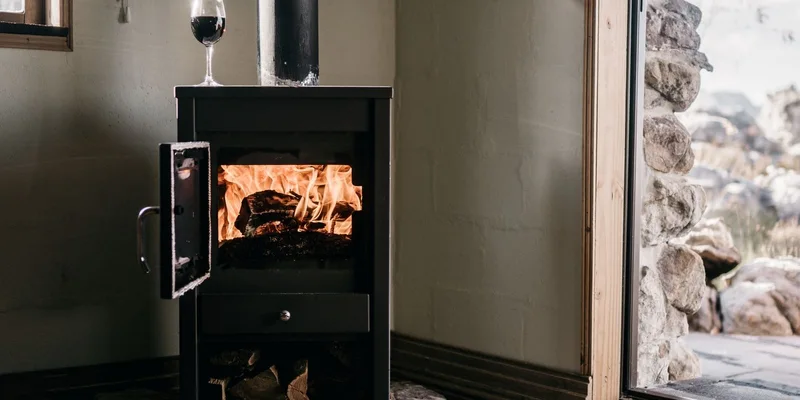
Stoves with a glass door panel give you the thing most people actually want from a fire, which is looking at it. They cost more, the glass needs cleaning, and the view is worth it to a lot of hot tenters who would otherwise be staring at a steel box.
If Your Tent Has No Jack
Retrofit stove jacks exist as silicone panels you install into a canvas roof or wall, and some tent makers sell them for their own models. Installing one is a real modification and worth doing carefully, because a jack that does not seal will leak water forever after.

The Alarm That Goes With All of Them
A wood stove burns fuel, so it produces carbon monoxide, and a tent is a small space. Run a battery carbon monoxide alarm listed for residential use, placed at roughly sleeping height, every night the stove is in the tent. This is a standing recommendation rather than an optional extra.

Comparing the Stove Types
The table sums up how the categories differ on the things that determine your night: how long a fire holds, what it weighs, and how much of it you have to carry. Firebox figures come from the manufacturers rather than from us.
| Type | Firebox and burn | Weight and pack | Best fit |
|---|---|---|---|
| Stainless box stove | Mid to large, holds a fire well | Heavy, nests its own pipe | Canvas wall tent, car camping |
| Folding titanium | Small, needs frequent feeding | Light, packs flat | Sled hauls and lightweight hot tents |
| Glass door stove | Similar to steel box, plus a view | Heavy, glass needs care | Base camp comfort |
| Large firebox stove | Longest splits, longest burn | Heaviest, bulkiest | Cold multi night trips with a group |
The Chimney Is Where Most Setups Fail
A stove that smokes into the tent almost always has a draft problem rather than a stove problem. Draft comes from chimney height and from a clean, unobstructed pipe, so the usual fix is more pipe sections rather than a different fire. Get the top of the chimney above the roofline and clear of the fabric, and most smoking stops on its own.
Guying the Pipe and Sealing the Jack
A tall pipe is a lever in wind, so guy it as the stove maker instructs and check the jack seal after the tent has been up a day and the canvas has moved. A spark arrestor at the top is not optional in fire country, and in many areas it is a condition of using any wood burning device at all.
Fire Restrictions Are Local and They Change
Whether you can run a wood stove at all depends on current fire restrictions, which vary by county, by land manager and by day. Check with the land manager or the county fire authority for the site you are visiting before you plan around a wood fire. Firewood is a second local question, since many states require locally sourced or certified heat treated wood to limit the spread of invasive insects.
Running It Without Ruining the Night
Start small and let the pipe warm before you load the box, because a cold chimney draws poorly and pushes smoke back into the tent. Keep the air controls where the fire is bright rather than smoldering, since a lazy smoky fire deposits creosote in the pipe and puts more carbon monoxide into the air around you.
Plan for the fire going out overnight. Most hot tenters run the stove hard in the evening, sleep with insulation rated for the actual overnight low, and relight in the morning rather than waking hourly to feed the box. That means your sleeping system still has to work cold, which is the same conclusion our cold weather camping guide reaches from the other direction.
Frequently Asked Questions
Can I use a wood stove in a regular nylon tent? No. Hot tenting requires canvas or polycotton fabric and a purpose built stove jack, because nylon and polyester melt near a hot chimney. There is no accessory that makes a nylon dome tent suitable.
How much chimney pipe do I need? Enough to clear the roofline with the top of the pipe standing free above the fabric, which is why kits ship with multiple sections. If the stove smokes into the tent, adding height is the first thing to try.
Do I need a carbon monoxide alarm with a wood stove? Yes, every night. A wood fire produces carbon monoxide, a tent is a small space, and the gas has no smell. Use a battery alarm listed for residential use at roughly sleeping height.
Will the stove stay lit all night? Usually not without someone feeding it. Larger fireboxes hold a fire longer, but most hot tenters plan to sleep in a bag rated for the overnight low and relight in the morning.
Are tent stoves allowed during a fire ban? That depends entirely on the restriction in force where you are camping. Check with the land manager or county fire authority for the current status before you rely on a wood stove, because these rules change by the day.
Titanium or steel for a first stove? Steel, for most car campers. It holds heat longer, tolerates rough handling, and costs less. Titanium earns its price when you are carrying the stove somewhere a vehicle cannot go.
The Bottom Line
A hot tent setup starts with the tent, not the stove: canvas or polycotton with a proper jack, then a firebox sized to how long you want a fire to hold, then enough chimney to draw above the roofline. Add a spark arrestor, a noncombustible base and a carbon monoxide alarm, and check fire restrictions with the land manager before every trip. Read next: our winter camping tent comparison and the broader tent heater buying guide.