Last updated: August 20, 2026
Cold weather camping fails in predictable ways, and almost none of them involve the air temperature. People are cold because the ground is pulling heat out from underneath them, because the inside of the tent is wet with their own breath by four in the morning, or because they went to bed already chilled after standing around at dusk in a damp base layer.
Fix those three and a winter trip becomes genuinely comfortable, often more comfortable than a hot August weekend. This guide covers the ground, the layers, and the condensation, in the order they matter, plus the heating question that gets asked constantly and deserves a careful answer rather than an enthusiastic one.
This article contains affiliate links. If you buy through them, we may earn a commission at no extra cost to you. Learn more.
Quick Answer
How do you stay warm camping in winter?
- Insulate underneath first: ground contact steals more warmth than cold air does.
- Layer to stay dry, not just warm, and change out of damp base layers before bed.
- Ventilate the tent all night, because trapped breath becomes frost and wet insulation.
- Go to bed warm: eat, move, and get in the bag before you have cooled down.
Bottom line: the pad under you does more for a cold night than the sleeping bag over you.
The Ground Is the Main Problem
Cold ground conducts heat away from your body far faster than cold air does, and a sleeping bag compresses flat underneath you, so its insulation there is doing almost nothing. That is why people in expensive bags still shiver on frozen ground, and why the pad is the first purchase for cold weather rather than the last.
Sleeping pads are compared using R value, a measure of resistance to heat flow. Manufacturers publish an R value for each pad, now commonly measured with the ASTM standard test method for sleeping pads, which is what makes numbers comparable between brands that use it. Take the value from the maker rather than from a general chart.
Stacking Pads Is the Cheap Fix
You do not need one expensive pad. A closed cell foam pad underneath an inflatable one adds insulation, protects the inflatable from sharp ground, and gives you something to sit on outside the tent. It is the standard cold weather setup and the cheapest upgrade available.
On a cot the problem is worse, because air moves underneath you on all sides. Put the pad on top of the cot rather than assuming the cot insulates. Our R value guide covers how the published figures compare.

Layers Manage Moisture, Not Just Warmth
The layering rule that matters in the cold is that sweat is the enemy. A base layer that holds moisture against your skin will chill you the moment you stop moving, which is exactly what happens when you finish setting up camp and sit down. Wool and synthetic base layers move moisture, cotton holds it.
Build in three parts: a base layer to move moisture, a mid layer to trap warmth, and a shell to block wind and precipitation. Then manage them actively by removing a layer before you start sweating rather than after, especially while pitching the tent or splitting wood.
The Bedtime Change
Keep one set of base layers that only ever get worn in the sleeping bag. Change into them at bedtime, even if what you are wearing feels dry, because a day’s worth of accumulated moisture is what makes a bag feel colder than its rating suggests.
Extremities matter most for sleep quality: a warm hat, dry socks that have not been walked in, and gloves within reach. Cold feet in the bag usually mean damp socks or not enough insulation underneath.
Condensation Is a Ventilation Problem
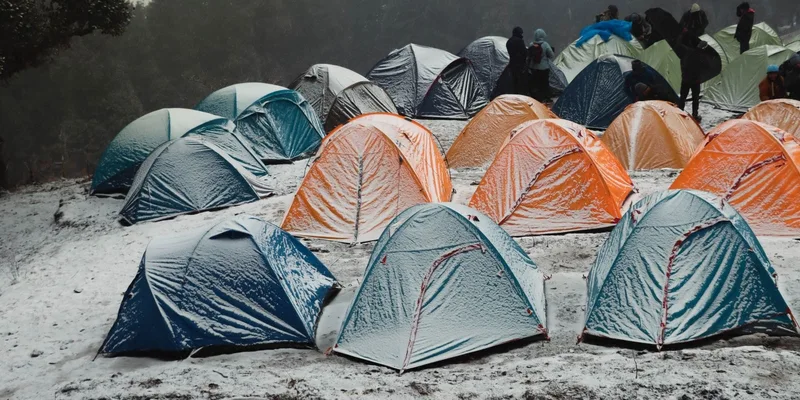
An adult breathes out a surprising amount of water overnight, and in a closed tent that moisture condenses on the coldest surface it can find, which is the inner face of the fly or the tent wall. By morning it drips, or in a hard freeze it forms a layer of frost that falls on everything when you move.
The counterintuitive fix is more airflow, not less. Keep vents open, keep a gap at the top and bottom of the tent so air can move through, and resist the urge to seal everything shut. A slightly cooler tent that is dry is far warmer to sleep in than a sealed tent that is wet.
Wet Gear Management
Keep damp clothing out of the sleeping area. Boots, shells, and anything with snow on it belong in the vestibule or the vehicle.
Winter specific tents help because they are designed around this, with fabric and vent arrangements intended for cold conditions rather than for summer airflow. Our winter camping tent guide covers what actually differs between a three season tent and one built for snow.
The Heater Question, Answered Carefully
This is where cold weather advice gets dangerous, so here is the rule. Combustion appliances produce carbon monoxide, and they belong outdoors and in open air. Stoves, grills, and propane fire pits are never tent heaters, and no amount of ventilation makes an appliance appropriate for a use its manufacturer does not rate it for.
Some portable propane heaters are specifically rated by their maker for use in enclosed spaces. Mr. Heater, for example, publishes an indoor safe rating for its Buddy series along with the space size and clearance figures for each model. If you use a heater in any enclosed space, use only a model with that published rating, and follow the maker’s manual for clearances, ventilation, and shutoff.
Carry a Carbon Monoxide Alarm
Take a battery powered carbon monoxide alarm on any trip where a heater or any fuel burning appliance is present, and place it according to the alarm manufacturer’s instructions rather than tucking it in a corner. It is inexpensive, it fits in a pocket of the gear bin, and it is the only thing in the tent that can tell you something is wrong.
Read the full picture in our tent heater guide before buying anything in this category. Detailed clearance, ventilation, and space size figures come from the manufacturer’s manual and from NFPA guidance, never from a general camping article.

What Changes About the Rest of Camp
Cold weather rearranges the daily routine as much as the sleeping setup. Water freezes, batteries fade, propane performs differently in low temperatures, and daylight runs out hours earlier than people plan for. Each of those has a straightforward workaround, and all of them are easier to sort out at home than at the site.
| Issue | What happens | Workaround | Plan it |
|---|---|---|---|
| Water | Jugs and hoses freeze overnight | Insulated bottles, store jugs in the vehicle | Before dark |
| Batteries | Runtime drops in the cold | Keep spares in an inside pocket | Each evening |
| Fuel | Propane output changes when cold | Keep cylinders out of the wind, follow the manual | At setup |
| Daylight | Camp goes dark early | Pitch and cook earlier than feels necessary | On arrival |
An Evening That Works
Arrive with daylight to spare, pitch on the flattest ground you can find, and get the sleeping setup fully built before you do anything else. That way, if the weather turns or the temperature drops faster than forecast, the one thing you cannot improvise is already done.
Hydration and Food
People drink less in the cold and feel worse for it. Insulated bottles keep water drinkable, and a hot drink before bed is a reliable way to go into the bag warm.
Any concern about cold exposure, numbness that does not resolve, or how a medical condition interacts with cold weather is a question for a medical professional before the trip, not something to work out at a campsite in the dark.
Frequently Asked Questions
What is the most important thing for winter camping? Insulation underneath you. Cold ground pulls heat away far faster than cold air, and a sleeping bag compresses flat under your body. A pad with a manufacturer published R value suited to the conditions does more than a warmer bag.
Can I use a heater in my tent? Only a heater whose manufacturer publishes an indoor safe rating for enclosed spaces, used exactly as the manual specifies for clearances and ventilation. Camp stoves, grills, and fire pits are outdoor appliances and are never tent heaters. Carry a battery powered carbon monoxide alarm whenever a fuel burning appliance is present.
Why is my tent wet inside in the morning? Condensation from breath and damp gear. Keep vents open all night, keep wet clothing and boots out of the sleeping area, and accept a slightly cooler tent in exchange for a dry one. Sealing the tent makes the problem worse.
What temperature rating sleeping bag do I need? Take the rating from the manufacturer for the specific bag and treat it as a survival or limit figure rather than a comfort promise. Pair it with an adequately insulated pad, since a rating assumes you are not losing heat to the ground.
How do you keep water from freezing while camping? Use insulated bottles, store jugs in the vehicle rather than outside, and put bottles upside down overnight so ice forms at the base rather than at the cap. Fill everything before dark rather than after.
Is winter camping colder in a cot or on the ground? A cot can feel colder, because air circulates underneath on every side. Put an insulating pad on top of the cot rather than relying on the cot to lift you away from the cold.
The Bottom Line
Insulate underneath, manage moisture in your layers, ventilate the tent all night, and get into the bag before you are cold. Keep combustion appliances outdoors and in open air unless the maker publishes an indoor rating for that model, follow the manual, and carry a battery powered carbon monoxide alarm whenever a fuel burning appliance is anywhere near the sleeping area. Start with our cold weather sleeping bag guide and the winter camping tent guide.