Last updated: August 20, 2026
The first cold night of the season is the one that sends people shopping for a tent heater. You wake at three in the morning with cold shoulders, the inside of the fly wet with condensation, and a kid in the next sleeping bag saying they cannot sleep.
The problem is that “tent heater” covers three different categories of appliance, and only one of them burns fuel. Getting this right is less about finding a favorite model than about matching the heat source to your campsite and to what the manufacturer actually publishes about the unit. This guide walks through the categories and the safety ground rules that come before any of it.
This article contains affiliate links. If you buy through them, we may earn a commission at no extra cost to you. Learn more.
Quick Answer
What is actually safe to use inside a tent?
- Combustion heaters belong outside unless the manufacturer publishes an explicit indoor safe rating for that exact model, and you follow the clearances in its manual.
- At a campground with an electrical pedestal, an electric space heater with a tip-over shutoff sidesteps the combustion question entirely.
- Battery and USB products marketed as tent heaters are personal warmers, not heating.
- Run a battery carbon monoxide alarm at sleeping height any night a fuel-burning appliance is near the tent.
Bottom line: match the heat source to your site first, then read the manual for that specific model before you rely on it.
The Three Kinds of Tent Heater
Tent heaters split into three groups: propane radiant heaters that burn fuel, electric space heaters that need a campground pedestal or a large power station, and wood stoves designed for canvas tents with a stove jack. They are not interchangeable. Each assumes a different campsite, a different tent, and a different set of precautions.
Propane Radiant Heaters
These are the small portable units most people picture. A ceramic element glows in front of a reflector and throws heat in a line of sight, so they warm what they are pointed at rather than circulating warm air. They run on one pound cylinders or, with a hose, on a larger refillable tank kept outside the tent.
Because they burn propane, they consume oxygen and produce combustion byproducts including carbon monoxide, which is why this category needs its own rules. We cover those in our guide to running a propane heater in a tent.
Electric Space Heaters
If your site has an electrical pedestal, a household ceramic heater with a tip-over switch and an overheat cutoff is the simplest answer available. No flame, no cylinder, nothing to ventilate. The tradeoffs are that you need shore power, most portable power stations will not run one through a night, and campgrounds sometimes cap what a site may draw.
Tent Wood Stoves
A wood stove is not something you add to a nylon dome tent. It needs a canvas or polycotton tent with a stove jack, a chimney run, and a noncombustible base under the firebox, which is covered in our hot tent wood stove guide.
The Rule That Comes Before Any Model Choice
Combustion appliances belong outside a tent unless the manufacturer publishes an explicit indoor safe rating for that exact model, and you follow the clearances and ventilation instructions in its manual. There is no general rule that makes a camp stove or a patio heater acceptable inside a tent. The rating either exists for that model or it does not.
Mr. Heater is the clearest example. The company lists its Buddy series as indoor safe radiant propane heaters, with a Life Safety System that includes an oxygen depletion sensor and a tip-over shutoff. That is a statement you can look up and read, which is the standard to hold any heater to.
Run a Carbon Monoxide Alarm
Any night a fuel-burning appliance is in or near the tent, run a battery carbon monoxide alarm at roughly sleeping height. This is a standing recommendation, not an optional extra, because the gas has no smell and the early symptoms are easy to misread. The CDC describes those symptoms as headache, dizziness, weakness, upset stomach, vomiting, chest pain and confusion, often mistaken for the flu.
Buy an alarm listed for residential use rather than a novelty card. Our tent heater safety guide covers placement and the questions to answer before you light anything.
Tent Heaters by Situation
The right pick follows from your site, not from a ranking. A campground with a pedestal points toward electric. A dispersed site in October points toward propane with the manual open. A family in a cabin tent has a different problem from a couple in a two person tent.
Small Tent, Short Cold Snap
The compact end of the propane category, screwing onto a one pound cylinder, suits a small tent where you want an hour of warmth before bed and again at first light. Mr. Heater lists its Little Buddy at 3,800 BTU with coverage up to 100 square feet, which shows the intended scale.

The Standard Propane Workhorse
The mid size radiant heater is where most car campers land, because the published coverage matches a real family tent. Mr. Heater publishes 4,000 to 9,000 BTU for the Portable Buddy and rates it to heat up to 225 square feet. Our Mr. Heater Buddy guide breaks down the lineup.

Big Cabin Tent or a Screened Awning
Larger spaces need matching published coverage plus a fan, since radiant line of sight alone leaves half a cabin tent cold. Mr. Heater lists the Big Buddy at 4,000, 9,000 and 18,000 BTU with coverage up to 450 square feet.

Campground With an Electrical Pedestal
With shore power, a compact ceramic heater with a thermostat, a tip-over switch and an overheat cutoff removes the combustion question entirely. Check what the campground allows a site to draw, and use an outdoor rated cord routed clear of foot traffic.

Heating the Sleeper Instead of the Tent
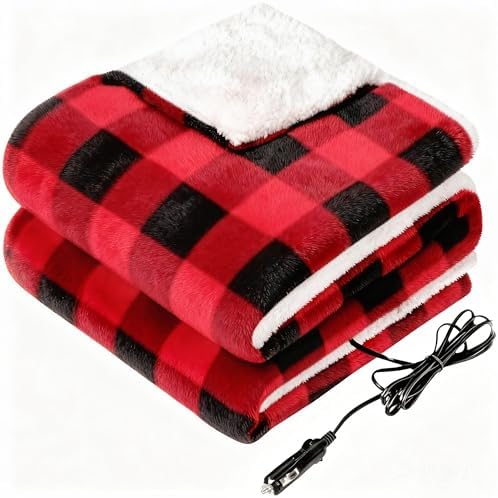
Often the real problem is ground chill rather than air temperature, and no heater fixes that. A heated blanket run off a power station, on top of an insulated pad, puts the energy where the cold actually is.
Comparing the Main Types
The table below sums up what each category asks of your campsite and what it realistically delivers. Coverage figures for any specific model come from that manufacturer’s own literature, so check the listing rather than assuming a category number.
| Type | What it needs | Best fit | Main limitation |
|---|---|---|---|
| Propane radiant | Cylinders or a hose, plus a CO alarm | Dispersed sites, no power | Rating and manual govern use |
| Electric ceramic | Pedestal or a very large battery | Campgrounds with hookups | High draw, site rules may limit it |
| Tent wood stove | Canvas tent with a stove jack | Hot tent winter camping | Bulky, needs tending |
| Heated blanket | Power station or vehicle outlet | Ground chill rather than cold air | Warms the sleeper, not the tent |
Sizing, Clearance and Fuel
Sizing a tent heater is not a calculation you should improvise. Every manufacturer publishes a coverage figure and a clearance table for its own models, and those are the numbers that apply. Anything you read as a general formula for BTU per cubic foot of tent is somebody’s estimate, and it does not account for the fabric, the vents, or the wind on the night you are out.
Clearances and Fuel
The distance a heater needs from sleeping bags, tent walls and gear comes from that unit’s manual and varies by design, because a radiant face throws heat differently than a convection cabinet. Read that section before the trip rather than in the dark, and set the heater where nothing can slump into it if somebody rolls over.
Fuel follows the same principle. Manufacturers publish run times per cylinder for each setting, so plan against that. Store cylinders outside the tent, and keep a used heater out of a closed vehicle.
Mistakes That Show Up Every Fall
The most common mistake is bringing an appliance into a tent that was never rated for enclosed use, usually a camp stove, a patio heater, or a charcoal grill carried in for residual warmth. None of those belong in a tent, and the charcoal version in particular has a long record of poisoning people who assumed a dying fire was harmless.
The second is treating a heater as a substitute for insulation. A low R value pad lets the ground pull heat out of you all night regardless of air temperature, which is why our guide to staying warm in a tent starts there instead.
Frequently Asked Questions
Can you use a propane heater inside a tent? Only with a model the manufacturer explicitly rates for indoor use, following that model’s manual for ventilation and clearance, and with a carbon monoxide alarm running. Without a published rating for that exact unit, no.
Where should a carbon monoxide alarm go in a tent? At roughly sleeping height, where the sound reaches everyone, and never on the floor or in the peak.
Do battery powered tent heaters work? Not in the way buyers expect. Resistance heating draws far more power than portable batteries carry, so products sold as battery tent heaters function as personal warmers. We cover the arithmetic in our battery powered tent heater article.
What size heater do I need for my tent? Use the coverage figure the manufacturer publishes for that model against your tent’s floor area. Avoid general BTU formulas, because fabric, venting and wind change the result too much for a rule of thumb.
Is a heater or a warmer sleeping bag the better fix? For most car campers, insulation is the better first purchase. A warmer bag and a higher R value pad work all night without fuel, supervision or a power source, and they solve ground chill that no air heater addresses.
Can I run a heater all night while everyone sleeps? Follow the instruction printed for your model. Many manufacturers are explicit that a heater should not be left running unattended or while people sleep.
The Bottom Line
Picking a tent heater comes down to what your site can supply and what the manufacturer publishes for the model in front of you: electric at a pedestal, a rated radiant propane unit with a carbon monoxide alarm off grid, a wood stove only with a canvas tent built for one, and better insulation under all of it. Read next: our tent heater safety guide and the deeper look at propane heaters in a tent.