Last updated: August 20, 2026
Leaning back in a camp chair should not feel like a risk assessment. Plenty of campers have pushed a standard quad chair past its balance point, felt the front feet lift, and spent the rest of the trip sitting bolt upright. A chair built to recline puts the pivot and the rear feet where they need to be so the backrest can drop without the whole frame going with it.
Reclining camp chairs cover a wide range, from a two position lounger to a zero gravity frame that suspends you between two rails. They differ in how far they lean, how much space they need behind them, and how easy they are to get out of. This guide sorts through those differences and points at which style suits a campground site, a lakeshore and a tight trunk.
This article contains affiliate links. If you buy through them, we may earn a commission at no extra cost to you. Learn more.
Quick Answer
Which reclining camp chair leans back without tipping?
- A chair designed to recline has rear feet set back behind the pivot, so leaning shifts weight onto the frame rather than off it.
- Zero gravity frames give the deepest recline and need the most level ground and the most room behind them.
- Multi position loungers lock at set angles, which is steadier at a picnic table than a free swinging seat.
- Deeper recline always costs pack size, so check folded dimensions against your trunk before ordering.
Bottom line: pick the recline style by how level your usual site is, then check folded size and how easy the chair is to leave.
What Makes a Chair Actually Safe to Lean Back In
Geometry, not padding. On a chair built to recline, the rear feet sit behind the point where your weight pivots, so leaning back presses the frame down instead of lifting the front. Standard quad chairs put the rear feet almost directly under the seat, which is why they feel light at the front when you push back.
The practical test at the site is simple. Set the chair on level ground, sit down, and lean back slowly with your feet still on the ground. If the front feet come up before the backrest reaches a comfortable angle, that chair is not a recliner regardless of how the listing describes it.
The Three Recline Styles
Camp recliners come in three shapes. Multi position loungers lock the backrest at fixed angles. Free swinging or suspended chairs let the seat pivot with your weight. Zero gravity frames slide the whole seat along curved rails so your legs finish higher than your hips, and they lock with a lever or a strap.
All three lean further than a quad chair. They differ in how much level ground they need and how much room they take behind them, which matters on a small pad where the chair backs onto a tent guyline or the picnic table bench.
Padding, Mesh and Headrests
A reclined seat puts more of your body weight on the backrest, so fabric choice shows up faster than it does upright. Mesh panels stay cooler on summer evenings, padded polyester feels better on cold nights, and a separate headrest pillow is the difference between a chair you doze in and one you merely sit in.
Footrests, Legroom and Getting Back Out
Footrests come as a fixed extension, a fold out flap or a separate ottoman. Fixed extensions are the sturdiest and the bulkiest folded. Fold out flaps pack better and rarely support a full leg. Whichever you pick, the real question is how the chair behaves when you want to stand up again.
Deep recliners put your hips lower than your knees, which is comfortable and awkward to leave. If stiff knees or a sore back are part of the picture, look at a chair that reclines from a taller seat height rather than one that starts low and drops further.
Reclining Camp Chairs by Situation
Match the chair to the site rather than to the deepest recline you can find. A lever locked lounger suits a family pad with a table, a zero gravity frame suits an open site where you can pick your patch of ground, and a low recliner suits sand and lakeshore evenings.
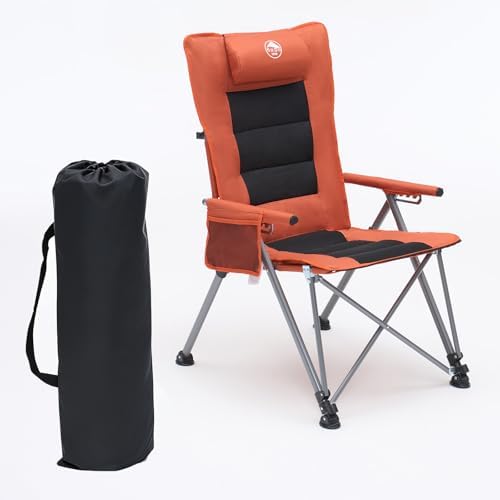
Best Lockable Lounger for a Family Site
A multi position chair that locks at set angles gives you an upright seat for dinner and a proper lean for afterwards, without needing perfectly level ground.
Best Zero Gravity Frame for an Open Site
Zero gravity chairs suspend the seat between two rails and lock anywhere along the range, which is the deepest recline in this category.

Best Low Recliner for Sand and Lakeshore
A low reclining chair sits close to the ground on wide feet, which keeps it stable on soft surfaces where a tall frame would work its way in.

Best Padded Recliner for Cold Evenings
Padded and insulated seats hold warmth better than mesh once the sun drops, which is the difference between staying out and going into the tent early.

Level Ground, Guylines and Where the Chair Goes
A reclining chair needs more floor than a quad chair does, both behind it and in front of it. On a marked campground pad that usually means placing chairs on the open side rather than between the tent and the fire ring, where the backrest swings into a guyline every time someone leans.
Slope matters more too. On a site that runs downhill, face the chairs across the slope rather than down it, so the recline works with the ground instead of adding to it.
Comparing Recline Styles
The table below lines up the three main styles against the questions that decide it: how far they lean, what ground they need, and what you give up in the trunk.
| Style | Recline depth | Ground it needs | Pack size |
|---|---|---|---|
| Multi position lounger | Set angles, moderate | Tolerates slight slope | Medium, folds like a quad |
| Zero gravity frame | Deepest, legs above hips | Level and firm | Large, rigid frame |
| Free swinging seat | Follows your weight | Level, firm | Medium to large |
| Low recliner | Shallow but low | Good on sand | Flat and wide folded |
Mistakes People Make With Camp Recliners
The most common is treating a quad chair with a slightly angled back as a recliner. It leans a few degrees and then lifts at the front, and forcing it further is how people end up on their backs in the dirt. If reclining matters to you, buy a frame built for it.
The second is buying the deepest recline available for a family that eats at a picnic table. A chair that puts your knees above your hips is a poor dinner seat, and dragging it upright at every meal gets old quickly. Two positions used often beat five positions used once.
Frequently Asked Questions
Are zero gravity chairs good for camping? They give the deepest recline in this category and lock in place with a lever, but they need level firm ground and take up the most trunk space. On soft or sloped sites a locking lounger is the easier chair to live with.
Will a reclining camp chair tip over backward? Not if the frame is built to recline, because the rear feet sit behind the pivot point. Pushing a standard quad chair past its intended angle is what causes most tipping, so check how far a chair is designed to lean before you lean on it.
Do reclining chairs work on soft ground? Low recliners with wide feet do well on sand and grass. Tall frames concentrate weight on small feet and work their way in, so put a board or paver under each foot if the ground is soft.
Is a footrest worth having? If you sit for hours in the evening, yes. Fixed extensions are the sturdiest and the bulkiest, fold out flaps pack smaller and support less of the leg, and a separate ottoman lets you keep a more compact chair.
Can you sleep in a reclining camp chair? People doze in them, but none of these are built as a bed and a chair does not replace a sleeping pad or a cot. For actual sleep, use the tent.
How much room does a recliner need behind it? More than you expect. Leave clearance for the backrest to swing without hitting a tent guyline, a table bench or the next chair, and place recliners on the open side of the pad.
The Bottom Line
A real camp recliner is defined by where its rear feet sit, not by how thick the padding is. Decide how level your usual site is, pick the recline style that fits it, then check folded size and how easy the chair is to leave. If you want evening comfort with a smaller footprint, compare it against a rocking camp chair, and for the underlying fit numbers see our camping chair guide.