
Last updated: August 20, 2026
The standard folding camp chair is a sling. The fabric sags in the middle, the hips drop lower than the knees, and the lower back rounds out with nothing behind it. For an hour by the fire most people never think about it. For anyone whose back already complains after a long drive, that shape is the reason the evening ends early.
A chair cannot treat a back problem, and nothing here is medical advice. What a chair can do is hold your pelvis level, put something firm behind the lumbar curve, and let you get up without twisting. This guide covers the features campers with back trouble actually shop for, and how to check them before ordering.
This article contains affiliate links. If you buy through them, we may earn a commission at no extra cost to you. Learn more.
Quick Answer
What camp chair features help if you have a bad back?
- A supported seat that stays flat rather than a deep sling that drops the hips below the knees.
- Lumbar support at the small of the back, built in or added with a small cushion.
- A taller seat height so you stand up with your legs instead of pulling with your arms.
- Recline that locks in position, so you settle into an angle rather than balancing there.
Bottom line: shop for seat shape and seat height first, and take persistent back pain to a doctor or physical therapist rather than to a gear list.
Why a Standard Camp Chair Feels Worse Than a Kitchen Chair
A quad chair carries you in a hammock of fabric between four tubes. As the fabric stretches, the middle of the seat drops, the pelvis rolls back and the lower spine rounds instead of keeping its natural curve. There is nothing behind the lumbar area to stop it, so the muscles do that work all evening.
A kitchen chair does the opposite: a flat seat, a back that meets you around the mid spine, and a height that lets your feet rest flat. Recreating those three things in a folding chair is essentially the whole brief for anyone with a sensitive back.
Seat Shape Beats Padding
Thick padding on a sagging sling still sags. What changes the feel is a seat that holds its shape under load, usually through a firmer fabric, a supporting bar under the front of the seat, or a rigid frame under the seat panel. Padding then makes an already good shape more comfortable.
You can judge this from a listing to a degree. Chairs photographed with a taut, roughly flat seat under someone’s weight hold their shape; chairs photographed empty tell you nothing. Reviews that mention the seat bottoming out after a season are describing fabric stretch, which is the same problem arriving later.
Where Lumbar Support Actually Sits
Useful lumbar support meets the small of the back, above the belt line and below the shoulder blades. Some camp chairs build in a shaped panel or an adjustable strap. If a chair you otherwise like has none, a small cushion or a rolled towel in that gap does much the same job for nothing.
Seat Height and the Way Out of the Chair
Standing up from a low seat means leaning forward and pulling with your arms, which loads the back at exactly the moment it is least braced. A taller seat that keeps the knees at or just below hip height lets you push up with your legs, and that single change is what most campers with back trouble notice first.
Firm armrests matter for the same reason. Armrests that flex under a push give you nothing to work against, so a rigid armrest on a steel frame is more useful here than a wide padded one that folds under pressure.
Recline That Locks Versus Recline That Balances
A locking recline lets you choose an angle and stay there without holding yourself in place. A free swinging or balance based recline keeps small stabilizing muscles working, which is fine for some people and tiring for others. If your back objects to holding a position, locking is the safer choice.
Head and neck support belongs in the same decision. Once the backrest goes past upright, an unsupported head pulls forward, so a chair with a headrest or a removable pillow finishes the job the recline started.
Camp Chairs Campers With Back Trouble Shop For
There is no single right answer, because a stiff lower back and a sore mid back want different things. The four situations below cover the common shopping patterns: firm upright support, locking recline, a taller seat, and a gentle rocking motion that lets you shift position.
Best Firm Support in an Upright Seat
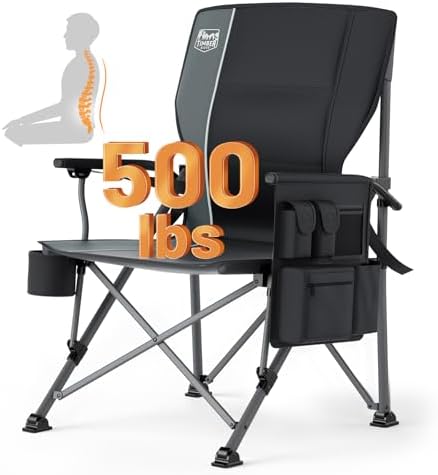
A high back chair with a supported seat panel and a shaped lumbar area keeps the spine closer to its normal curve than a plain sling does.
Best Locking Recline
A chair that locks at set angles lets you settle into a position and stay there, instead of holding yourself at the angle you want.

Best Taller Seat for Easy Standing
A taller seat height with firm armrests means standing up with the legs rather than pulling with the arms and the lower back.

Best for Shifting Position Through the Evening
A rocker lets you change loading without getting up, which suits backs that stiffen in any one position.

Comparing What Each Feature Does
Read the table as a checklist rather than a ranking. Most campers with back trouble end up wanting two or three of these in one chair, and no single feature substitutes for the others.
| Feature | What it changes | Suits | Trade off |
|---|---|---|---|
| Supported flat seat | Keeps hips level with knees | Rounded lower back | Less relaxed than a sling |
| Lumbar panel or cushion | Fills the gap at the small of the back | Long evenings upright | Position is personal |
| Taller seat height | Standing with the legs | Stiff backs and knees | Feels less loungey |
| Locking recline | Hold an angle without effort | Fatigue after an hour | Bulkier folded |
A Note on Back Pain
Back pain that keeps returning, wakes you at night, or comes with numbness or weakness in a leg is worth raising with a doctor or a physical therapist rather than working around with equipment. A chair changes how you sit for a few evenings a year; it is not a treatment and should not be bought as one.
It is also worth remembering that camping loads the back in other ways: lifting a cooler out of a trunk, sleeping on a thin pad, and driving several hours to get there. The chair is one part of a longer day, and often not the part doing the damage.
Frequently Asked Questions
What is the most comfortable camping chair for back pain? There is no universal answer, and no chair should be presented as a fix. Campers in this situation generally look for a supported seat that does not sag, lumbar support at the small of the back, a taller seat height and a locking recline, then confirm the fit numbers on the exact model.
Is a zero gravity chair good for a bad back? Some people find the reclined position comfortable because it spreads weight across the back rather than concentrating it. It also sits low and needs level ground, so getting out of it can be harder. Try that shape before committing if you can.
Do I need built in lumbar support? Not necessarily. A small cushion or rolled towel placed at the small of the back does much the same job in an otherwise well shaped chair, and it lets you adjust the position.
Are low camping chairs bad for your back? They are harder to get out of and they tend to round the lower spine, which many people find uncomfortable over a long evening. That is a comfort issue rather than a medical one, but it is the most common complaint we see about low chairs.
Does a rocking chair help? It lets you change position without standing up, which suits backs that stiffen when held still. It does not add support on its own, so look at the seat shape and back height as well.
Should I bring a cushion from home? It is the cheapest experiment available. A firm seat cushion raises the seat height slightly and a small lumbar pillow fills the gap behind the lower back, and both travel easily in the trunk.
The Bottom Line
Shop for shape rather than padding: a seat that stays flat, support at the small of the back, a seat height you can stand up from, and a recline that locks. Add a cushion where a chair is close but not quite there, and take persistent pain to a professional. For a deeper look at recline styles see our reclining camp chair guide, and for the underlying fit numbers start with the camping chair guide.