
Last updated: August 20, 2026
A rocking camp chair is the one piece of furniture that turns a folding seat into something you actually want to stay in after dinner. It is also the chair most likely to disappoint on the wrong ground. Set a rocker on sand, damp grass or a site that rain has softened, and the rocking motion works the feet into the surface until one side is lower than the other and the chair stops moving evenly.
That is a solvable problem, but it is solved by the base design, not by the seat. This guide covers what makes a rocking chair rock properly at a campground, how spring based frames differ from rail based ones, what to check before ordering, and which situations call for a rocker instead of a standard quad chair.
This article contains affiliate links. If you buy through them, we may earn a commission at no extra cost to you. Learn more.
Quick Answer
Which rocking camp chair holds up on soft ground?
- The base matters more than the seat: wide molded feet or a continuous rail spread load, bare tube ends dig in.
- Spring action frames rock on flat ground without needing curved runners, which keeps the folded size manageable.
- Check the capacity published for the exact model, since brands sell standard and XL versions of the same chair.
- On sand, a flat board or paver under each foot fixes more than any feature on the spec sheet.
Bottom line: buy the base design for your ground, then pick the seat height and width that suit you.
Why Rocking Chairs Sink and How to Stop It
A rocker moves your weight back and forth over a small contact patch, so any foot that concentrates load will work itself into soft ground. Chairs with wide molded feet, a skid plate or a full length base rail spread that load over a larger area and stay level much longer on grass and sand.
The second half of the fix is the site itself. Choose the firmest flat spot you can, avoid the strip of soft dirt right at the fire ring where everyone walks, and carry two thin boards or pavers if beach and lakeshore camping is your normal. Both together beat either alone.
Spring Action Versus Curved Runners
Two mechanisms dominate. Spring action frames use sprung linkages at the feet so the chair rocks while the base stays flat on the ground, which is what GCI Outdoor built its Freestyle Rocker line around. Curved runner chairs use traditional rockers, like a porch chair, and need a smooth level surface to move properly.
For campground use the spring style is usually the easier choice, because it tolerates gravel and uneven pads and folds down more like a normal camp chair. Runner style rockers give a longer, deeper motion when the ground cooperates, which is why they show up more often on decks and patios than at a site.
What the Mechanism Costs You
Rocking hardware adds weight and moving parts to a chair that already lives outdoors. Sand and grit in a linkage will make it squeak, and a rocker will always fold to a slightly bulkier package than a plain quad chair of the same seat size. Neither is a reason to skip one, but both belong in the decision.
Load Rating, Seat Width and Who the Chair Fits
Rockers are often rated lower than heavy quad chairs because the mechanism, not the tubing, sets the limit. GCI lists the standard Freestyle Rocker at 250 pounds and the Freestyle Rocker XL at 400 pounds, which is a good illustration of how much the figure moves between versions of one chair family.
Seat width between the armrests is the other fit number, and it is the one people notice on the first evening. A chair rated to hold you can still be narrow at the hips, so compare the seat dimensions in the listing rather than assuming an oversized name means an oversized seat.
Rocking Camp Chairs by Situation
Rockers split into a few clear cases: the general campground chair, the wider frame for bigger campers, the low chair for a beach or lakeshore, and the version with a canopy for open sites with no shade. Pick by where you sit most, since a rocker that suits a shaded forest pad is not the one for an exposed gravel site.
Best General Rocker for a Campground Pad
A mid height spring action rocker with a mesh back and a beverage holder covers most car camping evenings and folds into a shoulder bag for the trunk.

Best Wide Frame Rocker
Oversized rocker versions give more room between the armrests and a higher published capacity, which is the pair of numbers that matters for bigger campers.
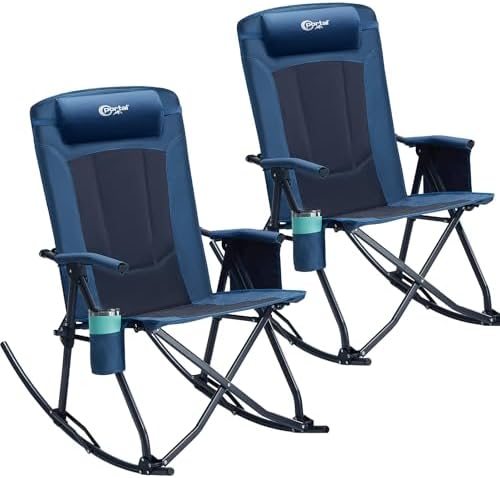
Best Low Rocker for Sand and Lakeshore
Low rockers sit closer to the ground on wide feet, which keeps them stable on soft surfaces and suits watching kids in the water rather than eating at a table.
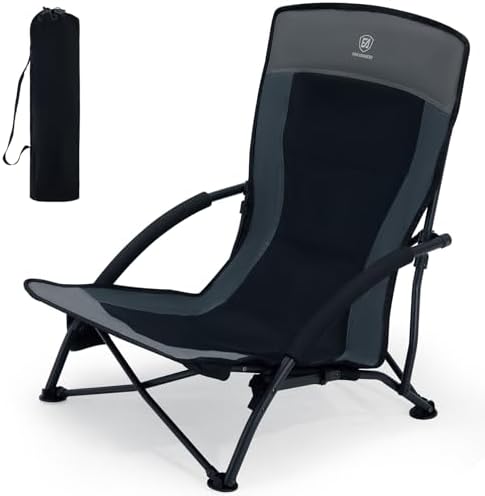
Best Rocker With Built In Shade
On an open site with no tree cover, a rocker with an adjustable canopy covers the hours when moving the chair is the only other option.
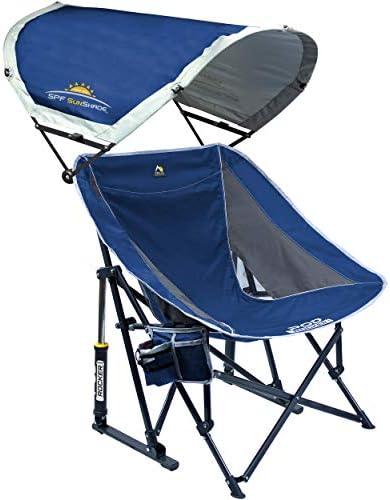
Folded Size and Getting It Home in One Piece
Rockers fold like standard chairs but land at a slightly larger folded package because of the base. If you are buying two, measure the trunk space you actually have with the cooler already in it, rather than the empty cargo figure from the car brochure.
The carry bag is worth a look too. A bag with a shoulder strap and a wide mouth gets used; a tight sleeve that takes two people to close gets abandoned by the second trip, and the chair then rides loose and scuffs everything next to it.
Comparing Rocker Types
Use the table below to match a base style to your usual ground. Every one of these works on a firm gravel pad, and the differences only start to matter once the surface goes soft or uneven.
| Base type | How it rocks | Handles soft ground | Watch out for |
|---|---|---|---|
| Spring action feet | Base stays flat, seat moves | Good with wide feet | Grit in the linkage |
| Curved runners | Whole chair tips forward and back | Poor on sand | Needs a level spot |
| Base rail | Glides on a continuous rail | Best of the three | Bulkier folded |
| Low rocker | Short motion, low seat | Good, wide contact | Harder to stand up from |
Mistakes That Turn a Rocker Into a Regular Chair
The first is setting it up on the softest ground on the site, usually the trampled ring right around the fire. Move a step or two back onto firmer dirt and the chair rocks properly all evening. The second is ignoring the feet on the product page, since that single detail decides most of this.
The third is buying a rocker as the only chair in the car. Rockers are built for sitting, not for eating, and a low rocking seat at a picnic table puts your chin near the tabletop. Most families end up with a rocker each for the evening and something taller for meals.
Frequently Asked Questions
Do rocking camp chairs work on grass? Yes, on firm grass. On damp or newly soft ground, chairs with wide molded feet or a base rail stay level far longer than chairs resting on bare tube ends, and a board under each foot removes the problem entirely.
How much weight does a rocking camping chair hold? It varies by model. GCI lists the standard Freestyle Rocker at 250 pounds and the XL version at 400 pounds, so check the capacity published for the exact model and size you are ordering.
Is a spring rocker better than a curved runner? For camping, usually yes, because the base stays flat and tolerates gravel and slightly uneven pads. Curved runners give a longer motion but need a smooth level surface to work well.
Can you use a rocking chair at a picnic table? Not comfortably. Rockers sit lower and move, which puts you too low for eating. Keep a taller, firmer chair for meals and use the rocker for the fire.
Do rocking camp chairs fold? Nearly all of them fold, most into a shoulder bag, though the folded package is a little bulkier than a plain quad chair because of the rocking base.
The Bottom Line
Buy the base, not the seat. Wide feet or a continuous rail keep a rocker level on the ground you actually camp on, and the published capacity for that exact model tells you the rest. If you want the same evening comfort without the rocking hardware, compare it against a reclining camp chair, and if you are still choosing your first chair, start with the basics in our camping chair guide.