Last updated: August 20, 2026
Coleman has been building green camp stoves for so long that the shape itself is shorthand for camping. That heritage is also the problem when you go shopping: the lineup carries several models that look nearly identical in a listing photo, with names that sound interchangeable and specifications that differ in ways nobody explains on the box.
This guide walks the Coleman camp stove range model by model, using the output and burn time figures Coleman publishes, and says plainly which one suits which kind of trip. It also covers where the grills fit, because plenty of people arrive here looking for a Coleman camping barbecue rather than a stove.
This article contains affiliate links. If you buy through them, we may earn a commission at no extra cost to you. Learn more.
Quick Answer
Which Coleman camp stove should you buy?
- The Classic two burner is the default: Coleman lists it at 20,000 total BTU with rotary matchless ignition.
- The Cascade Classic is the same output with dual wind guards and a removable chrome plated grate that fits a 12 inch and a 10 inch pan together.
- The Triton line steps up to 22,000 BTU with Coleman’s PerfectFlow and PerfectHeat pressure and heat control.
- The Cascade 328 adds a third burner at 28,000 total BTU for groups.
Bottom line: Classic or Cascade Classic for most families, Triton if you want steadier output, Cascade 328 once you are feeding more than four.
How the Coleman Lineup Is Organized
Coleman splits its camp stoves by burner count and by the level of flame control, not by trip type. Two burner stoves cover the vast majority of car camping, three burner stoves exist for groups, and the naming above them signals better regulation and wind protection rather than a different cooking format.
That means the practical decision is simpler than the catalog suggests. Decide how many burners you need, then decide whether steadier flame control is worth the step up. Everything else is finish and hardware.
The Names That Confuse People
Classic, Cascade Classic and Triton all describe two burner propane stoves. Cascade is the name Coleman attaches to the newer cooktop and wind guard design, and Triton is the line built around Coleman’s PerfectFlow pressure control and PerfectHeat technology. They are not tiers of the same stove so much as parallel takes on one.
The Classic Two Burner
The Classic is the stove most people picture. Coleman lists it at 20,000 total BTU across two adjustable burners, with rotary matchless ignition and up to one hour of burn time on high from a single 16 ounce propane cylinder. It is the benchmark against which every other budget camp stove gets measured.
It suits weekend family camping, tailgating and anyone who wants a stove that will still be working in a decade. The limitation is flame stability at exposed sites, which is exactly what the later designs address.
The Cascade Classic
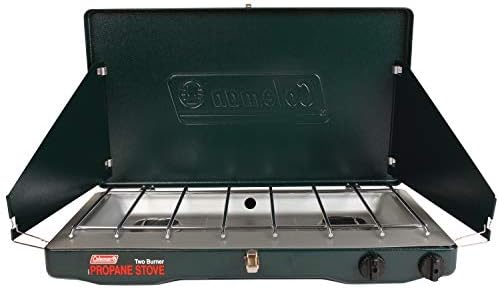
The Cascade Classic carries the same 20,000 total BTU output but changes what sits above the burners. Coleman lists it with two wind guards, a removable chrome plated grate and an aluminized steel cooktop, and states that it fits a 12 inch and a 10 inch pan at the same time.
Those three details matter more day to day than the output figure. Wind guards preserve heat at an open site, the removable grate makes a boil over cleanable at home instead of at a spigot, and the pan capacity is what lets you cook a skillet and a pot in parallel rather than in sequence.
Who Should Pick It Over the Classic
Anyone camping at exposed sites, anyone who cooks more than one dish at a time, and anyone who has ever scrubbed a fixed grate in the dark. If your camping is sheltered and simple, the Classic still does the job.
The Triton Line
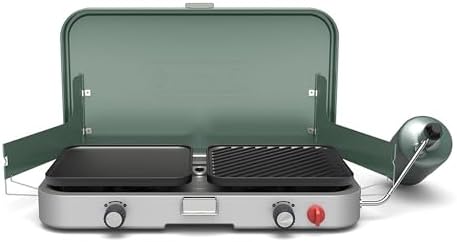
Triton is Coleman’s answer to inconsistent flame. Coleman lists the Triton+ two burner at 22,000 BTU with InstaStart ignition, and describes the line as pairing PerfectFlow pressure control with PerfectHeat technology to hold steady heat while using less fuel.
In practice that shows up as a flame that does not sag as a cylinder empties and does not surge when the sun warms the tank. If you cook things that punish an unstable flame, sauces, eggs, anything simmering, this is the step worth paying for.
Three Burners and Group Cooking
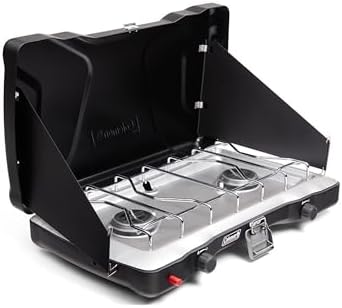
Coleman lists the Cascade 328 as a three burner camping stove at 28,000 total BTU with matchless lighting and dual wind guards. The third burner is not really about more power, it is about not having to choose between coffee and dinner when there are eight people at the table.
The cost is footprint. A three burner stove claims most of a picnic table on its own, which usually means pairing it with a camp kitchen stand rather than fighting for bench space.

Coleman Stoves Compared
Four models cover almost every Coleman camp stove decision. The figures below are the ones Coleman publishes.
| Model | Burners | Coleman listed output | Best for |
|---|---|---|---|
| Classic | Two | 20,000 total BTU | Weekend family camping |
| Cascade Classic | Two | 20,000 total BTU | Windy sites, parallel cooking |
| Triton+ | Two | 22,000 BTU | Steadier flame, simmering |
| Cascade 328 | Three | 28,000 total BTU | Groups and big families |
Where the Coleman Grills Fit
Coleman also builds portable grills, and people searching for a Coleman camping barbecue usually want one of those rather than a stove. The RoadTrip 285 is the stand up model, listed by Coleman with three adjustable burners, 20,000 BTU, Instastart ignition and 285 square inches of grilling area on scissor legs with wheels.
The RoadTrip 225 is the tabletop equivalent, a two burner grill Coleman lists at 11,000 BTU. Between them they cover the same split you see in the stove range: one unit that stands on its own legs for a family site, one that shares a picnic table with everything else.
Stove or Grill for a Camp Kitchen
A stove is the more flexible first purchase because it takes pots, pans and a griddle plate. A grill is the better second purchase, once you know your group eats grilled food often enough to justify a second appliance and a second fuel plan.
Using a Coleman Stove Safely
Coleman camp stoves and grills are outdoor appliances. Coleman states in its manuals that these units are for outdoor use only and must never be operated inside a tent, an awning, a screen room, a vehicle or any enclosed space, because burning propane produces carbon monoxide that cannot be seen or smelled.
Use the clearances published in the manual for your specific model rather than estimating, set the stove where a tipped pot cannot reach anyone, and leak check the connection with soapy water each time you fit a fresh cylinder. A battery powered carbon monoxide alarm in the sleeping area is worth carrying whatever you cook on.
Frequently Asked Questions
What is the difference between the Coleman Classic and Cascade Classic? Coleman lists both at 20,000 total BTU. The Cascade Classic adds dual wind guards, a removable chrome plated grate and an aluminized steel cooktop, and Coleman states it fits a 12 inch and a 10 inch pan at once.
Is the Triton worth the step up? If you simmer, cook eggs or care about a flame that stays put as the cylinder empties, yes. Coleman lists it at 22,000 BTU with PerfectFlow pressure control and PerfectHeat technology.
How long does a propane cylinder last on a Coleman stove? Coleman lists up to one hour on high from one 16 ounce cylinder for the Classic. Mixed setting cooking stretches that considerably, but always carry a spare.
Can Coleman stoves run off a refillable tank? Many models accept an adapter hose. Check the accessory list for your specific model number and follow Coleman’s connection instructions rather than using a generic fitting.
Which Coleman stove is best for a large group? The Cascade 328, which Coleman lists as a three burner at 28,000 total BTU with dual wind guards, so coffee does not compete with dinner.
Do Coleman camp stoves work with cast iron? Yes, provided the grate supports the weight and the cooktop dimensions fit your pan. Check the pan capacity Coleman lists for the model rather than assuming.
The Bottom Line
Coleman’s camp stove range is narrower than it looks. The Classic and Cascade Classic cover most family camping at 20,000 total BTU, the Triton buys steadier flame at 22,000, and the Cascade 328 exists for groups at 28,000. Pick by burner count first and flame control second. If you are cross shopping, our Camp Chef versus Coleman comparison shows where the extra money goes, and the two burner stove guide covers what to check on any brand.