Last updated: August 20, 2026
Two camp stoves sit on the shelf next to each other. One costs a fraction of the other, and both have two burners, wind guards and an igniter. The obvious question is what the extra money buys, and the honest answer is not simply more heat. It buys a heavier stove, a different accessory system and a different set of assumptions about how you cook.
This comparison lays Camp Chef and Coleman side by side using the output figures each brand publishes, and shows which kind of camper is better served by each. Neither brand is the wrong answer; they are answers to different questions.
This article contains affiliate links. If you buy through them, we may earn a commission at no extra cost to you. Learn more.
Quick Answer
Camp Chef or Coleman for a camp stove?
- Coleman is the value default, listed at 20,000 total BTU for the Classic two burner, and it covers most weekend family camping.
- Camp Chef sells output and build, listing the Everest 2X with two 20,000 BTU burners for 40,000 total.
- Camp Chef’s legged stoves add a 14 inch accessory system that turns the stove into a platform for griddles and other attachments.
- Camp Chef units are heavier and bulkier, which matters more than power for most car campers.
Bottom line: Coleman if you cook weekends for a family, Camp Chef if you cook for a group, cook in cold weather, or want the accessory platform.
Where the Money Actually Goes
The price gap between the two brands is not mostly about heat, although Camp Chef does publish higher figures. It goes into burner construction, frame weight, valve quality and the accessory ecosystem that surrounds the legged Camp Chef stoves. You are buying a platform rather than an appliance.
Coleman spends its budget differently, on making a reliable, light, compact stove at a price a family can justify for six weekends a year. That is a legitimate engineering target, and it is why the Classic has outlasted so many competitors.
The Question That Settles It
Ask how many people you cook for and how often. Two adults and two kids on summer weekends is Coleman territory. Eight people, a Dutch oven and shoulder season mornings is Camp Chef territory. Everything else is preference.
Output Compared
Camp Chef publishes higher numbers across the range. It lists the Everest 2X with two 20,000 BTU burners for 40,000 total, and the Explorer with two 30,000 BTU cast aluminum burners. Coleman lists the Classic at 20,000 total BTU and the Cascade 328 three burner at 28,000 total.
What that buys is boil speed under a big pot and better performance when the water is cold and the morning is not. It does not automatically mean better cooking, because simmer control and wind protection decide how food turns out more often than peak output does.
Output You Will Actually Use
Most camp cooking happens well below full flame. If your usual menu is eggs, pasta and chili for four, a 20,000 BTU total stove is not holding you back. If your menu includes boiling large volumes for a group, a chili cook or corn for a crowd, the higher output stops being a spec sheet number and starts being time saved.
Size, Weight and Where It Lives
Coleman’s two burner stoves are suitcase format: they close, latch and carry in one hand onto a picnic table. Camp Chef’s tabletop models like the Everest sit in similar territory, but the brand’s signature Explorer and Expedition stoves stand on their own legs, with cooking areas Camp Chef lists at 14 by 32 inches on the Explorer and 448 square inches on the Expedition.
A legged stove is a genuinely different piece of gear. It frees the picnic table completely, puts the cooktop at standing height and stays level on ground the table cannot help with. It also takes up trunk space a suitcase stove does not, and it is heavier to carry to a walk in site.
The Accessory Systems
Camp Chef’s 14 inch accessory standard is the strongest argument for the brand. Griddles, grill boxes, pizza ovens and other attachments drop onto the legged stoves, which means one base can become several cooking surfaces without buying several appliances.
Coleman’s ecosystem is looser but broader: griddle plates, grill grates and camp kitchen stands sized to fit their stoves, plus the RoadTrip grill line alongside. It covers less depth per stove and more ground across the camp.
Which Ecosystem Suits You
If you want one base and multiple surfaces, Camp Chef’s system is designed for exactly that and Coleman is not. If you would rather buy a stove and a separate griddle and be done, the ecosystem argument stops mattering and price takes over.
Side by Side
Four practical differences decide this for most car campers.
| Factor | Coleman | Camp Chef | Who it favors |
|---|---|---|---|
| Listed output | 20,000 total BTU Classic | 40,000 total BTU Everest 2X | Camp Chef for groups |
| Format | Suitcase, tabletop | Tabletop and legged models | Coleman for small trunks |
| Accessories | Griddle plates, stands, grills | 14 inch attachment system | Camp Chef for one base, many surfaces |
| Weight | Lighter, one hand carry | Heavier, especially legged | Coleman for walk in sites |
Which One to Buy
Buy Coleman if you camp weekends with a family, want a stove that fits on a picnic table and closes like a suitcase, and would rather put the saved money into a cooler or a better sleep setup. It is the higher value purchase for the way most people actually car camp.
Buy Camp Chef if you cook for a group, camp into the shoulder seasons, want a stove that stands on its own legs, or plan to build a camp kitchen around one base with multiple attachments. The extra weight is the price of that flexibility.
The Coleman Pick
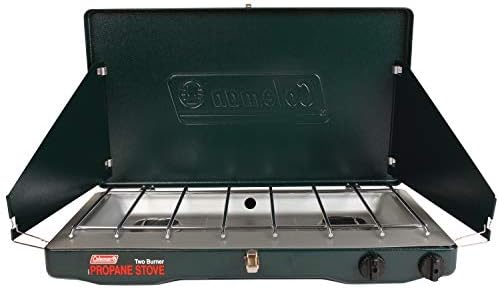
A two burner Coleman with wind guards and a removable grate covers the standard family camping season without complaint.
The Camp Chef Tabletop Pick
Camp Chef’s tabletop two burner brings the brand’s output and build to a format that still fits a picnic table.

The Camp Chef Platform Pick
A legged Camp Chef stove with the 14 inch accessory standard is the base for a camp kitchen that grows with griddles and grill boxes.

Using Either Brand Safely
Both brands make outdoor appliances. Coleman and Camp Chef state in their manuals that their stoves are for outdoor use only and must never be operated inside a tent, an awning, a screen room, a vehicle or any enclosed space, because burning propane produces carbon monoxide.
Follow the clearances published for your own model instead of estimating, keep the stove clear of tent fabric and low branches, and leak check the cylinder or hose connection with soapy water before lighting. A battery powered carbon monoxide alarm for the sleeping area is worth carrying regardless of brand.
Frequently Asked Questions
Is Camp Chef worth the extra money over Coleman? For group cooking, cold weather and anyone building a camp kitchen around an accessory system, yes. For weekend family camping in summer, Coleman does the same job for less.
Which brand has more power? Camp Chef publishes higher figures, listing the Everest 2X at 40,000 total BTU against Coleman’s 20,000 total for the Classic. Higher output mainly means faster boils, not better cooking.
Do Camp Chef accessories fit Coleman stoves? Not as a system. Camp Chef’s 14 inch attachments are designed for its own legged stoves, while Coleman griddle plates and grates are sized to Coleman cooktops.
Which is better for a small car? Coleman, because the suitcase format closes flat and carries in one hand. Camp Chef’s legged stoves are noticeably bulkier in a trunk.
Can both brands run off a refillable propane tank? Many models from each accept an adapter hose. Check the accessory list for your exact model number and follow the maker’s connection instructions.
Which brand simmers better? Both offer models with good low end control, and it varies by model rather than by brand. Read owner feedback on the specific stove rather than assuming a brand wide answer.
The Bottom Line
The extra money at Camp Chef buys output, build weight and an accessory platform; Coleman buys reliability and portability at a price that suits a family’s six weekends a year. Decide by group size and trunk space rather than by brand loyalty. For the model level detail, see the Coleman lineup compared, and our two burner stove guide covers what to check on any brand.