Last updated: August 20, 2026
Running out of propane on the second night is one of the more avoidable camping mistakes, and it happens constantly. The stove works fine, the food is bought, and the cylinder goes hollow halfway through dinner because nobody worked out how much fuel a weekend actually burns before leaving the driveway.
This guide covers what to look for in a propane camp stove and then does the fuel math properly, using the burn times manufacturers publish rather than guesswork. Get both right and the stove stops being something you think about at all.
This article contains affiliate links. If you buy through them, we may earn a commission at no extra cost to you. Learn more.
Quick Answer
How much propane does a camp stove need for a weekend?
- Coleman lists its Classic two burner stove at 20,000 total BTU with up to one hour of burn time on high from a single 16 ounce cylinder.
- Real cooking is mostly not on high, so most weekends land well under that worst case figure.
- Carry one spare cylinder beyond your estimate, always, because a cold night doubles what coffee costs you.
- A refillable tank with an adapter hose is cheaper and quieter for longer trips, at the cost of bulk.
Bottom line: estimate from the published burn time of your own model, then add one cylinder and stop worrying about it.
What Propane Actually Buys You
Propane is the default car camping fuel because it lights instantly in the cold, adjusts with a knob, shuts off completely and stores for years without going stale. Liquid fuel stoves burn hotter in deep cold and canister stoves pack smaller, but neither matches propane for the plain reliability a family camp kitchen needs.
It is also the fuel most of your other gear already speaks. Grills, griddles, lanterns and some heaters run on the same cylinders, which means one fuel type covers the whole site instead of three.
Where Propane Struggles
Cylinder pressure drops in genuinely cold weather, so flame output falls off on frosty mornings. Keeping the cylinder out of the wind and off frozen ground helps. This is a real limitation in winter conditions, not a reason to avoid propane for the seasons most car campers actually use.
Doing the Fuel Math
Start from the number your manufacturer publishes rather than a rule of thumb. Coleman lists the Classic two burner propane stove at 20,000 total BTU and up to one hour of burn time on high with one 16 ounce cylinder. That is the worst case, both burners wide open, and it is the right number to plan against.
Now count cooking time honestly. A camp breakfast might be twenty minutes with one burner going and a second running coffee. Dinner might be thirty. Almost none of it is on full high. A two night, three meal weekend for a family typically lands comfortably inside a single 16 ounce cylinder, with a second in reserve.
What Pushes Consumption Up
Wind is the biggest hidden drain, because heat blows sideways instead of into the pot and you compensate by turning the knob higher. Cold water, big pots, boiling for dishes and long simmers all add up too. If your trip includes any of those, plan for two cylinders instead of one and treat the spare as non negotiable.
Cylinders or a Refillable Tank
The small 16 ounce cylinders are convenient, widely stocked and expensive per unit of fuel. They also create disposable waste that some campgrounds have no good way to handle. For a weekend or two a year they are entirely sensible.
An adapter hose lets most camp stoves run off a refillable tank, which drops the running cost sharply and removes the empties problem. The tradeoff is a heavy tank in the trunk, a hose to route safely away from foot traffic, and one more thing to remember. Longer trips and regular campers usually make the switch and never go back.
Check That Your Stove Lists an Adapter
Not every stove is rated to run off a bulk tank, and the adapter has to match your specific model’s inlet and regulator. Check the manufacturer’s accessory list for your stove rather than assuming a generic hose fits, and follow their instructions for connecting and leak checking it.
Propane Camp Stoves by Situation
The stove that suits you depends on how many people you cook for and whether wind is part of your usual site. These are the cases that come up most.
The Standard Family Camp Stove
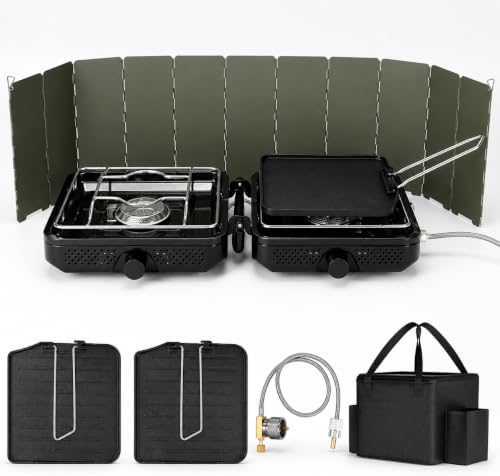
A two burner propane stove with fold up wind guards is the format that covers almost every car camping trip, sized to hold a large skillet and a coffee pot at the same time.
Cooking for a Larger Group
Three burner stoves add a dedicated burner for coffee or a pot of water so it is not competing with dinner. Coleman lists its Cascade 328 three burner at 28,000 total BTU.

High Output for Big Pots and Cold Mornings
Higher output stoves boil faster and hold temperature under a heavy pot. Camp Chef lists the Everest 2X with two 20,000 BTU burners for 40,000 BTU total, which is the class of stove people buy when they are cooking for a group or camping in the shoulder seasons.

Small Trunks and Solo Trips
Single burner propane stoves are enough for coffee, one pot meals and reheating, and they take up almost no space. They are also a useful second stove when the main one is busy.
Running Off a Refillable Tank
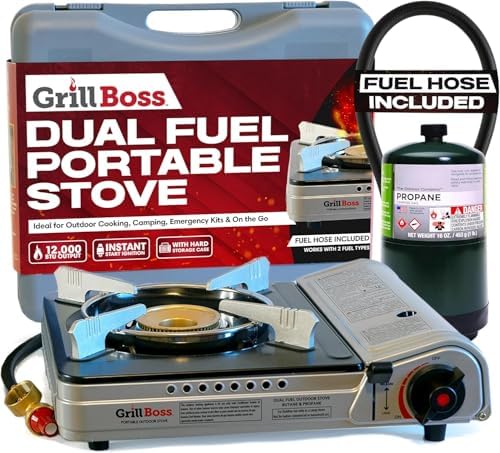
An adapter hose connects a compatible stove to a refillable tank, which cuts running cost and disposable cylinder waste on longer trips.

Fuel Planning at a Glance
These are the variables that change how much you burn, and what each one does to your estimate.
| Variable | Effect on fuel use | What to do | Notes |
|---|---|---|---|
| Wind at the site | Large increase | Use wind guards, orient the stove | The single biggest drain |
| Boiling for dishes | Moderate increase | Heat only what you need | Adds up over several days |
| Cold weather | Slower output, more run time | Keep cylinders off frozen ground | Pressure drops in the cold |
| Trip length | Linear increase | Refillable tank past a few nights | Cheaper per meal |
Using a Propane Stove Safely
A propane camp stove is an outdoor appliance. Coleman and Camp Chef both state in their manuals that their stoves are for outdoor use only and must never be operated inside a tent, an awning, a screen room, a vehicle or any enclosed space, because burning propane produces carbon monoxide that you cannot see or smell.
Follow the clearances in your own model’s manual rather than estimating, set the stove on a level surface where a spilled pot cannot reach a sleeping bag, and leak check the connection with soapy water when you fit a new cylinder or hose. A battery powered carbon monoxide alarm in the sleeping area is a small thing to carry and a sensible one.
Storing and Transporting Cylinders
Cylinders travel upright and secured, away from heat, and they are not stored in a hot car for a season. Disconnect the cylinder from the stove for transport rather than leaving it threaded on. Check whether your campground or land manager has rules about how empties are disposed of, because many do.
Frequently Asked Questions
How long does one 16 ounce propane cylinder last? Coleman lists up to one hour on high for its Classic two burner stove, which is the worst case. Real cooking at mixed settings usually stretches a cylinder across a weekend of meals.
How many cylinders should I bring for a weekend? Estimate from your own stove’s published burn time, then add one spare. Wind and cold are the two things that turn a comfortable margin into an empty cylinder.
Can I refill the small green cylinders? They are sold as disposable, and refilling them is not something manufacturers support. If cost or waste is the issue, the supported route is an adapter hose to a refillable tank.
Does BTU output tell me how good a stove is? Only partly. Higher output boils faster, but simmer control, wind protection and how well the burners are shielded matter just as much for real camp cooking.
Why does my stove flame get weak in the cold? Propane pressure falls as temperature drops, so output declines on cold mornings. Keeping the cylinder out of the wind and off frozen ground helps.
Can I use a camp stove under a canopy? Only with the overhead clearance your manual requires, and never in an enclosed shelter. When in doubt, cook in the open with a wind guard rather than under cover.
The Bottom Line
A propane camp stove is the least dramatic piece of gear in a car camping kit, which is exactly what you want from it. Buy for burner control and wind protection rather than headline output, plan fuel from your own model’s published burn time, and carry one spare cylinder past your estimate. For the format itself, our two burner camp stove guide covers BTU, wind and simmer in detail, and the Coleman lineup compared sorts the model numbers out.