Last updated: August 20, 2026
Cooking for four at a campsite is a meal. Cooking for ten is logistics. The stove that handled your family perfectly starts failing in a specific and predictable way: everything works, but nothing is ready at the same time, so the first plates go cold while the last batch is still in the pan and somebody is standing over the coffee pot waiting for a burner to free up.
This guide covers what changes when the headcount goes up, why a third burner solves more than a bigger second one, and how to set up a camp kitchen that can actually serve a group in one sitting. Group cooking is a throughput problem, not a power problem.
This article contains affiliate links. If you buy through them, we may earn a commission at no extra cost to you. Learn more.
Quick Answer
What camp stove do you need for a big group?
- Three burners, so coffee and water are not competing with the meal for space.
- Cooktop width that takes two large pans plus a pot, not two pans crammed together.
- Enough output under a full pot to keep a boil, which is where two burner stoves slow down.
- A stand or a dedicated table, because a picnic table cannot hold a group stove plus prep space.
Bottom line: for six or more, add burners and prep surface before you add power, and give the stove its own table.
Why Two Burners Stop Being Enough
A two burner stove has exactly two jobs available at once, and a group meal has at least three: the main dish, a side, and hot water for coffee or dishes. As soon as the third job exists, everything queues, and each queue adds the time it takes to reheat what already went cold.
The failure is not that the stove lacks heat. It is that it lacks positions. That is why groups who upgrade to a larger two burner stove usually find nothing improved, while groups who add a third burner notice the difference on the first morning.
The Coffee Burner
In practice the third burner becomes the utility burner. It holds the water pot, the coffee, the pan of something warming, and it is what lets you start dishes while dinner is still going. Nobody plans for it, and everybody who has it uses it constantly.
Sizing Output to the Pot, Not the Group
Group cooking uses bigger vessels, and a large pot of cold water is what exposes a weak burner. Camp Chef lists the Explorer with two 30,000 BTU cast aluminum burners and the Everest 2X at 40,000 BTU total, while Coleman lists the Cascade 328 three burner at 28,000 total. Match the burner to the vessel, not to the headcount.
If your group menu is skillet based, more burners beat more output. If it involves boiling large volumes, pasta for ten, corn, water for dishes, then output matters and a high output burner earns its place.
Camp Stoves for Groups by Situation
Group setups fall into a few recognizable shapes. Find yours before comparing model numbers.
Scout Troops, Extended Family and Regular Group Trips
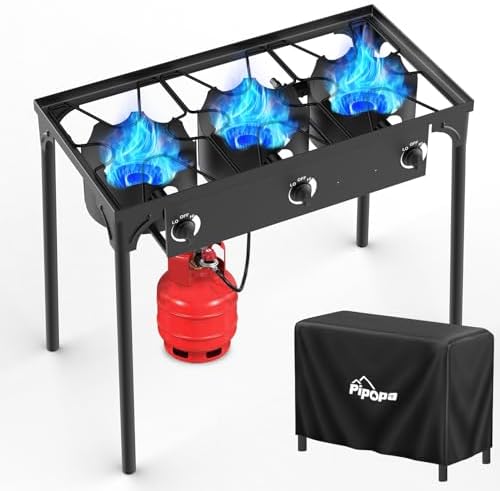
A three burner propane stove with dual wind guards puts a utility burner alongside the two cooking positions, which is the single upgrade that changes group meals most.
Cooking at Standing Height for Long Sessions
A legged camp stove stands on its own frame, freeing the picnic table for prep and serving and putting the cooktop at working height. For a cook who is at the stove for an hour, that height difference is not a luxury.

Large Pots and Boiling Volume
A high output two burner stove built around large pans handles the volume jobs that make a standard stove feel slow, and it pairs well with a smaller second stove for the utility burner.

Two Stoves Instead of One Big One
Plenty of groups run a large stove for the meal and keep a compact second stove purely for coffee and hot water. It is often cheaper than one big unit and it splits across two vehicles.

Giving the Stove Its Own Surface
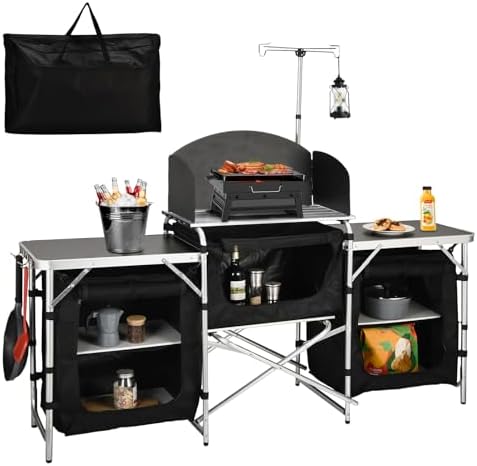
A folding camp kitchen stand sized to hold a stove plus side shelves solves the space problem that arrives with the stove itself.
What Changes at Each Group Size
Headcount changes the setup in steps rather than gradually. These are the thresholds most groups run into.
| Group size | Burners needed | Prep surface | What breaks first |
|---|---|---|---|
| Four to five | Two, comfortably | Picnic table is enough | Nothing, this is the design case |
| Six to eight | Three | Stove needs its own table | Hot water competes with the meal |
| Nine to twelve | Three plus a second stove | Dedicated kitchen area | Serving order and keeping food warm |
| More than twelve | Two full setups, split tasks | Two tables minimum | One cook cannot run it alone |
Setting Up a Group Camp Kitchen
Give the stove a table of its own, downwind of the sleeping area and out of the main walking line through the site. Keep a clear lane between the cooler, the prep surface and the stove so two people can work without crossing. That layout does more for throughput than any equipment upgrade.
Assign roles before the first meal rather than during it. One person cooks, one preps, one runs dishes and water. Group meals fall apart when everyone helps at the same moment and nobody owns the sequence.
Keeping Food Safe While You Serve
Serving a group takes longer than serving a family, which means food sits out longer. USDA and FSIS publish guidance on safe holding temperatures and time limits for hot and cold food, including specific advice for camping and outdoor cooking. Follow their figures rather than a rule of thumb, and plan to serve in one wave rather than leaving dishes on the table between rounds.
Fuel and Wind at Group Scale
A three burner stove running for a group burns fuel considerably faster than a two burner stove cooking for four, and the small disposable cylinders empty quickly at that rate. Groups are the clearest case for an adapter hose to a refillable tank, provided your specific model lists that accessory.
Wind protection matters more too, because a group cook is running longer sessions with the lid open. Position the stove so the wind guards face the prevailing breeze and put a solid object behind it as a break. Wasted heat at group scale is wasted fuel at group scale.
Using a Group Stove Safely
Camp stoves are outdoor appliances. Coleman and Camp Chef both state in their manuals that their stoves are for outdoor use only and must never be operated inside a tent, an awning, a screen room, a vehicle or any enclosed space, because burning propane produces carbon monoxide.
Follow the clearances published for your own model rather than estimating, keep the cooking lane clear of children and dogs, and leak check hose and cylinder connections before each trip. With a group camping together, a battery powered carbon monoxide alarm in each sleeping tent is a small and sensible piece of shared kit.
Frequently Asked Questions
How many burners do I need for eight people? Three. Two positions cook the meal and the third handles hot water and coffee, which is what stops the meal from queuing.
Is one big stove better than two small ones? Two stoves split across vehicles, cost less and give you a backup. One big stove is tidier and easier for a single cook to run. Group habits decide it.
Do I need a higher BTU stove for a group? Only if you boil large volumes. For skillet cooking, more burner positions beat more output every time.
Where should the group stove go on the site? On its own table, downwind of the sleeping area and off the main walking route, with a clear lane to the cooler and the prep surface.
How much propane does group cooking use? Considerably more than family cooking, which is why groups usually move to a refillable tank with an adapter hose if their stove lists one.
How do I keep food warm while serving ten people? Serve in one wave rather than in rounds, and follow the holding time and temperature guidance USDA and FSIS publish for outdoor cooking rather than judging by feel.
The Bottom Line
Group camp cooking is solved with burner positions and prep surface, not with a bigger flame. Move to three burners at six people, give the stove its own table, split the roles before the first meal, and follow published food safety guidance while you serve. For the underlying format, see our two burner stove guide, and the camp kitchen table guide covers the surface that makes the whole thing work.