Last updated: August 20, 2026
Search for a battery powered tent heater and you will find listings, review roundups and a great deal of confident language about cozy winter nights. Buy one, take it camping, and the usual reaction is that it puts out about as much heat as a laptop charger. The reviews that follow tend to use the word disappointed.
The products are real. The category, as most people imagine it, is not. This article explains why, using arithmetic rather than opinion, and then covers what campers who need warmth without propane or shore power actually use instead. If you came here to find out whether one of these will heat your tent, the honest answer takes about two paragraphs, and then it gets useful.
This article contains affiliate links. If you buy through them, we may earn a commission at no extra cost to you. Learn more.
Quick Answer
Does a battery powered tent heater exist?
- Products exist, but nothing that runs on internal batteries produces enough heat to warm a tent.
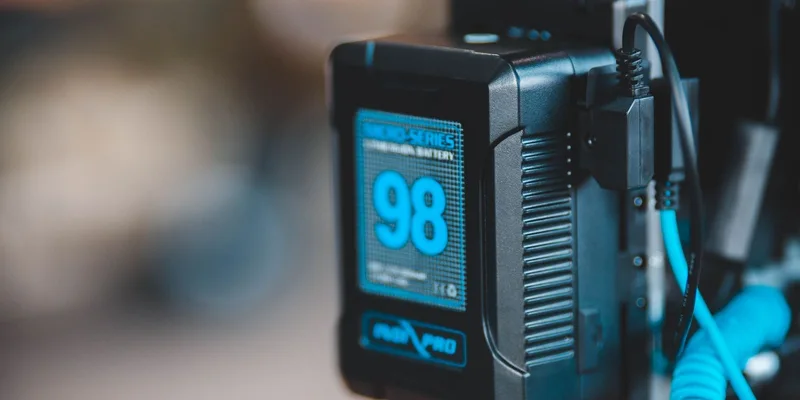
- Electric heating is expensive in watt-hours, so a space heater drains even a large power station in a couple of hours.
- The efficient version is to heat the person: a heated blanket or a heated pad topper uses a fraction of the energy.
- If you truly need to heat the air with no power at the site, that is a propane or wood stove question, with all the safety rules attached.
Bottom line: spend the battery on warming the sleeper, and spend the money on insulation.
Why the Category Does Not Work
Electric heating converts watts into heat at essentially one to one, which sounds efficient until you look at how many watts a real space heater uses. A household ceramic heater on its low setting draws several hundred watts continuously. Batteries store energy in watt-hours, and the ones you can carry hold a small fraction of what several hundred watts for eight hours requires.
Run the arithmetic with round numbers. A 750 watt heater draws 750 watt-hours every hour it runs. A one kilowatt-hour power station, which is a substantial thing to carry, therefore supports roughly an hour and a bit before it is empty. Nothing about that changes with a better product, because it is a property of heat itself rather than of any brand.
What the Listings Are Actually Selling
Most items sold as battery tent heaters fall into three groups: USB hand warmers and pocket warmers, small 12 volt ceramic units meant for defrosting a car windshield, and heaters that need a power station and are simply described in a way that implies otherwise. None of them are frauds exactly. They are just not heating a tent.
USB and Pocket Warmers
These work well at the job they were designed for, which is warming hands, a coat pocket or the inside of a sleeping bag near your feet. Treat them as comfort items with a useful place in a cold weather kit, and expect nothing from them at the scale of a room.
12 Volt Automotive Heaters
The small units that plug into a vehicle outlet are built for clearing a windshield, not for heating a space. On a typical vehicle circuit the available power is limited enough that these produce a thin stream of warm air, which is why campers who try them in a tent describe the result as underwhelming rather than dangerous.
Heaters That Assume You Own a Power Station
Some listings are honest about needing an external power source and still leave the impression of overnight heat. Check the wattage in the specification, then divide your power station’s watt-hour capacity by it. That single division answers the question faster than any review, and our guide to sizing a power station for camp walks through the same math for other loads.
The Approach That Actually Works
Stop trying to heat the air and heat the person instead. A heated blanket, a heated pad topper or a heated sleeping bag liner puts energy directly against your body, so it needs a fraction of the wattage that raising the temperature of a whole tent would take. That is the difference between a device you can run all night and one you can run for an hour.
The other half of the answer is insulation. Most cold nights in a tent are not an air temperature problem, they are a ground conduction problem, and no heater of any kind fixes a thin sleeping pad. Our guide to staying warm in a tent goes through pad insulation, bag ratings and the layering order that makes electricity optional.
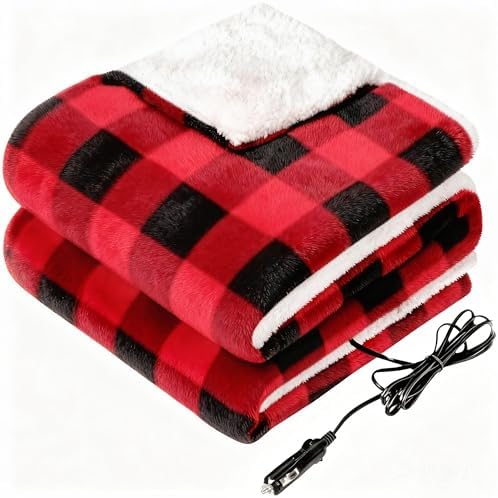
A Heated Blanket Off a Power Station
This is the setup most car campers land on once they have run the numbers. Low draw, all night runtime from a mid size power station, no combustion and nothing that needs supervising while you sleep. Check the blanket’s stated wattage against your power station’s capacity, and prefer a model with a timer and an auto shutoff.
Comparing the Realistic Options
The table sets the marketing category against the things campers actually use for a cold night. The pattern is consistent: anything that heats air electrically is short lived, and anything that heats a body directly is not.
| Approach | Power needed | Realistic runtime | Honest verdict |
|---|---|---|---|
| Battery tent heater as marketed | Internal battery only | Minutes of token warmth | Not a heating solution |
| Electric heater on a power station | Several hundred watts | An hour or two per kilowatt-hour | Works briefly, not overnight |
| Heated blanket or pad topper | Low, tens of watts | Full night from a mid size station | The practical electric answer |
| Better pad and bag | None | Every night, indefinitely | The cheapest fix per cold night |
When You Genuinely Need to Heat the Air
Some situations really do call for warm air rather than a warm sleeper: a family cabin tent where kids are changing clothes, a long shoulder season trip where gear needs to dry, a base camp used for days in one spot. Those cases point at propane or a wood stove, and both bring safety requirements that batteries do not.
If that is your situation, start with our tent heater buying guide, which compares rated propane units, electric heaters at a powered site, and hot tent stoves. Whichever you choose, a battery carbon monoxide alarm at sleeping height is a standing recommendation any night a fuel-burning appliance is in or near the tent.
Frequently Asked Questions
Is there any battery heater that will warm a tent? Not one that runs on internal batteries. Heating air electrically takes hundreds of watts continuously, and no portable battery small enough to carry stores enough energy to keep that going for a night.
Can I run a space heater off a power station? Briefly. Divide the station’s watt-hour capacity by the heater’s wattage to get the runtime, and expect an hour or two per kilowatt-hour rather than a full night.
What about a heated blanket, does that drain a power station? Far less. Heated blankets draw tens of watts rather than hundreds, which is why a mid size power station can run one overnight while the same station empties in about an hour on a space heater.
Are 12 volt heaters that plug into a car outlet worth trying? They are built for defrosting a windshield and the available power on that circuit limits them accordingly. Expect a thin stream of warm air, not a heated tent.
Is an electric heater safer than propane in a tent? It removes the combustion question, which is the main hazard, though it still needs a power source and a model with a tip-over shutoff. At a campground with a pedestal it is often the simplest option available.
What is the cheapest way to stop being cold at night? A sleeping pad with a higher R value. Ground conduction takes more heat out of most campers than cold air does, and a better pad works every night without power, fuel or supervision.
The Bottom Line
Battery powered tent heaters exist as products and not as a solution, because heating air electrically costs more watt-hours than any carryable battery holds. Heat the sleeper with a low draw blanket, fix the pad underneath, and treat warm air as a propane or wood stove question with its own rules. Read next: our tent heater buying guide and the power station sizing guide if you are working out what your battery can actually run.