
Last updated: August 20, 2026
Self inflating is a slightly generous name. Open the valve, unroll the pad, and the foam inside does begin pulling air in on its own, but a pad that reaches full thickness without any help from you is the exception rather than the rule. Most need a few breaths at the end, and a cold pad on a cold night needs more than a few.
None of that is a defect, it is how open cell foam behaves. Knowing it in advance changes the experience from feeling let down by the product to simply setting the pad out first and doing something else for twenty minutes. This guide covers how the mechanism works, what actually affects the timing, how to set the pressure, and how to store the pad so it keeps working for years.
This article contains affiliate links. If you buy through them, we may earn a commission at no extra cost to you. Learn more.
Quick Answer
How long does a self inflating sleeping pad really take?
- Longer than the box suggests, and almost all of them need a few breaths at the end.
- Cold weather and a denser, thicker foam both slow it down noticeably.
- A pad stored rolled up tight for months inflates more slowly than one stored open.
- Unroll it as the first job at camp, not the last, and it will be ready when you are.
Bottom line: open the valve on arrival, let it work while you pitch the tent, then top it up by mouth and set it slightly soft.
How Self Inflation Actually Works
Inside the shell is open cell foam that has been compressed and rolled. When you open the valve, the foam tries to return to its original shape, and as it expands it creates a lower pressure inside the pad, which draws outside air in through the valve until the pressure equalizes.
That means the foam is doing the work and the air is just following it. It also means the pad insulates through the foam as well as through the trapped air, which is why self inflating pads hold up better in cold weather than a pure air pad of the same thickness.
What Actually Changes the Timing
Temperature is the biggest factor. Foam is stiffer when it is cold, so a pad unrolled at a frosty site expands more slowly than the same pad on a warm afternoon. Thickness and foam density matter too, since a thicker car camping pad has far more foam to expand than a thin backpacking mat.
Storage history is the quiet one. A pad kept tightly rolled in its stuff sack for a year has foam that has taken a compressed set, and it takes longer to loft the first few times you use it. Manufacturers recommend storing pads unrolled with the valve open for exactly this reason.
How to Speed It Up
Unroll the pad the moment you arrive, valve open, and let it sit while you set up the tent. If you rolled it up with the valve closed last time, open it and shake the pad out flat so the foam is not fighting a fold.
Finish with a few breaths rather than waiting for the last of it. Moisture from breath is the standard warning against inflating pads by mouth, so most people top up briefly rather than inflating from flat, and some pads accept a pump sack or a small pump for the same job.
Setting the Pressure
Fully inflated is rarely the most comfortable setting. A pad topped up hard has little give, so your hip and shoulder carry the load instead of settling into the surface. Most campers sleep better letting a little air out once they are lying on it.
The method is simple: lie down on your side, open the valve for a second or two, and close it when your hip settles without touching the ground. Side sleepers need more depth than back sleepers, which is covered in our side sleeper pad guide.
Self Inflating Pads by Situation
Best all round car camping pad
A wide self inflating pad in a car camping thickness is the default for most people, since it needs no pump and works on a tent floor or a cot deck.

Best for couples sharing one pad
A double width self inflating pad removes the cold seam between two singles and packs as one item rather than two.
Best when insulation is the priority
Pads with a higher published R value carry more or denser foam, which is what makes the difference on cold ground.
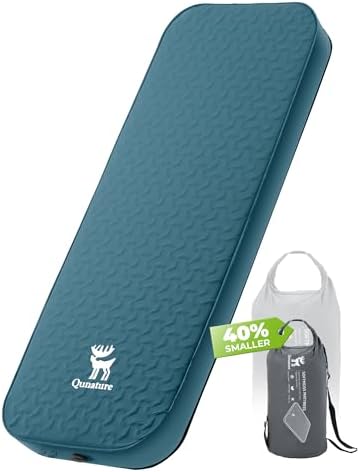
Best backup layer
A closed cell foam pad underneath adds depth, adds insulation and gives you something to sleep on if the self inflating pad ever picks up a puncture mid trip.

Self Inflating Versus the Alternatives
| Pad type | Setup | Cold weather | Main drawback |
|---|---|---|---|
| Self inflating | Valve open, wait, top up | Strong, foam plus air | Bulky rolled |
| Air pad | Pump or inflation sack | Depends on internal fill | Puncture ends the night |
| Closed cell foam | Unroll, done | Consistent | Thin and firm |
| Air mattress | Powered pump | Cools to tent temperature | Needs a pump and power |
Care, Storage and Repairs
Store the pad unrolled with the valve open, flat under a bed or standing loosely in a closet. That keeps the foam lofted so it self inflates faster and reaches full thickness, and it is the single thing that most extends the useful life of this type of pad.
For repairs, use the patch kit that came with the pad or a compatible repair kit for the shell material. Find a slow leak by inflating the pad firm and running soapy water over the surface, checking the valve seat as well as the fabric, since a valve that is not fully closed accounts for a lot of suspected punctures.
Frequently Asked Questions
How long does a self inflating pad take to inflate? Longer in the cold and longer for a thick pad, and most still need a few breaths at the end. Unroll it with the valve open as soon as you arrive and it will be ready by the time the tent is up.
Why is my self inflating pad not inflating fully? Usually because it has been stored rolled tight, so the foam has taken a set. Store it unrolled with the valve open and it recovers over a few uses.
Should I blow it up the rest of the way by mouth? A few breaths to top up is normal practice. Inflating fully by mouth adds moisture inside the pad, which is why pump sacks exist.
How firm should the pad be? Slightly soft. Lie on it, open the valve briefly, and close it when your hip settles without reaching the ground.
Can I use a self inflating pad on a cot? Yes, and it is one of the best uses, since a cot deck has open air underneath. See our cot mattress guide for sizing to the deck.
Is a self inflating pad warm enough for cold nights? Check the published R value rather than the type. Manufacturers measure it with the ASTM F3340 method, and our R value guide explains how to match it to the season.
The Bottom Line
A self inflating pad is the most practical sleeping surface in car camping because it needs no pump, insulates through foam as well as air, and forgives being run slightly soft. Give it time, top it up by mouth, set the pressure lying down, and store it unrolled with the valve open. For the wider category, read our sleeping pad guide, and for the warmth number see our R value guide.