Last updated: August 21, 2026
A phone at camp is a camera, a map, a flashlight and the way anyone reaches you in an emergency, which is why watching the battery slide toward single digits on the second afternoon is more stressful than it should be. The odd part is that phones are one of the smallest electrical loads anyone brings camping. The problem is almost never capacity. It is that nobody plans where the energy comes from.
There are only four realistic sources at a campsite, and a phone can be made to last a weekend on almost none of them if you change how it behaves. This guide covers the four routes in the order most car campers should consider them, plus the settings changes that do more for battery life than any accessory you can buy.
This article contains affiliate links. If you buy through them, we may earn a commission at no extra cost to you. Learn more.
Quick Answer
How do you charge a phone while camping?
- A power bank is the simplest answer for a weekend and covers several phone charges on its own.
- The car charges everything while you drive, which suits trips with any daily driving.
- A power station is worth it when other things need power too, not for phones alone.
- Solar is a top up for longer stays, not a same-day rescue for a flat phone.
Bottom line: put the phone in airplane mode, carry one decent power bank, and you will not think about charging again all weekend.
Fix the Drain Before You Add a Charger
A phone drains fastest where the signal is weakest, because it raises transmit power hunting for a tower it cannot reach. At a remote campground that search runs constantly, which is why a phone that lasts two days at home can be flat by dinner on the first evening. Airplane mode stops it immediately.
Turn airplane mode on when you arrive and switch it off for a few minutes when you actually want to check messages. Everything you rely on outdoors still works: the camera, offline maps, downloaded music and the flashlight all run without a cellular connection. GPS also works in airplane mode on modern phones, provided your maps are downloaded before you leave.
The Other Settings That Matter
Drop the screen brightness, turn off background app refresh, and keep the phone out of direct sun, since heat is hard on lithium batteries and a hot phone throttles and drains faster. Cold does the opposite kind of damage, showing up as a phone that reports a sudden drop overnight, so keep it in the sleeping bag rather than in the tent pocket on a cold night.
Route One: A Power Bank
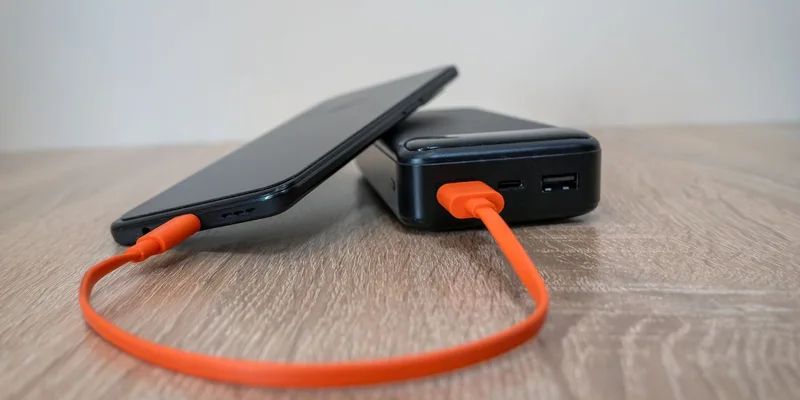
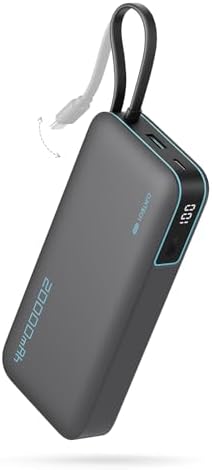
For a weekend with two phones, a single decent power bank is the whole solution. It needs no infrastructure, it costs nothing to bring, and it is the only option here that works while you are away from the site walking or paddling. Charge it at home the night before and it is ready.
Look for USB-C in and out so it charges from the same cable as everything else and can fast charge a modern phone. Capacity is stated in milliamp hours, and the amount that reaches your phone is always lower because of voltage conversion losses, so read the figure as an upper bound rather than a promise.
Route Two: The Car
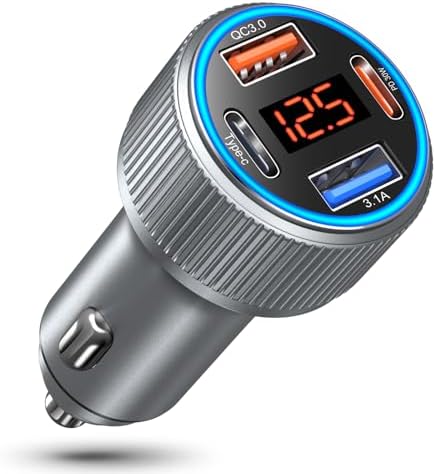
If your trip involves any driving, the car is the easiest charger you own. A USB adapter in the 12V socket charges phones, headlamps, lanterns and power banks on every transfer between the campground and wherever you go during the day, which for most trips is enough on its own.
Two cautions apply. Many vehicles keep the 12V socket live with the ignition off, which is how people flatten a starter battery charging overnight, so unplug when you park. And idling an engine purely to charge is against campground rules in many places and inconsiderate near other sites at any time. Check the campground or land manager’s policy rather than assuming.
Use a Real Car Adapter
The cheap adapters that came free with something else are usually slow and sometimes poorly made. A current adapter with USB-C Power Delivery charges a modern phone in a fraction of the time, which matters when the charging window is a twenty minute drive to the trailhead rather than a full day.
Route Three: A Lantern That Charges Devices
Many rechargeable camp lanterns include a USB output, and it is a genuinely useful backup. The limitation is that a lantern battery is sized for lighting, so a phone charge takes a real bite out of the evening’s light. It is a good emergency reserve and a poor primary plan.
If you already own such a lantern, treat its battery as the reserve tank: use the power bank first, the car second, and the lantern only when both are gone. Our guide to a rechargeable camping lantern covers which models carry enough capacity to do both jobs without leaving the site dark.
Route Four: Solar and Power Stations
Solar and power stations solve a different problem from phone charging. They exist for trips where a fridge, a fan, or medical equipment needs power for days. Buying either purely to keep a phone alive is a lot of weight and expense for a load a power bank handles comfortably.
If you already have a power station for other reasons, it charges phones easily and a folding panel keeps it topped up on longer stays. A small USB solar charger is the lighter middle ground, though it is slow and needs genuine direct sun, so treat it as a trickle rather than a rescue. Our guide to a portable solar panel for camping covers matching a panel to a battery’s published input limit.
Comparing the Four Routes
Each route suits a different kind of trip, and most campers end up using two of them without thinking about it.
| Route | What it needs | Speed | Best for |
|---|---|---|---|
| Power bank | Charging at home first | Fast with USB-C | Almost every weekend trip |
| Car socket | Some driving during the trip | Fast with a modern adapter | Trips with daily driving |
| Lantern with USB out | Nothing extra | Slow, partial charge | Backup when other options fail |
| Solar or power station | Sun, or a reason to own one | Slow to moderate | Long stays and bigger loads |
Keeping a Phone Alive on a Long Trip
On a week-long trip the discipline matters more than the hardware. Charge everything on every drive, keep the phone in airplane mode by default, download maps and music before leaving home, and use a headlamp instead of the phone flashlight so the battery is not spent on lighting.
Add a paper backup for anything that would ruin the trip if the phone died: the campground reservation, the address of the ranger station, and one phone number written down. Phones are reliable right up until they are wet, cold or broken, and a car camper is rarely far enough from a road for that to be more than an inconvenience if there is a paper copy in the glovebox.
Emergencies Are Their Own Question
A charged phone is not a substitute for knowing where you are and telling somebody your plan. Leave your itinerary with someone at home, note where the nearest cell coverage is on your way in, and check with the campground host or land manager about coverage and emergency procedures for that specific area.
Frequently Asked Questions
How do I keep my phone charged while camping? Put it in airplane mode on arrival, carry one USB-C power bank charged at home, and top everything up in the car on any drive. That covers a weekend for most people without further equipment.
Why does my phone drain so fast at a campsite? Weak signal. The phone raises transmit power hunting for a tower, which drains the battery continuously. Airplane mode stops it, and the camera, offline maps and flashlight all still work.
What size power bank do I need for camping? For two phones over a weekend, a mid-size bank with USB-C in and out is comfortable. Remember that the milliamp hour figure on the label is higher than what actually reaches the phone.
Can I charge my phone from the car overnight? It is possible if the socket stays live, but it is a common way to flatten a starter battery. Unplug when you park, and use a power bank overnight instead.
Do solar phone chargers work for camping? Slowly, and only in genuine direct sun with the panel angled correctly. They are a useful top up on a long open-site stay and a poor rescue for a phone that is already flat.
Does GPS work without a signal? Yes on modern phones, including in airplane mode, provided you downloaded the map area before losing coverage. Downloading offline maps before you leave home is the step people forget.
The Bottom Line
Charging a phone at camp is a planning problem, not a hardware problem. Airplane mode removes most of the drain, one good USB-C power bank covers a weekend, and the car handles the rest on any trip with driving. Save the power station and the solar panel for the loads that genuinely need them. A rechargeable camping lantern makes a useful reserve while doing its real job, and if you are already sizing a battery for a fridge or a fan, our portable solar panel guide covers what to match it to. Put chargers and cables on the camping checklist so they are not the thing left on the kitchen counter.