
Last updated: August 20, 2026
Standard camp chairs are built around an average that a lot of adults are not. The frame may hold you fine, and the chair can still be wrong: armrests that press at the hips, a seat that sags until your knees end up higher than your waist, and a front rail that cuts across the back of the legs after twenty minutes. None of that shows up in a listing photo of a chair on a lakeshore.
Shopping for a big and tall camp chair comes down to three published numbers and one habit. The numbers are capacity, seat width between the armrests and seat height off the ground. The habit is reading them for the exact model rather than trusting a product family name, because brands sell a standard and an oversized version of the same chair under nearly identical titles.
This article contains affiliate links. If you buy through them, we may earn a commission at no extra cost to you. Learn more.
Quick Answer
What should a big and tall camper look for in a camp chair?
- Seat width between the armrests decides comfort more often than the capacity number does.
- Use the capacity published for that exact model: ALPS lists the King Kong at 800 pounds, Coleman lists the Big-N-Tall Quad at 600 pounds.
- Taller seat heights make standing up easier and keep your knees below your hips.
- Steel frames and wide feet handle both the load and the soft ground it presses into.
Bottom line: check width, height and the model specific capacity together, since a chair can pass one and fail the others.
Capacity Is the Floor, Not the Answer
A capacity rating tells you what the frame is built to carry, and nothing about whether the chair fits. Plenty of chairs rated well above average body weight are still narrow between the armrests, because the rating comes from the tubing and the joints rather than from the seat dimensions.
Read it as a minimum requirement you clear comfortably, then move on to width and height. Buying a chair rated close to your own weight leaves nothing for the shift and lean of normal use, and the published figures vary enough between models that the margin is easy to find.
Seat Width Between the Armrests
This is the measurement that decides whether an evening in the chair is comfortable. Listings usually give seat width as the distance across the fabric, and the useful figure is the clear space between the armrests, which is often narrower. Where a brand publishes both, use the smaller one.
An easy home check is to measure the seat of a chair you already sit in happily, then compare. Chairs sold as oversized are typically several inches wider across the seat than the same brand’s standard model, and that difference is what stops the armrests pressing in at the hips.
Armless and Wide Frame Options
If armrests are the pinch point, a chair without them removes the problem entirely, though it also removes the push off point that makes standing up easier. Some campers solve it the other way, with a wide steel frame chair where the armrests sit far enough out to be useful rather than confining.
Seat Height and Standing Back Up
Seat height decides effort. A taller seat keeps the knees at or below hip level and lets you stand with your legs rather than your arms, which matters more the longer the evening runs. Low slung chairs feel relaxed for ten minutes and turn into a project after dinner.
Compare the listed seat height against a kitchen or dining chair at home that you can leave without pushing off. That single comparison rules out more unsuitable chairs than any other check, and it costs nothing but a tape measure.
Frames, Fabric and What Fails First
On heavier duty chairs the frame is usually powder coated steel, which carries more than aluminum and weighs more in the trunk. Look at the joints and the crossbars rather than the tube diameter, since folding chairs give way at pivots and rivets long before a straight tube bends.
Fabric matters as well. Heavier denier polyester resists stretch, which keeps the seat from sagging into a hammock shape over a season. A sagging seat is what turns a chair that fitted on day one into one that pinches by the end of the summer.
Big and Tall Camp Chairs by Situation
The right chair depends on whether you want maximum capacity, maximum width, a taller seat for easy standing, or a rocker that still fits. These four cases cover most of what bigger campers actually shop for.
Best for the Highest Published Capacity
Heavy steel quad frames sit at the top of the capacity range. ALPS Mountaineering lists the King Kong at 800 pounds, which is among the highest figures published for a folding camp chair.

Best Wide Seat From a Familiar Brand
Coleman lists the Big-N-Tall Quad at 600 pounds, with an oversized seat and the same folding format most campers already know.

Best Tall Seat for Easy Standing
A high back chair with a taller seat height keeps the knees low and gives you something to push against on the way up.

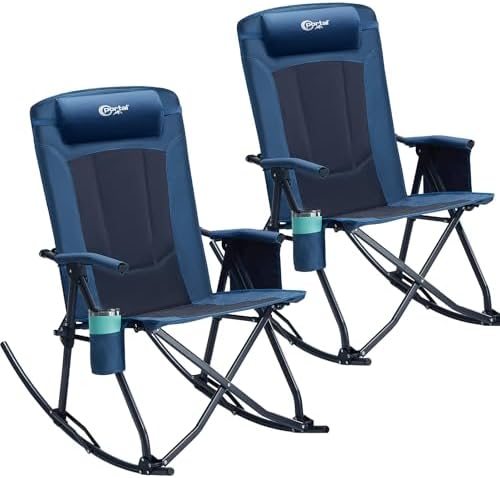
Best Oversized Rocker
XL rocker versions widen the seat and raise the published capacity, which lets bigger campers use the same fire ring chair as everyone else.
Comparing the Fit Numbers
The table below shows how the three numbers interact. A chair can pass on capacity and fail on width, which is the most common way a purchase goes wrong in this category.
| Chair type | Typical frame | Seat width | Best for |
|---|---|---|---|
| Heavy steel quad | Powder coated steel | Widest | Highest published capacity |
| Oversized quad | Steel or thick aluminum | Wide | Everyday family sites |
| High back oversized | Steel | Wide, taller seat | Easy standing, back support |
| XL rocker | Steel with spring base | Wide | Fire ring evenings |
Common Mistakes When Buying an Oversized Chair
The first is buying on the capacity figure alone. It is the number brands print biggest and the one that tells you least about fit, and a chair rated far above your weight can still press at the hips.
The second is ignoring the trunk. Heavy duty chairs are bulkier and heavier folded than standard ones, and two of them plus a cooler can fill a hatchback. Measure the folded dimensions in the listing against the space you load into, especially if the whole family needs a chair.
Trusting a Product Family Name
Brands run standard, oversized and XL versions of the same chair with almost identical titles. The capacity and seat width can differ substantially between them, so confirm the numbers on the exact listing you are ordering rather than on a review of the family.
Frequently Asked Questions
What is the highest capacity camping chair? Among widely sold folding chairs, ALPS Mountaineering lists the King Kong at 800 pounds. Figures vary by model and change between versions, so always read the capacity on the listing for the chair you are buying.
How wide should a big and tall camp chair be? Wide enough that the armrests do not touch your hips when you sit normally. Measure a chair at home that you find comfortable and compare seat width figures, using the clear space between the armrests where a brand publishes it.
Are heavy duty camping chairs uncomfortable? Not inherently, but they trade weight and folded bulk for strength. Steel frames are heavier to carry and take more trunk space than the standard aluminum chairs sold alongside them.
Do oversized chairs sink into grass? More weight on the same size feet means more sinking. Look for wide molded feet or a base rail, and set a flat board or paver under each foot on sand or soft ground.
Is a high back chair better for tall campers? Usually, yes. A taller backrest supports the shoulders instead of stopping at the mid back, and a taller seat height keeps the knees from riding up.
Should I size up to a two person chair instead? A double chair gives width but usually a lower seat and a shared frame that moves when the other person moves. For one bigger camper, an oversized single is normally the better fit.
The Bottom Line
Capacity gets you onto the list, seat width and seat height decide the chair. Read all three for the exact model, look at the feet if your sites are soft, and check the folded size before you buy two. For the general fit rules that apply to every camp chair, see our camping chair guide, and if lower back support is the priority, start with the camp chair for a bad back instead.