Last updated: August 20, 2026
Shade decides how a summer campsite feels. A site with a shady spot to sit stays usable from breakfast through the afternoon, and a site in full sun turns into a place people hide in the car. Campgrounds are inconsistent about this: some hand you mature oaks over the picnic table, and some hand you a gravel pad in an open meadow with nothing above it at all.
The two answers car campers reach for are a pop up canopy with legs and a tarp strung between anchors. They cost roughly similar amounts of trunk space and solve the same problem in very different ways. This comparison covers which one suits which site, how each behaves in wind and rain, and what people get wrong about both.
This article contains affiliate links. If you buy through them, we may earn a commission at no extra cost to you. Learn more.
Quick Answer
Should you bring a pop up canopy or a tarp for camp shade?
- Open gravel or grass site with no trees: a pop up canopy, because it brings its own legs.
- Wooded site with trunks to work from: a tarp, which pitches lower, tighter, and cheaper.
- Windy or exposed site: a tarp pitched low, since a canopy is a sail on four legs.
- Fast setup after a long drive: a canopy, up in minutes with two people.
Bottom line: canopies win on open ground and speed, tarps win on wind, weight, and price.
The Real Difference Is the Anchor
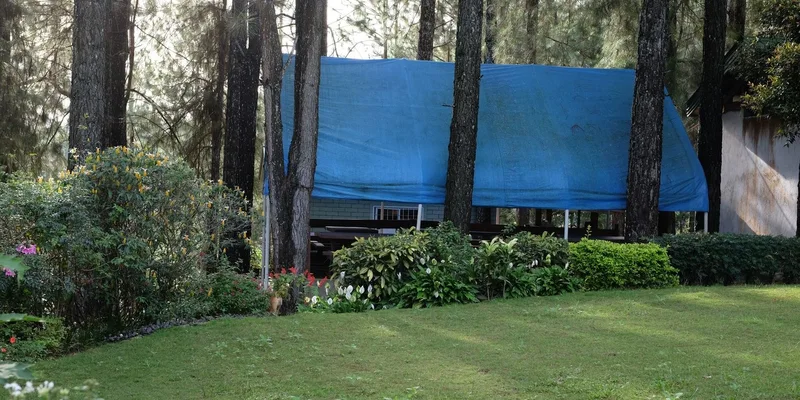
A canopy carries its own structure, so it works anywhere you can put four feet down. A tarp borrows structure from trees, poles, or the car, so it works brilliantly where anchors exist and not at all where they do not. Everything else about the comparison follows from that single difference.
That is why the honest recommendation depends on where you camp rather than on which product is better. Campers who use state park sites in the woods almost always end up preferring tarps, and campers who use open lakeside or desert sites almost always end up with a canopy in the trunk.
Sun Angle Beats Square Footage
Shade is not overhead at the hours you want it. Morning and late afternoon sun comes in sideways, which is when a flat canopy roof stops helping and a tarp pitched at an angle keeps working. Canopy sidewalls solve this, and they are the accessory most canopy owners wish they had bought at the same time as the canopy.
With a tarp you simply pitch one edge low toward the sun and the other high for headroom. It takes longer to rig and it looks less tidy, but it puts shade where the sun actually is rather than where the diagram assumed.
Wind Is What Breaks Canopies
A pop up canopy is a rigid roof on four legs, which makes it a sail. Gusts lift the roof, the legs come off the ground, and the frame folds or the fabric tears. This is the most common way canopies die, and it usually happens while nobody is at the site to lower it.
The fix is guy lines and weight at all four legs, every time, not just when it looks windy. Sandbags, water jugs, or purpose made leg weights on the feet plus lines out to stakes make an enormous difference, and most canopy manufacturers publish exactly that instruction in the manual.
Why Tarps Handle Wind Better
A tarp has no rigid frame to fold and can be pitched low and steeply, which sheds wind instead of catching it. If a gust does overpower it, the usual outcome is a popped grommet or a slipped line rather than a bent aluminum frame, and both are repairable at the site.
The trade is headroom, so you sit under a low pitched tarp rather than stand under it. On an exposed site that is a fair exchange.
Rain Changes the Answer Again
For rain, the priority flips from area to pitch. Flat canopy roofs pool water in the middle, and a pool that keeps growing will either dump on somebody or bend the frame. Many canopy roofs are shaped with a peak to shed water, but a canopy pitched dead level on soft ground quickly stops being level.
A tarp is easier to pitch with real slope, so water runs off one edge and away from the seating area. That is why the classic wet weather camp setup is a tarp over the kitchen and a canopy, if there is one, over the picnic table with one corner deliberately dropped.
Cooking Under Cover
Keep combustion appliances out from under fabric. Camp stoves, grills, and propane fire pits are outdoor appliances, and every manufacturer publishes clearance and ventilation instructions in the manual for the specific model. A canopy roof or a tarp is not open air, and none of these appliances belong under one unless that model’s own instructions say otherwise.
The practical camp version is to cook at the edge of the cover with the appliance out in the open and the cook standing under the fabric, and to move the kitchen downwind of the sleeping area. Our camping in the rain guide covers the rest of the wet weather site layout.
Canopy Versus Tarp at a Glance
The table below compares the two on the four things that decide the purchase: what they need to stand up, how they cope with weather, how long they take to pitch, and what they cost you in trunk space. Neither is universally better, and a lot of car campers eventually own both.
| Factor | Pop up canopy | Tarp | Which wins |
|---|---|---|---|
| Needs anchors | No, brings its own legs | Yes, trees or poles | Canopy on open sites |
| Wind behavior | Sail, needs weights and guys | Pitches low, sheds wind | Tarp |
| Setup time | Minutes with two people | Longer, needs rigging | Canopy |
| Packed size | Long rigid bag | Small soft bundle | Tarp |
Which One to Buy for Your Sites
Buy for the site you use most, not for the exception. If your regular campgrounds are wooded, a tarp and a set of lines will cover almost every trip and pack into the space a jacket takes. If your regular sites are open, a canopy is the only one of the two that will stand up at all.
Best for Open Sites With No Trees
A straight leg pop up canopy with proper weights and guy lines is the default for gravel pads, meadows, and lakeside sites. Straight legs give more usable shade at the edges than slant leg models of the same nominal size, which matters when you are trying to cover a picnic table.

Best for Wooded Sites
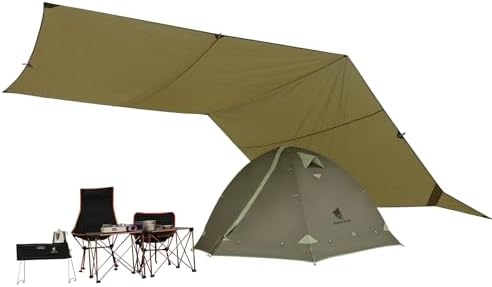
A polyethylene or ripstop nylon tarp with reinforced grommets, plus a set of adjustable lines, pitches between trunks in whatever shape the site allows. It is the cheapest shade you can carry and the easiest to repitch when the sun moves.
Best for Keeping a Canopy Standing
Weights on all four feet plus lines to stakes are what separate a canopy that survives a season from one that folds in July. Leg weight bags that you fill with sand at the site pack flat and avoid carrying dead weight in the car.

Frequently Asked Questions
Is a canopy or a tarp better for camp shade? A canopy is better on open ground and sets up faster. A tarp is better in wind, packs smaller, and costs less, but it needs trees or poles to hang from. Choose by the sites you actually camp on.
Can you use a pop up canopy in wind? Only with weights on every leg and guy lines to stakes, and even then most manufacturers instruct you to take the canopy down in strong wind. An unweighted canopy is the single most common piece of camp gear lost to a gust.
Can I cook under a canopy? Camp stoves, grills, and propane fire pits are outdoor appliances and belong in open air, following the clearance and ventilation instructions in the manufacturer’s manual for that model. Cook at the edge of the cover with the appliance outside it.
What size tarp do I need for a campsite? Enough to cover the seating or kitchen area with slope left over, since a tarp pitched flat sheds nothing. Most campers find a tarp noticeably larger than the area they want covered is what actually works once it is angled.
Do canopies keep rain off? They keep direct rain off, but a flat roof pools water in the middle. Drop one corner deliberately so the water runs off, and check the frame after heavy rain, since pooled water is what bends canopy roofs.
Do I need both? Plenty of car campers carry both and choose at the site. If you are buying one first, buy for your most common site type, and add the other when a trip actually calls for it.
The Bottom Line
Canopies buy you speed and independence from trees, tarps buy you wind resistance and packability. Anchor a canopy properly every single time, pitch a tarp with real slope rather than flat, and keep every combustion appliance out in open air regardless of which cover you own. For the canopy models themselves, see our camping canopy guide, and for tarp materials and sizes, the camping tarp guide.