Last updated: August 20, 2026
Nothing ends a camping weekend faster than a canopy going airborne. It happens in the same way every time: someone puts up a pop up shade over the picnic table, nobody stakes it because the ground is hard and the sky is clear, a gust comes across the campground in the afternoon, and the canopy cartwheels into a neighbor’s tent with bent legs.
A canopy is the highest value item at a campsite in summer and the one most likely to be damaged, and both facts come down to anchoring. This guide covers frame construction and what it means in wind, the anchoring methods that work on grass, gravel and sand, and how to choose between a pop up frame, a tarp and a proper shade shelter.
This article contains affiliate links. If you buy through them, we may earn a commission at no extra cost to you. Learn more.
Quick Answer
How do you choose a camping canopy that survives a gust?
- Anchoring decides survival more than the frame does, so plan stakes or weights before you buy.
- Steel frames are heavier and stiffer, aluminum frames are lighter and easier to carry alone.
- Peaked or vented tops let wind through instead of lifting the whole canopy.
- Take it down before a storm and overnight, since an unattended canopy is the one that gets destroyed.
Bottom line: buy the canopy for the shade and the anchoring kit for the wind, and treat them as one purchase.
Anchoring Is the Whole Game
A canopy is a wing. Wind passing over the top creates lift, and a ten by ten top generates far more of it than people expect. The four legs are there to hold the roof up, not to hold it down, and every frame in the category will fail if the wind gets under an unanchored top.
The practical answer is to use both stakes and weights wherever you can. Stakes handle sideways movement and weights handle lift, and on hard ground where a stake will not drive, weights become the only line of defense.
Match the Anchor to the Surface
Grass and soft dirt take long steel stakes well. Gravel and packed sites often refuse them, which is where leg weights, water filled bags or sandbags do the work. On sand, ordinary stakes pull straight out and screw in anchors or buried sand bags are what hold.
Frames and What They Mean in Practice
Pop up canopy frames come in steel and aluminum. Steel is stiffer and cheaper and heavier, which suits a canopy that lives in a car and gets set up on a level site. Aluminum is lighter and easier for one person to carry and raise, and it resists corrosion better at the coast.
Leg profile matters too. Straight legs give you the full footprint of shade under the top, while slant legs shade a smaller area than the top suggests. For a picnic table plus a couple of chairs, straight legs are usually the better use of the footprint.
Peak Shape and Venting
A flat top holds water in a puddle and presents a solid surface to wind. A peaked top sheds rain, and a vented peak lets a gust pass through instead of lifting the canopy. Outdoor gear testers consistently rate peaked and vented designs above flat tops for windy sites, and E-Z UP builds a peaked model specifically for that reason.
Canopies by Situation
Most campers need one of four things: shade over the table, shelter over the kitchen, a bug free space, or something small and quick for a day trip.
Shade Over the Picnic Table
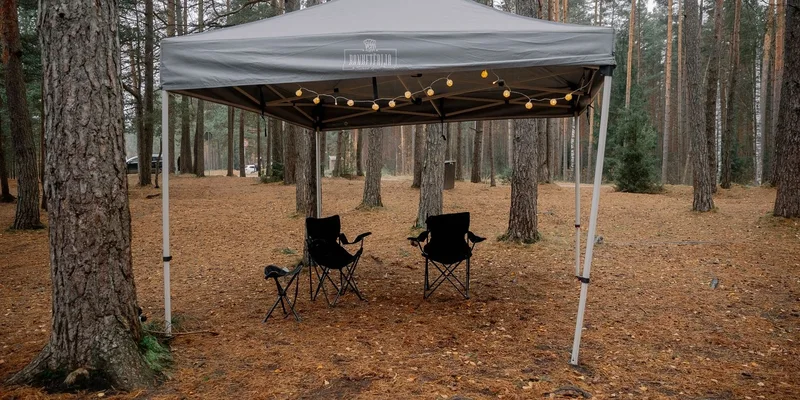
A straight leg ten by ten pop up is the standard campground answer, and it covers a table with room for people to move around it.

Windy or Coastal Sites
A peaked and vented top handles gusts better than a flat one, which is worth paying for if your usual sites are exposed.

You Need Sides As Well As a Roof
Sidewalls turn a canopy into a windbreak and a rain shelter, and they clip on to most frames as an accessory. They also increase the load on the anchors considerably, so anchor accordingly.

Bugs Are the Problem, Not the Sun
A screen shelter with mesh walls is a different product from a shade canopy, and it is what you want near water in mosquito season.

Anchoring That Actually Holds
Whatever canopy you buy, plan the anchors as part of it. Weight bags and long steel stakes are the two items that decide whether the canopy survives the season.

Canopy, Tarp or Screen Shelter
These three solve overlapping problems, and picking the wrong one is a common source of frustration. The table sets out what each is genuinely for.
| Option | Best at | Weak spot | Setup |
|---|---|---|---|
| Pop up canopy | Shade over a fixed area | Lift in wind if unanchored | Minutes, one or two people |
| Tarp with poles and lines | Flexible shape, storm angles | Needs skill and anchor points | Longer, more rope work |
| Screen shelter | Insects and dining | Little sun protection at low angles | Similar to a small tent |
Setting One Up Without Damaging It
Two people, one at each side, walking the frame open together is how a pop up canopy is meant to go up. Forcing one corner while the opposite side is still folded is what bends trusses, and a bent truss never quite folds properly again.
Raise the legs a notch at a time, going around the canopy rather than fully extending one leg first. Then stake or weight all four legs before anybody puts a chair under it, because the gust that matters always arrives during the ten minutes when the canopy is up and unanchored.
Take It Down for Weather and for the Night
Canopies are day structures. Drop the top or take the whole thing down before a storm and before bed, and lower it if you leave the site for a long hike. Nothing about this is optional if you want the canopy to last more than a season.
Frequently Asked Questions
How do I keep a canopy from blowing away? Anchor all four legs with both stakes and weights where the ground allows, and use weights alone where stakes will not drive. Choose a peaked or vented top if your sites are exposed, and take the canopy down before a storm.
Is a steel or aluminum canopy frame better? Steel is stiffer and less expensive but heavier. Aluminum is easier for one person to handle and resists corrosion better near salt water. Neither survives being left unanchored in wind.
Are straight legs or slant legs better for camping? Straight legs give you the full shaded footprint under the top, which is what you want over a picnic table. Slant legs shade less area than the top dimension suggests.
Can a canopy handle rain? A peaked top sheds rain well. A flat top collects water in a pocket that grows heavy enough to damage the frame, so if you camp in rain, either buy a peaked model or prop the center to create a slope.
Can I leave a canopy up overnight? Better not to. Wind picks up unpredictably at night, and an unattended canopy is the one that ends up in someone else’s site. Drop the top or take it down before bed.
How do I anchor a canopy on a paved or gravel site? Weights rather than stakes. Water filled leg weights or sandbags on each leg are the standard answer where nothing will drive into the ground.
The Bottom Line
A camping canopy is worth having and easy to destroy, and the difference is anchoring. Choose straight legs and a peaked, vented top, buy stakes and weights at the same time, and take it down before storms and overnight. Our camp shade guide compares a canopy against a tarp in more detail, and the camping tarp guide covers the rope and pole route.