Last updated: August 20, 2026
The bottleneck at most camp kitchens is not cooking, it is surface. A two burner stove eats most of a picnic table, the cutting board goes on the cooler lid, and the utensils, the oil, and the paper towels end up in a bag on the ground that somebody kicks over in the dark. A camp table with storage solves that by giving the stove its own stand and putting everything else in pockets, bins, or shelves that travel with the table.
These tables also change how you pack. Instead of a table in one place and a tub of kitchen gear somewhere else, the whole prep station comes out of the car as one unit and goes back the same way. This guide covers the formats that exist, what storage actually means on each of them, and how to pick the one that matches your site and your trunk.
This article contains affiliate links. If you buy through them, we may earn a commission at no extra cost to you. Learn more.
Quick Answer
Which camping table with storage should you buy?
- Full camp kitchen: a cook station with a stove bay, side tables, and a lower rack.
- Table plus organizer: an aluminum table with hanging bags for utensils and spices.
- Small site or small car: a compact table with a mesh undershelf instead of bins.
- Group cooking: a wide station with a sink tub or a dish bay built in.
Bottom line: buy for the stove you already own, because stove bay width is what most often rules a model out.
What Storage Means on a Camp Table
Storage on a camp table comes in three forms: hanging bags, an open lower shelf or rack, and a dedicated bay sized for a stove or a wash tub. Each solves a different problem. Bags keep small items sorted and quiet, shelves hold bulky things you grab often, and a bay turns the table into a stand rather than just a surface.
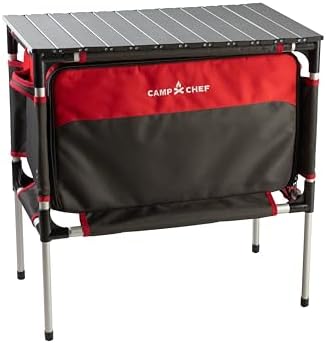
Camp Chef’s Sherpa table is the clearest example of the bag approach: the listing describes an aluminum tabletop of about 27 by 17 inches at roughly 28 inches high, with four removable padded storage bags, one of which is lined so it can serve as a wash basin. That is the pattern most bag equipped tables follow, and the bags are what you actually pack the kitchen into at home.
Cook Stations Are a Different Category
A cook station is a taller, wider unit built around a stove. GCI Outdoor’s Slim Fold Cook Station, for instance, is described with four multi use side tables, a storage rack underneath, and a paper towel holder, which is a fair summary of what separates a station from a table with a shelf. You get more work surface at the cost of a bigger folded footprint.
The trade is real. Stations are the better choice if you cook full meals for a family and camp on drive up sites. If you move camp often or share a small site, a plain table with an undershelf packs faster and is easier to reposition when the wind shifts.
Measure the Stove Before the Table
The single most common return in this category is a table whose stove bay or main panel is narrower than the stove the buyer already owns. Two burner propane stoves vary in footprint by brand and model, so measure yours, note the width and depth with the wind screens folded down, and compare against the listed bay dimensions rather than the overall table width.
Height matters almost as much. A station that puts the burners at comfortable standing height keeps you out of a stooped posture for an hour of cooking, and it keeps the flame further from little hands. If the table is adjustable, check the range rather than assuming the tallest setting is stable enough to cook on.
Trunk Depth and Folded Thickness
Cook stations fold flat but stay long, usually the longest single item in the trunk after the tent. Measure your cargo floor from the seat back to the closed hatch and compare it to the folded length on the listing. If it does not fit flat, it rides on top and blocks the rear window.
Tables with hanging bags pack differently: the frame goes in flat and the bags go wherever they fit, or better, get loaded as your kitchen bins so they do double duty.
Camp Tables With Storage by Situation
Storage needs follow the way you cook. A family cooking three meals a day wants a station with bays and a rack, a couple heating one pot wants a table with an undershelf, and a group cooking together wants width and a wash setup. Match the situation, then compare within that group.
Best for a Family Site With a Two Burner Stove
A full cook station gives the stove its own bay at standing height, with side tables on both flanks for a cutting board and a plate stack, and a rack underneath for the oil, the pot, and the dish tub. This is the format that most changes how a family site feels, because the picnic table stops being the kitchen.

Best for Packing the Kitchen Into the Table
An aluminum table with removable padded storage bags lets you load utensils, spices, and the coffee kit at home and carry them out as one unit. Camp Chef lists a lined bag on the Sherpa that doubles as a basin, which is the kind of detail that saves a separate tub.
Best for a Small Site or a Full Trunk
A compact folding table with a mesh undershelf carries less but sets up in seconds and takes far less floor space. It suits couples, small sites, and anyone who wants a table that can also work as a side table beside the chairs after dinner.

Best for Group Cooking and Dishes
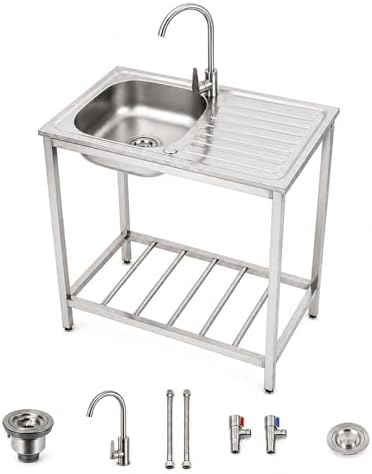
A wider station with a sink tub or a dedicated dish bay keeps washing off the food prep surface, which matters when four people are cooking and clearing at once. Pair it with a water jug on the lower rack so the wash station has its own supply.
Best for Adding Storage to a Table You Already Own
If your current table is fine but the clutter is not, a hanging organizer that straps to the table leg or edge adds pockets without adding a new table. It is the cheapest fix in this category and the easiest to pack.

Comparing the Storage Formats
The four formats below cover almost everything sold as a camping table with storage. The differences that matter are how much surface you get, whether the stove has a home, and how big the thing is once it is folded. Check the specific dimensions on the listing before ordering, since they vary widely within each format.
| Format | Storage type | Stove handling | Suits |
|---|---|---|---|
| Cook station | Side tables plus lower rack | Dedicated bay at cooking height | Family sites, full meals |
| Table with bags | Removable padded bags | On the tabletop | Packing the kitchen as one unit |
| Table with undershelf | Open mesh or fabric shelf | On the tabletop | Small sites, quick setup |
| Station with wash bay | Rack plus tub or basin | Bay plus separate wash area | Groups, dish heavy trips |
What Actually Wears Out
Fabric is the first thing to go. Hanging bags and mesh shelves take the sun, the rain, and the weight of things they were never meant to hold, and the seams or the hook tabs give out before the frame does. Buying a model whose bags are removable means you can replace or repurpose them without replacing the table.
Hinges and leg locks are the second. Anything folded away damp corrodes at the pivots. Wiping the frame down and letting the fabric dry fully before storage is the whole maintenance routine.
Heat and the Tabletop
Aluminum tops handle a hot pan far better than plastic or laminate ones, which is why manufacturers such as GCI Outdoor call out heat resistant aluminum tabletops on their camp tables and stations. That does not make any surface a trivet, and the maker’s own guidance on setting a lit stove directly on the table is worth reading rather than assuming.
Keep the stove itself on the bay or panel the maker intended, and keep the propane cylinder off the fabric shelf. Combustion appliances belong outdoors and in open air, never inside a tent, a canopy with the walls down, or an enclosed space, unless the manufacturer publishes an explicit indoor rating for that exact model.
Frequently Asked Questions
What is the difference between a camp table with storage and a camp kitchen? A camp kitchen or cook station is taller and wider, with a dedicated stove bay, side tables, and a lower rack. A table with storage is a normal camp table plus bags or a shelf. The station replaces the picnic table, the table supplements it.
Will my two burner stove fit? Only if you measure. Stove footprints differ between brands and models, so note the width and depth of yours with the wind screens folded and compare against the bay dimensions on the listing rather than the total table width.
Can I put a lit camp stove on the table? Follow the manufacturer’s instructions for both the table and the stove. Aluminum tops are described as heat resistant by several makers, but stove placement, clearances, and fuel handling come from the appliance manual, not from a general rule.
How much storage do I actually need? Enough for utensils, a cutting board, cooking oil, dish soap, paper towels, and a trash bag. That is the list most campers keep reaching for. Anything beyond it usually lives better in a bin in the car.
Is a station worth it if the site already has a picnic table? For families cooking real meals, usually yes, because the picnic table then stays free for eating and for the kids. For a couple heating one pot, a table with an undershelf is normally enough.
The Bottom Line
Buy the storage format that matches how you cook, but choose the specific model on stove fit, working height, and folded size. Measure your stove and your trunk before you order, prefer removable bags over sewn in pockets so you can pack the kitchen at home, and keep every combustion appliance outdoors and in open air. For the wider view of camp cooking surfaces, see our camp kitchen table guide, and for keeping the rest of the gear sorted, the camp gear organizer guide.