Last updated: August 20, 2026
Every car camper eventually hits the same wall. The gear fits in the trunk on the way out and refuses to fit on the way home, and somewhere in the middle of that weekend you spent twenty minutes digging through grocery bags looking for the can opener. Loose stuff sacks and cardboard boxes are what make packing feel like work.
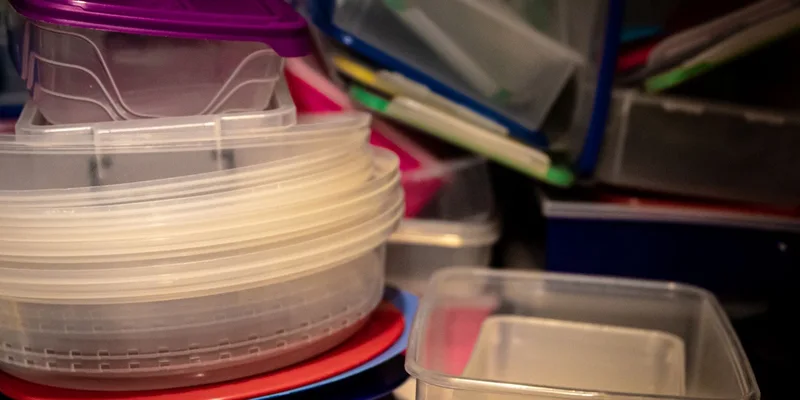
Hard bins fix the packing problem and the finding problem at the same time, because the same things live in the same box on every trip. Storage boxes for camping are not all equal, though. A thin clear tote from a discount aisle cracks at the corners after two summers in a hot garage, and a lid that only presses on will let rain and road dust into your bedding on an open truck bed.
This article contains affiliate links. If you buy through them, we may earn a commission at no extra cost to you. Learn more.
Quick Answer
Which storage bins actually work for camping?
- Opaque, thick walled totes with latching lids hold up far better than thin clear storage bins, especially in a hot car or a cold garage.
- Two or three medium bins beat one huge one, because a full large bin gets too heavy to lift over a tailgate on your own.
- Match the footprint to your trunk or truck bed first, then stack, instead of buying the biggest box on the shelf.
- A flat, reinforced lid is what lets you stack; a domed or flexing lid means the top bin slides on every corner.
Bottom line: buy for the lid, the wall thickness and the shape of your cargo bay, not for raw gallon numbers.
What a Camp Storage Bin Actually Has to Survive
A camping bin lives a much harder life than a closet tote. It rides in a trunk that bakes in the sun, gets set down on gravel and pine duff, catches rain in an open bed, carries the weight of other bins on top of it, and then spends the off season in a garage that swings between freezing and hot. Thin plastic fails at exactly those points.
The failure is almost never in the middle of a wall. It is at the corners, where the plastic is thinnest and the stress concentrates, and at the handles, where a stretched grip tears out the first time somebody lifts a full bin by one side. Lids crack along the hinge line for the same reason.
Cold Makes Cheap Plastic Brittle
Polypropylene and polyethylene both get stiffer and more brittle as the temperature drops, which is why bins that survived all summer split when you drag them across a cold concrete floor in January. If your gear lives in an unheated garage, wall thickness matters more than it does for a bin that stays indoors. Heavier grades of plastic cost more and weigh more, and that weight is the honest trade.
Camp Storage Bins by Situation
The right bin depends far more on where it rides and what goes inside than on any single specification. A box that is perfect strapped into a pickup bed is the wrong shape for a hatchback, and the tote that holds bedding beautifully is a bad home for a stove and fuel canisters. Pick by situation and the size sorts itself out.
Gear That Rides in an Open Truck Bed
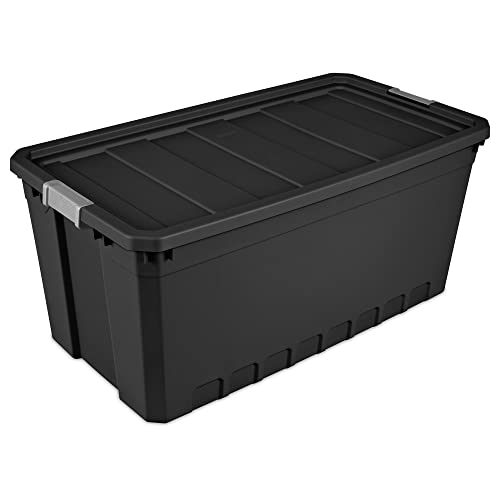
An open bed means weather, road grit and highway wind, so this is the one position where a genuinely rugged, lockable box earns its keep. Look for thick walls, metal or reinforced latch points and a grooved lid that sheds water instead of pooling it. Rubbermaid’s ActionPacker line is the reference point most truck campers land on, and it is sold in several capacities.

A Trunk or Hatch That Has to Close Flat
In a sedan or a small SUV, height is the constraint, not volume. A low profile tote that slides under the parcel shelf lets you keep the rear window clear, which matters more than most people expect on a night drive. Two shallow bins side by side usually beat one deep one in this bay.
The Kitchen Kit That Comes Out First
Cookware, utensils, spices and the stove want a bin with a hinged or split lid, so you can open it on the table without unstacking whatever sits on top. Keeping the kitchen in its own box also means you can carry the whole cooking setup to a picnic table in one trip and leave the rest packed.

Bedding, Clothing and Other Soft Gear
Sleeping bags, pillows and spare layers do not need a crush proof box, they need volume and a lid that keeps dust out. A large wheeled tote is easier on your back at the end of a long weekend, and wheels turn the walk from a parking spot to a walk in site into one trip instead of three.

Comparing the Common Bin Types
Four styles cover almost everything car campers use, and each one trades something away. Rugged trunks give up light weight, clear totes give up durability, collapsible crates give up water resistance, and wheeled totes give up stackability once the wheels stick out. Matching the style to the job is most of the decision.
| Bin type | Lid and seal | Stacks loaded | Best job at camp |
|---|---|---|---|
| Rugged latching trunk | Grooved, latching, often lockable | Yes, flat lid | Truck bed, tools, stove and fuel |
| Clear utility tote | Press on, no real seal | Only lightly loaded | Indoor storage, dry goods, off season |
| Hinged lid camp box | Split or hinged, opens in place | Yes, if lid is flat | Kitchen kit at a picnic table |
| Wheeled tote | Latching, deep body | Bottom of the stack only | Bedding, clothing, long carries |
| Collapsible crate | Open or soft top | No when folded flat | Firewood, wet gear, site trash |
Lids, Latches and Keeping Water Out
Almost no consumer storage bin is genuinely waterproof, and any listing that suggests otherwise is worth reading twice. What a good lid does is shed rain that falls on it and keep out blown dust, which is the realistic threat for a bin sitting on a site or in a bed. Standing water and submersion are a different problem entirely.
Look for a double walled lid with a raised rim, a groove that channels water toward the edges rather than a flat top that puddles, and latches that pull the lid down against the body instead of just clipping over it. If you need real protection for electronics or documents, put those in a sealed case inside the bin rather than trusting the bin itself.
Size, Weight and Stacking in the Car
The single most common sizing mistake is buying one enormous bin. A large tote filled with cast iron and canned food becomes a two person lift, and it will not clear a tailgate lip cleanly. Two mid size bins hold the same gear, load faster, and let you pull just the one you need at a rest stop.
Measure the flat floor of your cargo bay, not the widest point, because wheel arches steal the corners. Then check that your chosen footprint fits twice across, or once across with room for the cooler. Bins that nest when empty save garage space, but only nest if you buy the same model rather than mixing brands.
Stack in the Order You Unload
Load so the last bin in is the first one you need. In practice that means the kitchen box and the lantern go on top or nearest the tailgate, bedding goes deep, and the off season spares stay home. Our camp gear organizer guide covers the labeling and packing list side of this in more detail.
Mistakes That Turn a Good Bin Into a Chore
Most bin regrets trace back to four decisions: buying too big, buying too thin, mixing sizes so nothing stacks, and storing food where animals can smell it. The first three cost you convenience. The fourth can cost you a whole night of sleep and get a site closed to future campers.
A plastic storage bin is not animal resistant, and it should never be treated as a substitute for a hard sided vehicle, a campground food locker or a certified container where one is required. Some land managers require specific bear-resistant storage in certain areas, and that requirement is set locally, so check the rules for the site you are visiting before you rely on any container.
Frequently Asked Questions
What size storage bin is best for camping gear? Mid size bins in the range that one adult can still lift loaded are the practical sweet spot. Volume matters less than the footprint fitting your cargo floor and the loaded weight staying liftable over a tailgate.
Are clear storage totes good for camping? They are fine for indoor and off season storage, where seeing the contents helps. For the road they are usually the wrong choice, because the thinner clear plastic cracks sooner at corners and the press on lids do not seal against dust or rain.
Can I store food in a camping storage bin? Only when the container is not what stands between wildlife and the food. A plastic tote is not a bear-resistant container, so food belongs in a hard sided vehicle, a campground locker or a container the land manager accepts. Check the local requirement for your site.
How many bins do I need for a family camping trip? Most families settle on three or four: kitchen, bedding and clothing, shelter hardware, and a small catch all for lights, batteries and first aid. Splitting by function beats splitting by who owns what.
Do camping storage bins keep water out? They shed rain that lands on the lid and keep out blown dust, which covers most real situations. Treat none of them as waterproof, and put anything that truly must stay dry into a sealed bag or case inside the bin.
The Bottom Line
Good camping storage bins are chosen by lid, wall thickness and footprint, in that order. A rugged latching trunk handles the truck bed, a low profile tote fits a sedan hatch, a hinged lid box keeps the kitchen usable on a table, and a wheeled tote saves your back on the walk in. Buy within one product line so everything stacks, keep each bin light enough to lift alone, and never treat a plastic tote as animal resistant. Read also our chuck box guide for the kitchen specific version of this problem, and how to store camping gear for winter before the bins go back on the shelf.