Last updated: August 20, 2026
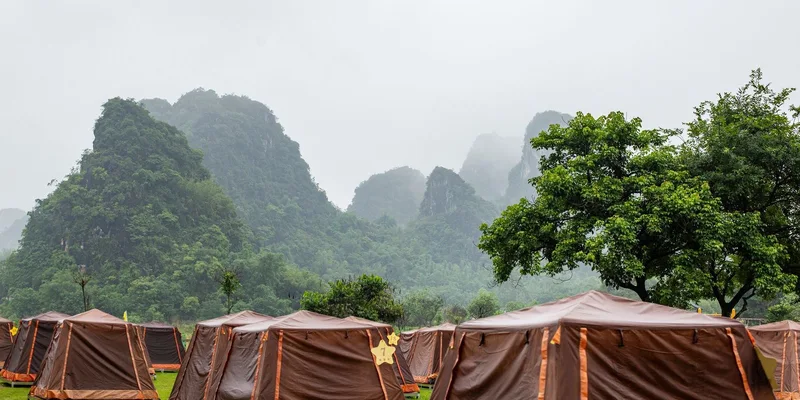
Rain does not ruin a camping trip. Wet bedding ruins a camping trip. The two are only loosely connected, because most of the water that ends up inside a tent walked in on somebody’s feet, condensed on the inner wall overnight, or wicked up through a groundsheet that was pitched in a hollow. Fix those three paths and a rainy weekend becomes merely damp.
The other half of the problem is morale. A site with nowhere dry to stand empties out by lunchtime, and everyone sits in the car. A tarp over the picnic table changes that completely, which is why experienced car campers treat covered space as the first purchase for wet weather rather than better rain jackets.
This article contains affiliate links. If you buy through them, we may earn a commission at no extra cost to you. Learn more.
Quick Answer
How do you camp in the rain and stay comfortable?
- Put up covered space over the table first, because a dry place to stand and cook is what keeps the trip going.
- Pitch on ground that drains, not in the flattest hollow, and get the fly fully guyed out so it stays off the inner wall.
- Create a boundary at the tent door: shoes off, wet layers stay in the vestibule, nothing wet crosses the threshold.
- Ventilate more, not less, since a closed tent full of breathing people produces the condensation people mistake for a leak.
Bottom line: covered space, drainage, a door boundary and ventilation solve almost all of it.
Put Covered Space Up First
When rain is in the forecast, the tarp or canopy goes up before the tent, which is the one time the normal setup order changes. A covered area over the picnic table gives you somewhere dry to organize gear, cook, eat and wait out a squall. Without it, everyone retreats to the car and the trip effectively ends at the first shower.
Pitch the cover with a deliberate slope so water runs off one corner instead of pooling in the middle. A pool of water on a flat tarp gets heavy fast and will either stretch the fabric or collapse the whole thing onto your table. A single pole or a raised guyline at one edge is all it takes.
A Tarp Is More Flexible Than a Canopy Here
Canopies are faster and more comfortable to stand under, but a tarp can be pitched at an angle, wrapped around a windward side, or slung between trees where a canopy frame will not fit. Many wet weather setups use both. Our camping tarp guide covers sizes, grommets and ridgeline options.

Pitch for Drainage, Not for Flatness
The flattest patch on a site is often the lowest, and in heavy rain the low ground becomes the drain. Look for ground with a gentle slope that lets water pass by, ideally slightly raised, and avoid obvious channels where water has clearly run before. Ground that is already soft underfoot in dry weather will be a bog by morning.
Do not dig trenches around the tent. It is prohibited or discouraged in most managed areas because it damages the site, and Leave No Trace guidance at lnt.org covers this along with the rest of site selection. Move the tent instead, and check the land manager’s rules for the site you are visiting if you are unsure what is allowed.
The Groundsheet Has to Be Smaller Than the Floor
A footprint or tarp that sticks out beyond the tent floor catches rain running off the fly and channels it directly underneath you. Tuck the edges in so nothing protrudes. This one detail causes a surprising share of the wet floors that get blamed on a leaking tent.
Condensation Versus an Actual Leak
Most reported tent leaks are condensation. Warm, damp air from breathing and wet gear meets cold fly fabric and turns back into water, which then drips or wicks where the inner touches the fly. It appears overnight, is worst near the ceiling and the corners, and gets worse when people close every vent to feel warmer.
A real leak has a source you can trace: a seam whose tape has lifted, a pinhole, an abraded patch, or water pushing through a floor pressed hard against wet ground. Our guide to stopping a tent leaking walks through finding and fixing each of those.
Ventilate Even When It Feels Wrong
Open the high vents and crack a low one to create airflow through the tent. It feels counterintuitive on a cold, wet night, but moving air carries moisture out instead of letting it collect on the walls. Keeping the fly guyed out so it never touches the inner does the other half of the job.
The Door Boundary That Keeps the Inside Dry
Decide on a threshold rule before the first shower and enforce it with everyone. Shoes come off in the vestibule, wet outer layers stay in the vestibule, and nothing wet passes the door. A small mat or a folded towel at the entrance gives people a place to stand while they change over, which is what makes the rule survivable.
Inside, keep a dedicated dry bag or dry bin for the things that must stay dry: spare clothes, electronics, the sleeping bag if it is not in use. Once a sleeping bag gets damp at camp it is difficult to dry, and that single item does more to determine how the night goes than anything else you packed.

Cooking and Warmth Without Bringing Flame Inside
Cook under the tarp or canopy, never inside the tent and never in a closed vestibule. Stoves, grills and propane fire pits are outdoor appliances that produce combustion gases, and they belong outside any enclosed space unless the manufacturer publishes an explicit indoor rating for that specific model. Follow the clearance instructions in the manual for whatever you own.
For warmth without a flame, insulate rather than heat. Dry socks, a hat, an insulating layer under your sleeping pad and a camping blanket over your legs while sitting will do more on a wet evening than any appliance. If you do use any fuel burning heater at camp, run a battery powered carbon monoxide alarm alongside it and read the manufacturer’s instructions first.
What Goes Wrong and What Fixes It
Wet weather failures repeat themselves across almost every campground. Each one has a cheap fix, and most of the fixes are habits rather than purchases. This is the short list worth reading before a rainy forecast turns into a rainy weekend.
| Problem | Actual cause | Fix at the site | Fix before the trip |
|---|---|---|---|
| Wet tent floor | Footprint sticking out past the floor | Tuck the edges under | Trim or fold the groundsheet |
| Dripping ceiling | Condensation, closed vents | Open high and low vents | Pack a small microfiber towel |
| Soaked bedding | Wet gear carried through the door | Vestibule rule, mat at the door | Dry bag for bags and clothes |
| Sagging tarp | Pitched flat, water pooling | Drop one corner to shed water | Bring an extra pole or guyline |
| Nowhere to be | No covered common area | Tarp over the picnic table | Buy shade or tarp before the trip |
Drying Out at Home
Nothing goes back in a bin wet. A tent packed damp will mildew and the coating can start to fail, and a damp sleeping bag loses loft in storage. Pitch the tent in a garage or hang the fly over a rail until it is genuinely dry to the touch, including the seams and the stuff sack.
Load the car so that wet items ride on top, which happens automatically if you break camp in reverse order of setup. That way the tent and fly come out first at home rather than being buried under bins you will not unload until next weekend.
Frequently Asked Questions
Is it worth camping if rain is forecast? Usually yes, if you have covered space. A tarp or canopy over the table gives everyone somewhere dry to cook and sit, which is the difference between a damp weekend and a weekend spent sitting in the car.
Why is the inside of my tent wet when it is not leaking? Condensation. Breath and wet gear raise the humidity inside, the moisture condenses on the cooler fly, and it drips or wicks where the inner touches it. Open the vents and keep the fly guyed away from the inner wall.
Should I dig a trench around my tent in the rain? No. It damages the site and is discouraged or prohibited in most managed areas. Move to ground that drains instead, and check the land manager’s rules for the site you are visiting.
Can I cook inside the tent when it rains? No. Cook under a tarp or canopy outside. Stoves and other combustion gear belong outside any enclosed space unless the manufacturer publishes an explicit indoor rating for that model, and the manual’s clearance instructions apply.
How do I keep sleeping bags dry while camping in the rain? Keep them in a dry bag when not in use and enforce a threshold rule at the tent door: shoes and wet layers stay in the vestibule. A damp bag is the hardest item to recover at camp.
What do I do with a wet tent when I get home? Dry it fully before storing it. Pitch it in a garage or hang the fly until the fabric, seams and stuff sack are dry to the touch, since packing it damp invites mildew and coating damage.
The Bottom Line
Camping in the rain is manageable once you accept that the enemy is wet bedding rather than wet weather. Put covered space up first, pitch on ground that drains with the footprint tucked in, enforce a door boundary so nothing wet crosses the threshold, and ventilate hard to keep condensation off the walls. Keep all flame outside the tent, insulate instead of heating, and dry everything properly at home. Read also our camping tarp guide and how to stop a tent leaking.