Last updated: August 20, 2026
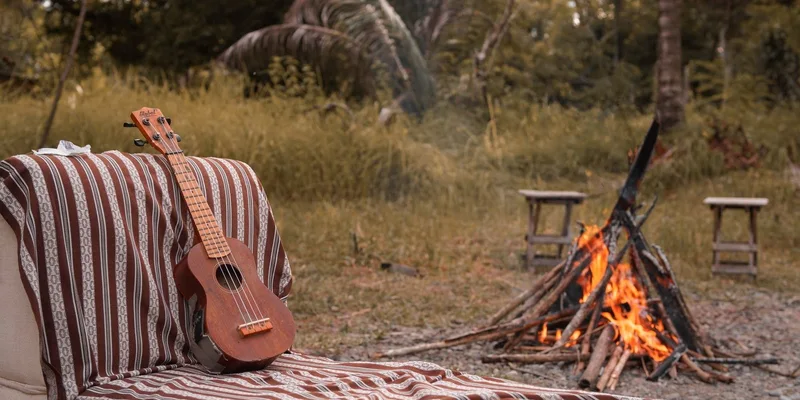
The coldest hour of a camping trip is rarely in the tent. It is the stretch between sunset and bedtime, sitting in a camp chair with the fire going on one side and a cold breeze on the other, when everybody quietly starts putting on more layers. A camping blanket is the item that covers that hour, and it is the one piece of gear that gets used on trips where nothing else does.
The category has also split into three quite different products that share a name: synthetic puffy blankets, down blankets, and traditional wool. They behave differently around a fire, in damp weather, and in a trunk. This guide covers which one suits fireside sitting, which suits a cold night in the tent, and what the sizes on the listings actually mean in practice.
This article contains affiliate links. If you buy through them, we may earn a commission at no extra cost to you. Learn more.
Quick Answer
Which camping blanket should you buy?
- Sitting by a fire: wool, because synthetic and down shells are easily damaged by sparks.
- Damp evenings and general use: a synthetic puffy blanket with a water resistant finish.
- Packing small for weight and warmth: a down blanket, kept dry.
- Sharing under one blanket: a two person size, which is much wider than a single.
Bottom line: pick by where you will sit, then check the listed dimensions, because blanket sizing varies far more than sleeping bag sizing.
Three Materials, Three Jobs
Synthetic puffy blankets are quilted shells filled with polyester insulation, usually with a durable water repellent finish. Down blankets use the same construction with duck or goose down, which packs smaller for the same warmth. Wool is a woven fabric with no shell at all, heavier and bulkier but far more tolerant of sparks and damp.
Those differences matter more outdoors than they do at home. A blanket that lives in a camp chair beside a fire ring faces a completely different set of hazards than one that stays inside the tent, and buying the wrong material for the job is the usual reason a camping blanket looks tired after one season.
The Recycled Synthetic Standard
Rumpl is the reference product in the synthetic category. The Original Puffy is listed with recycled polyester insulation and a durable water repellent coating for water, stain, and odor resistance, in a one person size of about 52 by 75 inches and a larger size of about 84 by 80 inches. Those numbers give you a sense of how much wider a shared blanket needs to be.
Down versions exist alongside them. Rumpl lists its Down Blanket with certified duck down at 600 fill power, a one person size of about 52 by 75 inches at roughly 1.2 pounds packing to about 5 by 10 inches, and a two person size of about 80 by 84 inches at around 2 pounds. Down is the packing winner and the wet weather loser.
Sparks Are the Deciding Factor
Nylon and polyester shells melt when an ember lands on them, and a single spark leaves a permanent hole that leaks insulation. This is the most common way camping blankets get ruined, and it happens at the exact place people most want to use them, which is a camp chair pulled up to a fire.
Wool behaves differently. It is a traditional fireside fabric because it does not melt the way synthetics do and tends to smolder rather than run, which is why wool blankets have been the campfire choice for generations. That is a reason to prefer wool near a fire, not a claim that any fabric is immune to damage.
Practical Fireside Habits
Sit back from the ring, keep the blanket off the ground where embers land, and shake it out before folding rather than after. If you only own a synthetic blanket, an old wool blanket kept purely for fire nights is a cheap way to protect the good one.
None of this replaces normal fire care. Keep fires attended, follow the campground’s method for putting them fully out, and check current fire restrictions with the land manager or county fire authority before you plan an evening around one at all.
Camping Blankets by Situation
Blanket choice follows use. Below are the five situations that cover most car camping: fireside sitting, damp shoulder season evenings, packing small, sharing, and adding warmth inside a sleeping bag on a cold night. Check the listed dimensions on the model you are considering, since sizes vary widely.
Best for Sitting Around the Fire
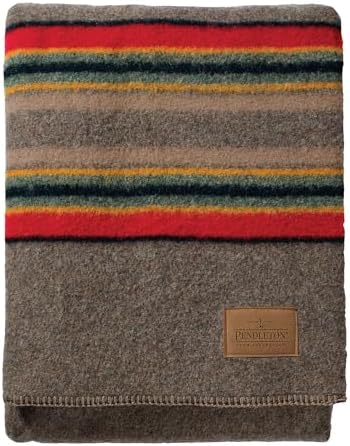
A heavy woven wool blanket is the traditional answer and still the right one. It is bulky and it is not waterproof, but it tolerates sparks far better than a quilted shell and it holds warmth even when it picks up damp from a chair.
Best All Round Synthetic
A recycled polyester puffy blanket with a water repellent finish handles dew, spilled drinks, and a damp picnic table bench, and it dries far faster than wool or down. This is the version most families use for everything except sitting close to the flames.

Best for Packing Small
A down blanket gives the most warmth for the least packed size, which matters when the trunk is full. Keep it dry, because down loses loft when wet and takes a long time to recover, and check whether the shell has a water repellent finish.
Best for Two People Under One Blanket
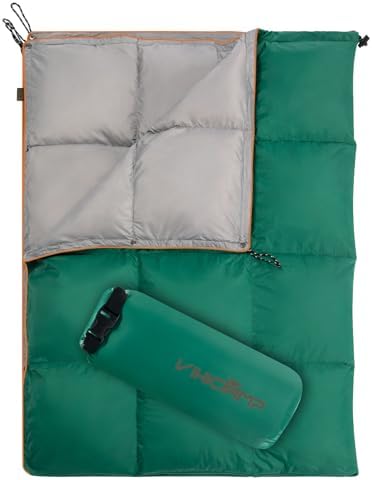
Two person blankets are much wider rather than merely longer, which is what makes sharing work in two camp chairs pushed together. Compare the listed width against a single before assuming a large single will do the job.

Best for Extra Warmth Inside a Sleeping Bag
A lightweight fleece or synthetic blanket used as a liner adds warmth inside a bag on an unexpectedly cold night, and it washes far more easily than the bag itself. It is also what most people end up handing to the child who is cold at midnight.

Comparing the Materials
The three materials trade against each other on four things: how they handle sparks, how they handle damp, how small they pack, and how easy they are to clean. There is no single winner, which is why many car campers end up with a wool blanket in the fire chair and a synthetic one in the tent.
| Material | Near a fire | When damp | Packed size |
|---|---|---|---|
| Wool | Best tolerance of sparks | Stays warm, dries slowly | Bulkiest |
| Synthetic puffy | Shell melts from embers | Sheds light moisture, dries fast | Medium |
| Down | Shell melts, filling escapes | Loses loft, slow to recover | Smallest |
| Fleece | Melts, but cheap to replace | Dries quickly | Medium, no compression |
Sizing, Features and What to Ignore
Read the dimensions rather than the name. Sizes described as one person, throw, and two person vary between brands, and a two person blanket is defined by width. If the blanket will go over two people in camp chairs, width is the number that decides whether it works.
Corner loops, snap buttons, and stuff sacks are the features that get used. Loops let you stake a blanket down as a ground layer on a windy day, snaps let a blanket close into a poncho or a chair cover, and an attached stuff sack is the only reason a blanket ever goes back in its bag.
Cleaning and Storage
Follow the manufacturer’s care instructions, since down and treated synthetics both have specific washing requirements and a water repellent finish can be damaged by the wrong detergent. Wool usually asks for cold water or specialist cleaning, and it should never go through a hot cycle.
Store blankets loose and dry rather than compressed in a stuff sack all winter, which flattens insulation over time. Our winter storage guide covers the same principle for bags and pads.
Frequently Asked Questions
What is the best camping blanket for sitting by a fire? Wool. Synthetic and down blankets have nylon or polyester shells that melt when an ember lands on them, leaving a permanent hole. Wool is the traditional fireside fabric because it tolerates sparks far better.
Is a camping blanket warmer than a sleeping bag? No. A blanket is open at the sides and has no hood or draft collar, so it loses heat a bag would trap. Blankets are for sitting, for layering inside a bag, and for the hour before bed, not as a replacement for a bag.
Are waterproof camping blankets actually waterproof? Most are water resistant rather than waterproof. A durable water repellent finish sheds dew, light rain, and spills, but a blanket left out in steady rain will wet through. Check what the listing claims for the specific model.
What size camping blanket do I need for two people? Look at the width rather than the label. Two person blankets are typically far wider than singles, and it is the width that decides whether two people in adjacent camp chairs can both stay covered.
Down or synthetic for a camping blanket? Down packs smaller for the same warmth, synthetic handles damp much better and costs less. For car camping, where packed size rarely decides anything, most people are better served by synthetic.
Can I use a camping blanket as a ground cover? Yes, and many have corner loops for staking it down. Expect it to pick up dirt and moisture from below, so keep the one you use on the ground separate from the one that goes in the tent.
The Bottom Line
Buy for where you will sit. Wool for the fire chair, a water resistant synthetic puffy for everything else, and down only if packed size genuinely matters and you can keep it dry. Check the listed dimensions rather than the size label, and prefer models with corner loops and an attached stuff sack. For the rest of the cold evening problem, see our guide to staying warm in a tent and the cold weather camping guide.