Last updated: August 20, 2026
Most camping hacks fail the same test. They look clever in a short video, they require an item you would not otherwise own, and they solve a problem you did not have. A hack is only worth knowing if it either saves real time at the site or removes something from the car, and the honest ones do both.
What follows is a filtered list. Every item here comes from a recurring car camping annoyance, uses something you already carry or can carry in almost no space, and works in the dark, in the wind and when you are tired. The ones that did not survive that filter are named at the end, because knowing which popular tricks to skip is just as useful.
This article contains affiliate links. If you buy through them, we may earn a commission at no extra cost to you. Learn more.
Quick Answer
Which camping hacks are actually worth doing?
- Prep and freeze meals at home, so the cooler works as insulation and the first night needs no cooking.
- Wrap duct tape around a pencil or a lighter instead of carrying the roll, and keep a repair pouch in the shelter bin.
- Strap a headlamp around a water jug to turn it into a soft area light with no extra gear.
- Pack in the reverse of your unload order, so the tent comes out first and the wet fly rides on top going home.
Bottom line: keep the hacks that save time or space, and skip anything that adds a single purpose gadget.
Kitchen Hacks That Save Real Time
Camp cooking eats more of a weekend than anything else, and almost all of that time is prep and cleanup rather than cooking. Doing the prep at home, in your own kitchen with a sink and a cutting board, moves the work to where it is easy and leaves you with assembly at the site.
Freezing a meal or two before the trip does double duty. Frozen food acts as an ice block in the cooler for the first day, then thaws in time to cook, which means fewer bags of ice and less water sloshing around the bottom. Our easy camping meals guide covers what actually survives that treatment.
Pre Crack, Pre Chop, Pre Mix
Eggs in a sealed bottle, onions and peppers chopped into one container, dry pancake mix already measured with just water to add. Each of these removes a cutting board, a bowl and a cleanup from your morning. Label the containers, because unmarked liquids in a cooler all look the same by day two.
Light Hacks That Beat Buying More Lanterns
Strapping a headlamp around a translucent water jug with the beam pointing inward turns the whole jug into a soft, glare free area light. It costs nothing, uses gear you already brought, and gives better light for a picnic table than a bare headlamp pointed at whoever is talking.
The other free lighting win is discipline rather than equipment. Use red light after dark inside the tent and around the site, aim lights downward, and never sweep a beam across a neighbor’s site. Red light preserves your night vision and it is the single most appreciated piece of campground etiquette after quiet hours.
Clip a Light Where You Will Reach for It
Clip a small light to the tent ceiling loop before dark, not after. Fumbling for a headlamp inside a sleeping bag at two in the morning is the reason people trip over guylines on the way to the bathhouse. One light that stays in a known place solves it.
Packing and Organization Hacks
Pack the car in the reverse of your unload order. Shelter goes in last so it comes out first, bedding goes deep because it is not needed until the tent is up, and the kitchen sits in the middle where you can reach it at a rest stop. This one habit removes more standing around than any product.
Then take the two minute version of labeling: a printed contents list taped inside each lid, doubling as a packing checklist and as the place you note what ran out. Our camp gear organizer guide covers the full system, and the right storage bins make it stick.
Wrap Tape, Do Not Carry Rolls
Duct tape wrapped around a pencil, a lighter or a water bottle gives you a repair length in a fraction of the space of a roll. The same logic applies to cordage: a few feet of paracord in the repair pouch beats a hundred foot hank you will never fully use.
Site Comfort Hacks
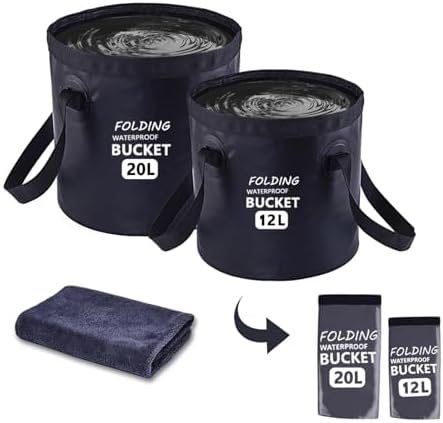
A collapsible bucket is the most useful multi purpose item most campers do not own. It carries water, becomes a dish basin, holds firewood, works as a trash caddy, and folds flat into a gap in a bin. Very few single items replace that many separate objects at a car camping site.
Second on the list is a doormat or old towel at the tent door. It creates the boundary that keeps sand, mud and pine needles out of the sleeping area, and it costs almost nothing. Almost every complaint about a dirty tent traces back to the last two feet before the threshold.
The Hacks Worth Skipping
Some popular tricks are either unsafe, damaging to the site, or simply worse than the normal method. Skipping these saves you a bad night, a fine or a ruined piece of gear, and none of them are as clever as they look in a thirty second clip.
| Popular hack | Why people try it | Why to skip it | Do this instead |
|---|---|---|---|
| Heating a tent with any open flame | Cold nights | Combustion gear belongs outside enclosed spaces | Insulate under you, add layers |
| Digging a trench around the tent | Rain runoff | Damages the site, often prohibited | Pitch on ground that drains |
| Burying trash or food scraps | Saves a trash trip | Attracts wildlife, against Leave No Trace | Pack it out |
| Storing food in a plastic tote | Convenience | Not an animal resistant container | Vehicle or the required local storage |
| Nails or screws into trees | Hanging gear | Damages trees, banned in many areas | Straps around the trunk |
Where the Rules Override the Hack
Several of the most shared camping tricks run into local regulation rather than physics. Food storage requirements, firewood transport rules, where gray water may be poured and whether a fire is permitted at all are decided by the land manager, and they differ between the National Park Service, US Forest Service, BLM land, state parks and private campgrounds.
Leave No Trace guidance at lnt.org covers the general practice for waste, water and site impact, and the specific numbers and requirements come from the agency managing the site you are visiting. When a hack conflicts with either, the hack loses.
Firewood Is the One People Forget
Bringing firewood from home seems harmless and is restricted in many states because of invasive insects. The usual requirement is locally sourced or certified heat treated wood, and the definition of local is set by the state or the agency. Check before you load a truck bed with wood from your own yard.
Frequently Asked Questions
What is the most useful camping hack? Prepping and freezing meals at home. It removes the longest chore at the site, reduces cleanup, and the frozen food acts as an ice block in the cooler for the first day of the trip.
How do I make a lantern out of a headlamp? Strap the headlamp around a translucent water jug with the beam pointing into the water. The jug diffuses the light into a soft area glow that works far better over a table than a bare beam.
Is it safe to heat a tent with a candle or a stove? No. Combustion gear belongs outside a tent and outside any enclosed space unless the manufacturer publishes an explicit indoor rating for that model. Insulate underneath and add layers instead, and run a battery powered carbon monoxide alarm if you use any fuel burning heater at camp.
Can I bring my own firewood camping? Often not. Many states restrict moving firewood because of invasive insects and require locally sourced or certified heat treated wood. Check the rule for your destination before loading wood from home.
What single item replaces the most gear? A collapsible bucket. It carries water, works as a dish basin, holds firewood, serves as a trash caddy, and folds flat into a gap in a storage bin.
Do camping hacks actually save money? The good ones save time and space rather than money. Prepping food at home, wrapping tape instead of carrying rolls, and packing in unload order cost nothing and remove chores from the trip.
The Bottom Line
The camping hacks worth the space are the ones that remove work or remove objects: prep meals at home, use a water jug as a lamp diffuser, wrap tape rather than carry rolls, pack in reverse unload order, and carry one collapsible bucket instead of four single purpose containers. Skip anything that brings flame into a tent, damages a site or ignores a local rule. Read also our camp gear organizer guide and our storage bin guide for the system that makes most of these stick.