
Last updated: August 20, 2026
The complaint about camp showers is almost always the same: not that the water was cold, but that it dribbled. A gravity bag hung from a low branch produces a trickle, and standing under a trickle with soap in your hair on a breezy evening is how people decide camp showers are not worth the trouble.
Pressure is the variable that changes the experience, and there are three different ways to get it. A pressurized tank you pump once before use, a battery driven pump that draws from any container, and height, which is free but usually in short supply. This guide covers what each one really delivers at a site.
This article contains affiliate links. If you buy through them, we may earn a commission at no extra cost to you. Learn more.
Quick Answer
Which portable camping shower gives real pressure?
- Pressurized tank showers hold a charge from a hand or foot pump and give the steadiest spray.
- Battery pump showers draw from any bucket or jug and run until the charge or the water is gone.
- Gravity bags depend entirely on hanging height, which is the thing most sites cannot offer.
- A shut-off trigger on the head is what makes a small tank last a whole wash.
Bottom line: buy pressure and a shut-off, then worry about capacity.
The Three Ways a Camp Shower Makes Pressure
Camp showers create pressure by pumping air into a sealed tank, by driving water with a small electric pump, or by hanging a bag high enough that gravity does the work. Those three mechanisms explain every product in the category, and they behave very differently once you are standing there wet.
Pressurized tanks give the most consistent spray but hold a fixed amount of water. Battery pumps have no capacity limit beyond the container you drop them into, but their output depends on the charge. Gravity bags are the cheapest and the most dependent on your site having a sturdy branch at the right height.
Pressurized Tank Showers
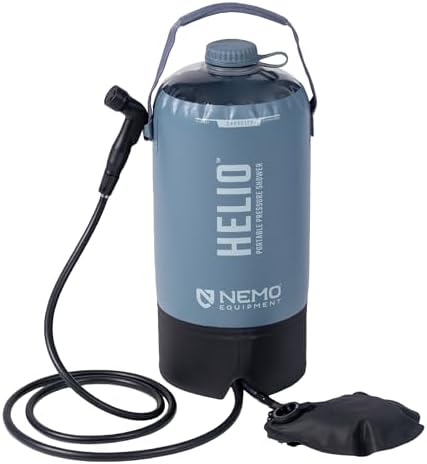
A pressurized shower is a sealed reservoir with a pump built in, usually a foot pump on the larger models. You fill it, pump air in, and the trapped pressure pushes water out of the hose. Nobody has to keep pumping while you wash, which is the main reason these feel like a proper shower rather than an improvisation.
Nemo’s Helio is the best known example of the foot pump design, and RinseKit sells a pressurized chamber version aimed at rinsing off after the beach or the trail. Both publish tank capacity and an approximate spray duration on the listing, and both need repressurizing partway through a longer wash.
What to check before buying
Look at the spray duration the maker quotes rather than the tank size alone, since a wide shower head empties a tank far faster than a narrow one. A trigger or valve on the head that lets you stop the flow while you soap up roughly doubles what a given tank achieves.
Battery Pump Showers
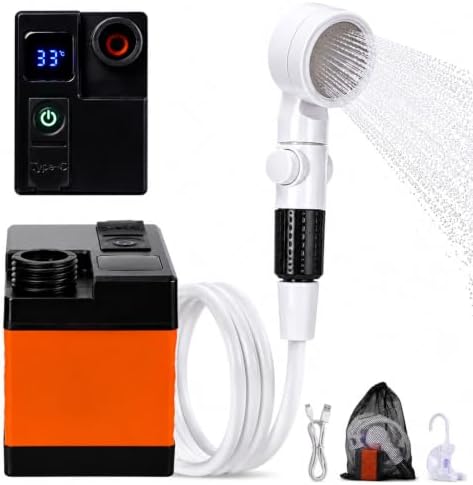
A battery pump shower is a submersible pump on a hose with a shower head on the other end. Drop the pump into a bucket, a jerry can or a pot of water warmed on the stove, switch it on, and it runs until the water or the charge runs out. It is the most flexible format in this category.
Ivation sells the version most car campers encounter, a rechargeable pump with a hose, a hook and a USB charging cable. Runtime per charge is stated on the listing, and it is worth reading, because a pump that outlasts three people washing is a very different product from one that manages one.
Why campers with children like them
The pump does not care where the water comes from. You can mix hot water from a kettle with cold from a jug in a bucket, get the temperature right by hand, and then wash. That control is much harder with a fixed tank that was filled and heated hours earlier.
Gravity Bags and When They Still Make Sense
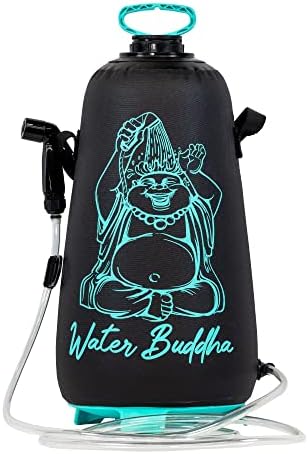
A gravity shower is a bag with a hose and a head, hung as high as you can manage. Flow depends entirely on the height difference, so a bag slung over a low branch produces a dribble while the same bag on a proper hook a foot or two higher becomes usable.
They still make sense as a backup, as a rinse for sandy feet, and for campers who want something with no battery, no pump and nothing to break. Many of them double as solar heaters, which is a separate topic covered in our solar shower guide.
Portable Camping Showers by Situation
Best all-round pressure without a battery
A pressurized tank shower with a foot pump gives a steady spray with nothing to charge and nothing to plug in. It suits families who want a predictable wash at the end of the day and do not want another device competing for the power bank.
Best when you want to control the temperature yourself
A rechargeable submersible pump shower lets you mix water in a bucket to the temperature you want and then wash. It is the most adaptable option and the easiest to share among several people in an evening.
Best simple backup with no power at all
A gravity bag with a shut-off head is the fallback that lives in the trunk and costs almost nothing. Hang it as high as you can, and use the shut-off between rinses so the small volume stretches further.

Best for rinsing gear, dogs and sandy feet
A compact pressurized rinse unit with a short hose handles the jobs that are not really showers: sand off feet, mud off boots, salt off a dog. Keeping this separate from the shower you wash with saves a lot of arguing.
Comparing the Three Designs
| Design | Where pressure comes from | Capacity limit | Suits |
|---|---|---|---|
| Pressurized tank | Hand or foot pump into a sealed tank | Fixed tank volume | Families wanting a steady spray |
| Battery pump | Submersible electric pump | Whatever container you use | Mixing your own temperature |
| Gravity bag | Hanging height | Bag volume | Backup, rinsing, no-power setups |
| Rinse unit | Pre-charged pressure chamber | Small, by design | Feet, dogs, gear |
Where the Water Goes Afterward
Greywater from washing is not neutral, and where it may go is set by the land manager rather than by habit. National Park Service units, Forest Service districts, BLM areas, state parks and private campgrounds each publish their own rules, and many campgrounds provide a designated drain or utility sink for it.
Leave No Trace keeps current guidance on washing and waste water at lnt.org, including the practice of keeping washing well away from lakes and streams. Use a soap sold as biodegradable, and remember that biodegradable still means it belongs in soil away from water rather than in it.
Frequently Asked Questions
How much water does a camp shower actually need? Less than people expect once the head has a shut-off. Wetting down, turning the water off to soap, then rinsing is what makes a small tank enough for a full wash rather than a rushed rinse.
Do portable camping showers heat the water? Most do not on their own. Solar bags warm water in the sun, and separate propane or electric heaters exist for those who want hot water on demand. Battery pump showers simply move whatever water you put in the bucket.
Can I use a camp shower without a privacy tent? At a dispersed site with nobody around, yes. At a campground, a privacy shelter is what makes it practical, and it also gives you somewhere to hang a towel and dry clothes.
How long does a battery shower pump run? The maker states a runtime per charge on the listing, and it varies quite a bit between models. If several people will wash in one evening, check that figure rather than assuming, and carry a power bank.
What soap should I use at camp? A soap sold as biodegradable and used sparingly, well away from water sources. Concentrated camp soaps go further than shower gel, which matters when everything has to be carried in and the greywater dealt with.
Will a camp shower work in cold weather? The pump or tank will, but standing wet in the cold is the limiting factor. Shoulder season campers usually switch to a heated shower inside a privacy shelter, or to wipes and a hot water wash at a basin.
The Bottom Line
A portable camping shower is worth buying when it delivers steady pressure and lets you shut the water off between rinses. Pressurized tanks give the most consistent spray, battery pumps give the most control over temperature, and gravity bags are the cheap backup that depends on finding somewhere high to hang them. Decide how you will heat the water in our comparison of a camp shower with hot water, give it somewhere to stand with our shower tent guide, and see the whole routine in how to shower while camping.