Last updated: August 20, 2026
Ask a campground loop which portable grill is better and you will get two confident answers and no agreement. The propane camp swears by the knob and the instant shutoff. The charcoal camp swears the food tastes like camping only when there are coals under it. Both are right about their own trips, which is why the useful question is not which fuel wins but which one fits the way you actually camp.
This comparison puts propane and charcoal side by side on the things that decide it at a real site: how long until dinner, what happens to the leftovers of the fire, what the campground allows in a dry summer, and what you have to load and unload every trip.
This article contains affiliate links. If you buy through them, we may earn a commission at no extra cost to you. Learn more.
Quick Answer
Propane or charcoal for a portable camp grill?
- Propane wins on speed, control and pack down, and it is the easier fuel to share with a camp stove.
- Charcoal wins on heat and flavor, and the hardware is simpler with nothing to leak or regulate.
- Charcoal leaves ash that has to go in the campground’s designated container, never on the ground.
- In dry season, appliances with an instant shutoff are often treated differently from solid fuel, but the current restriction is set locally.
Bottom line: propane for short trips, mixed weather and tight schedules; charcoal when the cooking is the evening’s entertainment and the site allows it.
What Actually Separates the Two
The fuel changes far more than flavor. Propane gives you a temperature you can set and reverse in seconds, at the cost of a regulator, a hose and a cylinder to keep track of. Charcoal gives you a heat curve you manage by moving food and air, at the cost of a lighting window before dinner and ash afterward.
Everything else people argue about follows from that one difference. A propane grill is ready when you are; a charcoal grill is ready when it is ready. If dinner has to land while the kids are still upright, that is not a small distinction.
Time From Trunk to Dinner
Propane is the fastest route from a closed trunk to food on a plate. Open the lid, connect the cylinder, turn the knob, press the igniter and preheat while you prep. Charcoal adds a lighting stage before any of that, and that stage does not shorten because you are hungry or because a squall is coming through.
The gap matters most on arrival day. You reach the site late, the tent still has to go up, and one grill lets you cook while the other asks for twenty quiet minutes you do not have. On day two, with camp already set, the difference all but disappears.
Shutting Down at Quiet Hours
A propane grill is off the moment you close the valve, cool enough to pack shortly after. Charcoal has to burn down before the ash is safe to handle, which pushes cleanup past the point where most people want to be rattling metal near sleeping neighbors. If your group eats late, propane is the quieter neighbor.
Heat, Flavor and What You Can Cook
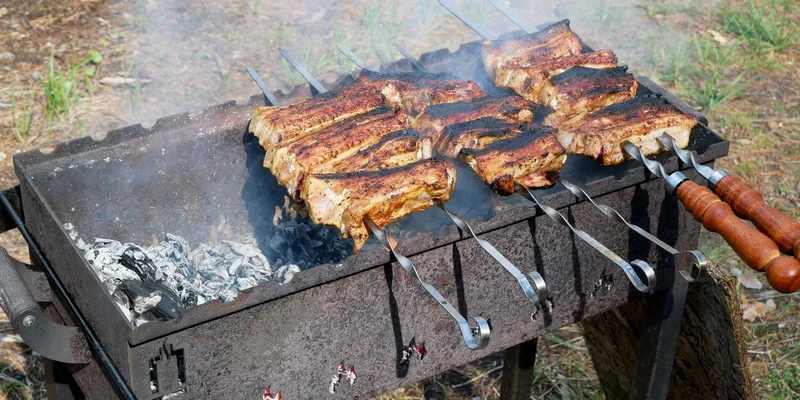
Charcoal reaches searing heat that most portable propane grills cannot match, and the drippings hitting the coals produce smoke that flavors the food. That is a genuine cooking advantage for steak, chops and anything you want a hard crust on, not just campfire nostalgia.
Propane is better at everything that needs a steady, moderate, adjustable temperature. Chicken thighs that need to cook through without burning, vegetables that want a medium surface, anything you are cooking in shifts for a group. You give up peak heat and gain repeatability.
Two Zone Cooking on a Small Grill
Both fuels can run a hot side and a cooler side, which is how you finish thick food without charring it. On charcoal you bank the coals to one half. On a multi burner propane grill you simply leave one burner off. On a single burner tabletop propane unit you have less room to work, which is worth knowing before you buy the smallest model on the shelf.
Ash, Grease and Campground Rules
Charcoal produces ash that must go into the campground’s designated ash container once it is fully cold. It does not go in a plastic trash bag, it does not go in the fire ring at a site with a restriction in force, and it does not get spread in the brush. Confirm where ash goes at your specific campground before the first cook, not after.
Both fuels produce grease. Propane units usually catch it in a removable tray or cup; charcoal grills often drip into the ash bed. Either way it travels home with you in a sealed container, because greywater and drippings poured on the ground attract animals and are against the practice Leave No Trace describes at lnt.org.
Fire Restrictions Are Local and Change Daily
During restriction stages, many land managers draw a line between solid fuel fires and appliances that can be shut off instantly, which sometimes leaves propane usable when charcoal is not. That is a common pattern, not a rule you can count on. The current stage is set by the land manager or the county fire authority for the exact site you are visiting, so check it before you plan a menu around either fuel.
Side by Side
Strip away preference and the two fuels differ on four practical points that show up every single trip.
| Factor | Propane | Charcoal | Who it favors |
|---|---|---|---|
| Time to cook | Ready in minutes | Lighting window first | Late arrivals, families |
| Heat and flavor | Steady and adjustable | Hotter, adds smoke | Steak and chops on charcoal |
| Cleanup | Grease tray, cool fast | Ash to a designated container | Propane on short trips |
| Gear to carry | Cylinder, hose, regulator | Bag of fuel, chimney or starter | Charcoal if you hate hardware |
Which One to Buy
Buy propane if you camp on weekends, arrive after work, cook for a group with different orders, or camp anywhere fire restrictions are common. It is the lower friction choice and it shares fuel with most camp stoves, which cuts what you load.
Buy charcoal if you camp for longer stretches, if cooking over coals is part of why you go, and if your usual campgrounds have ash disposal. It is also the cheaper hardware by a wide margin, with less to break on a rough road.
The Propane Pick for Most Car Campers
A tabletop propane grill that runs off a small cylinder and latches shut is the format that fits a campground picnic table and one pair of hands.

The Charcoal Pick for Flavor First
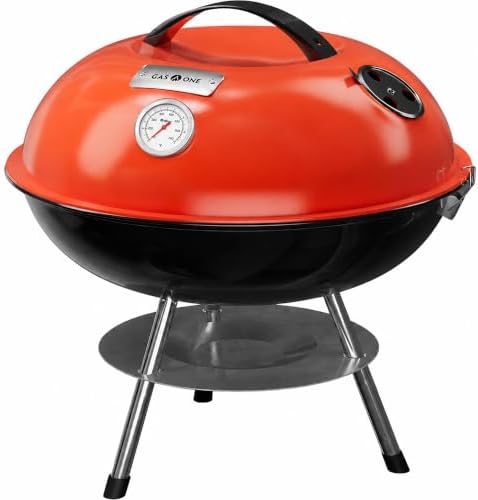
A compact charcoal grill with a lid and adjustable vents gives you enough control to bank coals and cook in two zones, which a lidless grate cannot do.
When You Want Both Without Two Grills
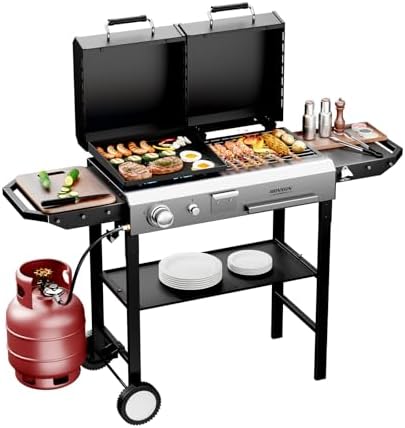
Some portable units accept either a charcoal tray or a gas burner box, and some campers simply carry a small charcoal grill alongside a propane camp stove and let each do what it is good at.
Using Either One Safely
Both propane and charcoal grills are outdoor appliances. Coleman and other manufacturers state in their manuals that these units must never be used inside a tent, a screen room, an awning, a vehicle or any enclosed space, because burning fuel produces carbon monoxide. Charcoal continues producing it while the coals glow, long after the flames are gone.
Follow the clearances in your own model’s manual, keep the grill clear of tent fabric and overhanging branches, and check hose and regulator fittings each trip if you run gas. Carrying a battery powered carbon monoxide alarm for the sleeping area is a cheap habit that costs nothing to keep.
Frequently Asked Questions
Which is cheaper to run at camp? Charcoal hardware is cheaper up front, while propane fuel is easier to portion for a single meal. Over a weekend the running cost is close enough that convenience should decide it.
Can I take a charcoal grill to any campground? No. Some campgrounds restrict solid fuel entirely during dry conditions and some have no ash disposal at all. Check the campground and the land manager’s current rules before you pack it.
Does a propane grill taste worse? It tastes different. Drippings on hot coals create smoke that gas cannot replicate, though a griddle or a smoker box narrows the gap for most camp menus.
Can I run a portable grill off a larger propane tank? Many models accept an adapter hose to a refillable tank, which cuts waste from disposable cylinders. Check that your specific model lists that accessory rather than assuming it fits.
How do I put out charcoal at a campsite? Let it burn out completely, then follow the campground’s instructions for the ash container. Dousing coals with water creates a wet ash slurry that many sites specifically ask you not to produce.
The Bottom Line
Propane is the practical default for car camping because it collapses the gap between arriving and eating, and because it shares fuel with the stove already in your trunk. Charcoal stays worth carrying when the cooking is part of the trip and the site can handle the ash. If you are still weighing formats rather than fuels, our camping grill guide covers grate versus griddle, and the propane camp stove guide works out how much fuel a weekend actually needs.