Last updated: August 20, 2026
The grill question at a campground is rarely about flavor first. It is about what fits on a picnic table next to the stove, what runs on the fuel you are already carrying for that stove, and what you can scrape clean at a water spigot before checkout. A backyard kettle answers none of those questions, which is why so many first camping grills get used once and then live in the garage.
This guide sorts camping grills by cooking surface, a grate, a flat griddle top or a combo of both, and then by fuel. Once you know which surface your group actually eats off, the rest of the decision gets short.
This article contains affiliate links. If you buy through them, we may earn a commission at no extra cost to you. Learn more.
Quick Answer
Which camping grill should you buy?
- A grate suits burgers, brats, chicken and anything you want to drip and char.
- A flat griddle top suits eggs, pancakes, smash burgers and diced vegetables that fall through a grate.
- Combo models split the surface so one side does each, at the cost of size and pack weight.
- Propane lights in a minute and shuts off instantly; charcoal runs hotter and dirtier and needs somewhere to dump ash.
Bottom line: choose the surface for what your group eats most, then choose the fuel for how your campground handles ash and fire restrictions.
Grate, Griddle or Both
A grate cooks food over open flame with gaps for fat to drip through, which is what gives burgers and sausages their char. A griddle is a solid steel plate, so nothing falls through and rendered fat stays in contact with the food. A combo splits one cookbox between the two. Your menu decides, not the marketing.
Most car camping groups eat more griddle food than they expect. Breakfast is eggs, bacon and pancakes for four people, and a grate handles none of that without a pan. Dinner is where the grate earns its place, especially if you are feeding a group who all want their own burger off the same surface at the same time.
When a Combo Is Worth the Bulk
Combo grills carry two surfaces, which means a larger footprint and more weight in the trunk. They make sense when you camp with a group large enough that breakfast and dinner are both a production, or when you camp for four nights or more and get tired of one cooking style. For a two night trip with two people, one surface plus a decent skillet usually beats hauling both.
Propane or Charcoal at a Campground
Propane is the default for car camping because it lights instantly, adjusts with a knob and shuts off completely when you are done. Charcoal cooks hotter and adds flavor a gas burner cannot, but it needs a lighting window, produces ash you have to dispose of properly, and stays hot long after dinner is over.
The practical difference shows up at quiet hours and at departure. A propane grill is cool enough to pack within minutes of the last burger. Charcoal needs to burn down, and ash goes in the campground’s designated container, never on the ground and never in a trash bag. Check the site rules before you assume there is somewhere to dump it.
Fire Restrictions Change the Answer
During dry spells, many land managers restrict open flame and solid fuel while still allowing appliances with a shutoff valve. That distinction can make a propane grill usable on a weekend when charcoal is not, but the current stage of restriction is set locally and changes by the day. Check with the land manager or the county fire authority for the site you are visiting before you rely on either one.
Camping Grills by Situation
The right grill depends less on brand than on where you cook and how many people are waiting. Below are the situations that come up most at a campground, with the type of unit that suits each one.
Cooking on a Picnic Table Next to the Stove
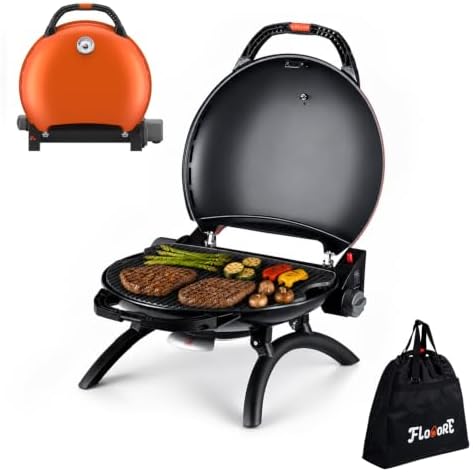
Tabletop propane grills run off the small cylinders most car campers already carry, fold shut with the lid latched, and leave enough table left over for prep. This is the format that fits the standard campground picnic table without pushing the stove off the end.

Feeding a Family Site With No Table Room Left
Stand up propane grills on folding legs put the cooking surface at counter height and free the table entirely for plates and prep. Coleman’s RoadTrip 285 is the format most people picture here, a three burner stand up grill with scissor legs and wheels, listed by Coleman at 285 square inches of grilling area.
Campers Who Want Charcoal Flavor
Portable charcoal grills for camping are simpler, cheaper and hotter than their gas equivalents, with no regulator or hose to fail. They ask more of you in exchange: a lighting window before dinner, and a plan for the ash afterward.

Groups Who Eat Breakfast Seriously
A flat top griddle turns the same fuel into eggs, hash browns, pancakes and bacon on one surface, cooked all at once instead of in pan sized batches. If your camp mornings involve more than coffee and a granola bar, this is the surface that changes them.

One Unit That Has to Do Everything
Grill and griddle combos give you half a grate and half a flat plate, or a removable griddle plate that drops onto the grate. They are the answer for longer trips where you are cooking every meal at the site and do not want to choose in advance.

Comparing the Main Types
Four formats cover almost every camping grill on the shelf. The differences that matter at a site are surface type, fuel, how it travels and how long it takes to be ready.
| Type | Best for | Setup time | Travel notes |
|---|---|---|---|
| Tabletop propane grate | Burgers, brats, chicken for two to four | Minutes, knob and igniter | Fits a picnic table, lid latches shut |
| Stand up propane grill | Family sites, cooking at counter height | Minutes once legs are open | Bulkiest option, usually wheeled |
| Portable charcoal grill | Flavor first, simple hardware | Lighting window before cooking | Light and cheap, ash needs disposal |
| Flat top griddle | Breakfast, smash burgers, vegetables | Minutes, longer to preheat evenly | Heavy steel plate, needs seasoning care |
Size, Weight and How It Rides in the Car
Cooking area is published in square inches, and it is the number most people over buy on. A larger surface needs more fuel to hold temperature, takes longer to clean and eats trunk space that a cooler wants. Match the surface to the number of plates, not to the biggest model on the shelf.
Weight matters more than campers expect, because the grill is usually the last thing loaded and the first thing needed. A tabletop unit that one person can carry from the trunk to the table in one trip gets used far more often than a heavy stand up model that needs both hands and a clear path.
Packing the Grease
Every grill of every type produces drippings, and they have to travel home somewhere. Look for a removable grease tray or cup rather than a molded channel you have to scrub in place, and pack a sealable container so nothing leaks across the trunk on the drive back. This single detail separates a grill you keep using from one you quietly retire.
Using Gas Safely at a Site
Propane grills and charcoal grills are outdoor appliances. Manufacturers including Coleman and Blackstone state in their manuals that these units are for outdoor use only and must never be operated inside a tent, an awning, a screen room, a vehicle or any enclosed space, because burning fuel produces carbon monoxide.
Follow the clearance distances in your own model’s manual rather than guessing, keep the unit away from tent fabric and low branches, and check hose and regulator connections before you light. A battery powered carbon monoxide alarm in the sleeping area is a sensible piece of camping gear in general, and it costs almost nothing to carry.
Common Mistakes When Buying a Camping Grill
The most common mistake is buying a grate when the group eats griddle food. If breakfast is the meal everyone shows up for, a grate means cooking eggs in a skillet balanced over bars, which works badly and cleans worse. Look at a week of your actual camp menus before choosing.
The second is ignoring fuel compatibility. If your stove runs on the small green cylinders and your new grill needs an adapter hose to a larger tank, you are now carrying two fuel systems. Match the grill to the fuel you already bring, or accept the adapter and the extra tank as part of the purchase.
Frequently Asked Questions
Is a camping grill different from a regular portable grill? Mostly in how it packs and latches. Camping models are built to travel closed, with lids that lock down, folding legs and removable grease trays, while a patio portable is built to sit in one place.
Can I use a camping grill on a picnic table? Tabletop models are designed for it, but check your manual for the required clearance and put the unit on a heat resistant surface. Never use one on a plastic table or directly on tent fabric.
Do I need a griddle if I already have a grill? Only if your camp menu includes eggs, pancakes or anything diced. A flat top adds a whole category of meals a grate cannot cook without a pan.
Can I use a propane grill during a fire ban? Sometimes, because appliances with an instant shutoff are treated differently from open wood fires in many restriction stages. Restrictions are set locally and change often, so confirm the current rule with the land manager before you count on it.
How do I clean a camping grill without a hose? Scrape the surface while it is still warm, wipe it down with a paper towel and a little oil, and finish it properly at home. Scrubbing with soap at a campground spigot sends greasy water where it should not go.
What size grill do I need for a family of four? A tabletop unit in the range most manufacturers market as two to four person handles four burgers at once comfortably. Buy for the plates you serve, not for the largest surface offered.
The Bottom Line
A camping grill earns its trunk space when the surface matches your menu and the fuel matches what you already carry. Grate for char, flat top for breakfast, combo when you are cooking every meal at the site for a week. If you are torn between fuels, our propane versus charcoal comparison takes that decision apart on its own, and the camping griddle guide covers flat top cooking in detail.