Last updated: August 20, 2026
The stakes that come in the bag with a family tent are the cheapest part of the tent, and on anything harder than a lawn they are the first thing to fail. Thin wire pegs bend on the second hit into packed dirt, fold sideways in gravel, and pull straight out of sand under the first real gust. Most people learn this on a site where the ground turned out to be a lot harder than the campground photo suggested.
The fix is not one better stake, it is the right stake for the surface you are on. Hard ground, loose sand and soft mud each defeat a different design, and a small mixed set in the car covers almost every site you will meet. This guide covers the four common stake types, which ground each one is for, and how to drive and remove them without wrecking them.
This article contains affiliate links. If you buy through them, we may earn a commission at no extra cost to you. Learn more.
Quick Answer
Which tent stakes work on hard ground, sand and mud?
- Hard or rocky ground: solid steel nail stakes, because a narrow shaft drives where a wide one bends.
- Loose sand and soft soil: screw in or auger stakes, which grip through surface area rather than depth.
- Mud and soft turf: long V or Y profile stakes that resist pulling sideways through wet ground.
- Carry a mixed set and a small mallet, since the site decides which one you need.
Bottom line: match the stake profile to the surface, and stop trying to make one design cover every campsite.
Why the Included Stakes Fail
Tent makers ship thin wire or hooked pegs because they are light and cost almost nothing. They are adequate in soft lawn and inadequate everywhere else. In hard ground they bend at the first obstruction, and in loose sand the small surface area gives them nothing to grip.
That is not a defect so much as a design for the easiest possible case. Treat the included pegs as backups, and carry a set chosen for the ground you actually camp on.
How Many You Need
Count the stake points on your tent, add the guylines, and add a handful spare because you will lose some. A large family tent with a fly and guylines needs considerably more stakes than the bag contains.
Hard and Rocky Ground
Solid steel nail stakes are the standard answer. The narrow round shaft concentrates the force of each hammer blow into a small area, so it drives into packed dirt and works its way past small stones instead of deflecting. Longer versions reach deeper and hold better, which matters on a large tent.
The trade is weight and a smaller grip surface than a V profile stake. In hard ground that surface matters less, because the ground itself is doing the holding. On a truly rocky site, expect to relocate a stake or two rather than force one that has hit rock.
Use a Mallet, Not a Rock
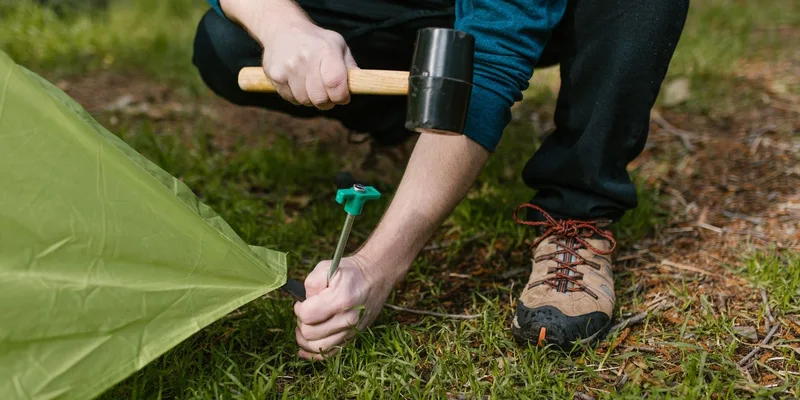
A rubber or dead blow mallet drives steel stakes cleanly and saves the tops from mushrooming. Hitting a stake with a rock deforms the head, which is what makes it impossible to remove and unpleasant to hit next time.
Sand, Loose Soil and Beach Sites
Loose ground reverses the problem entirely. A narrow shaft slides out under load no matter how deep it goes, so what you need is surface area. Screw in and auger style stakes have a spiral that engages a large volume of sand or loose soil, and they hold far better than a straight peg.
Wide V or U profile stakes, sometimes sold as sand stakes, work on the same principle with a flat blade instead of a spiral. Both are driven or twisted in and both can be buried on their side with a line tied around the middle, which is the classic deadman anchor trick that works when nothing else will.
Coastal Wind Adds Load
Beach sites usually combine loose ground with steady wind, which is the hardest combination for any anchor. Use more anchor points than you would inland, and check them through the day rather than assuming they stayed put.
Stakes by Situation
Rather than one universal stake, most car campers end up with a small mixed set in a bag that lives in the car. These are the four that cover almost everything.
Hard, Packed or Rocky Sites
Solid steel nail stakes, ideally longer than the pegs the tent came with, driven with a mallet.

Sand and Loose Soil
Screw in or auger stakes that grip through surface area rather than depth, for beaches, dunes and sandy campgrounds.

Mud, Wet Turf and Soft Ground
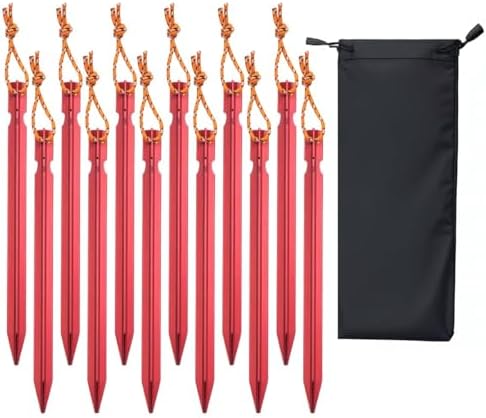
Long V or Y profile stakes present a wide face to sideways pull, which is what soft ground demands.
Canopies and Large Tents
Heavy duty stakes with a proper head, sized for the load a canopy leg or a large fly puts on a single point.
The Tool That Makes It Work
A mallet with a hook or a puller on the end drives stakes cleanly and pulls them without wrecking your fingers or the stake head.

Matching Stake to Ground
The short version of everything above, in one place. Buy across at least two rows if you camp in more than one kind of place.
| Ground | Stake type | Why it works | Watch out for |
|---|---|---|---|
| Hard, packed, rocky | Solid steel nail | Narrow shaft drives past stones | Heavier, needs a mallet |
| Sand, loose soil | Screw in or auger | Spiral grips a large volume | Slower to place and remove |
| Mud, soft turf | Long V or Y profile | Wide face resists sideways pull | Can bend if hammered on rock |
Driving and Removing Them Properly
Drive stakes at roughly a right angle to the line they are holding, leaning slightly away from the tent, so the pull tightens the stake into the ground rather than levering it out. Leave enough of the head exposed to get a puller under it, but not so much that it becomes something to trip over in the dark.
To remove, use the hook on the mallet or another stake through the head and pull straight along the shaft. Levering a stake sideways is what bends it, and a bent stake never drives straight again.
Keep Track of Them
Stakes disappear into grass and gravel more reliably than any other camping item. A bright bag, a count before you leave, and a habit of putting each one straight into the bag as it comes out are what keep a set complete over several seasons.
Frequently Asked Questions
What are the best tent stakes for hard ground? Solid steel nail stakes. The narrow round shaft concentrates each hammer blow and works past small stones, where a wide profile stake tends to bend or deflect.
What holds a tent down in sand? Screw in or auger stakes, or wide sand stakes, because loose ground requires surface area rather than depth. Burying a stake on its side as a deadman anchor also works well when nothing will hold upright.
Are the stakes that came with my tent any good? They are adequate on soft lawn and weak everywhere else. Keep them as spares and buy a set matched to the ground you camp on most.
How many stakes do I need? Count the tent’s stake points, add every guyline, and add a few spares. Large family tents with a full fly need considerably more than the included bag holds.
Do I need a mallet? For steel stakes in hard ground, yes. A rubber or dead blow mallet drives them cleanly and saves the heads, and models with a hook on the end make removal much easier.
How deep should a stake go? As deep as the ground allows, with just enough head exposed to attach a line and get a puller under it. If a stake stops on rock, move it rather than forcing it, since a bent stake is a lost stake.
The Bottom Line
Tent stakes are a per surface problem, not a per tent problem. Steel nails for hard and rocky ground, screw in or auger anchors for sand, long V or Y profiles for mud, and a mallet with a puller to make all of them workable. Our camping canopy guide covers the anchoring side of shade structures, and the tent footprint guide deals with what goes under the tent.