Last updated: August 20, 2026
Two adults and two kids is the most common car camping headcount in the country, and it is also the size where the tent aisle is most misleading. A tent labeled for four people will hold four people the way a bench seat holds three, and the family that buys one usually discovers this at the exact moment there is nowhere to put four duffel bags at eleven at night.
The other half of the problem is the car. Family tents grow quickly once you move past the four person label, and a large cabin tent in a bulky bag competes for trunk space with the cooler, the chairs, the stove and everyone’s clothes. This guide works through both constraints at once: what four people actually need on the floor, and what still fits in a normal vehicle alongside the rest of the kit.
This article contains affiliate links. If you buy through them, we may earn a commission at no extra cost to you. Learn more.
Quick Answer
What size tent does a family of four actually need?
- A six person tent is the practical minimum for four people with gear, not a four person tent.
- If you sleep on a queen air mattress, size on the mattress footprint and add a walking strip.
- Check the packed length against your trunk before you order, since long pole bags are the usual problem.
- Two rooms are worth more than extra square footage once kids reach school age.
Bottom line: buy two person ratings above your headcount, then check the packed bag fits the car you actually drive.
What Four People Need on the Floor
Four sleepers on standard sleeping pads occupy a strip roughly the width of four pads laid side by side, with no room left over. Add duffel bags, a couple of pairs of boots and space to stand up and dress, and the honest requirement is a floor roughly half again as large as the sleeping strip itself.
That is why a six person tent is the usual recommendation for four campers. It gives one sleeping row plus a genuine gear zone, or two mattresses with a corridor between them, depending on how you lay it out.
If You Sleep on Air Mattresses
Air mattresses change the math completely, because a queen bed takes up far more floor than two sleeping pads. Two queens side by side need a large tent floor, and the manufacturer publishes exact floor dimensions for every model. Measure your mattresses, compare them against the published figures, and leave at least a narrow strip to walk on.
The Car Is the Other Constraint
Tent bags for family sized models are long rather than bulky, and the length is what defeats a trunk. Before you buy, measure the longest straight run in your cargo area with the seats up, because that is where the pole bag has to go. A tent that only fits with the rear seats folded is a tent you cannot take when all four seats are occupied.
Weight matters less than shape for car camping, but it still decides whether one adult can carry the bag from the parking area to a walk in site. Published packed dimensions and weight are on every listing, and they are worth reading before the review scores.
Loading Order
Load the tent last so it comes out first. Nothing else can be set up until the tent is standing, and digging it out from under four bins in the dark is a genuinely miserable way to start a trip.
Tents That Suit a Family of Four
Four different situations point at four different tents. Pick the row that matches your trips rather than the one with the highest star rating.
The All Round Choice
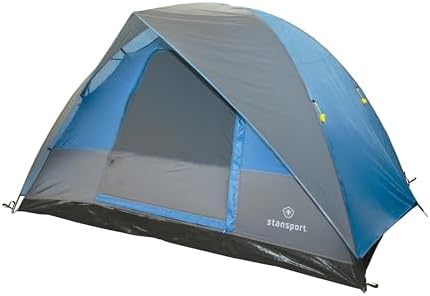
A six person dome or modified dome with a full coverage rainfly handles most family campground weekends, packs into a manageable bag, and stands up to weather better than a boxy cabin does.
You Want Two Separate Rooms
A tent with an included room divider gives the kids their own half, which stops the trip becoming a negotiation about bedtimes. Check the divider ships with the tent rather than being an accessory.

Small Car, Limited Trunk Space
Some family tents pack noticeably shorter than others in the same person rating. If the trunk is the binding constraint, compare packed length across candidates before anything else.

You Sleep on a Queen Air Mattress
Once a queen bed is in the plan, an eight person tent often makes more sense than a six, because the mattress eats the floor a six person model was going to give you.

Six Person or Eight Person for Four Campers
Both work, and the deciding factor is the sleeping surface plus how long you stay. Short trips on pads suit a six. Longer trips with air beds and rainy afternoons suit an eight, if the car can take it.
| Choice | Sleeping setup it suits | Car impact | Trade off |
|---|---|---|---|
| Six person tent | Four pads, or one queen plus two pads | Fits most trunks with seats up | Tight on a rainy day indoors |
| Eight person tent | Two queen air mattresses | Often needs a folded seat or a roof | Longer pitch, more to dry out |
| Two smaller tents | Adults and kids separately | Two small bags pack flexibly | Two pitches, two sites to level |
Where Families Get Caught Out
Buying to the label is the classic error, and the second is forgetting that kids grow. A tent bought when the children are five is still in service when they are ten and take up adult space, so the extra size you question at purchase is usually the part you are glad of later.
The third is treating a big tent as a fair weather product and skipping the guylines. Larger tents catch more wind, and the lines are what keep the shape stable when a gust comes across the campground. Stake and guy every time.
Pitch It Once at Home
A trial pitch in the yard is worth an hour. You confirm all the poles are there, learn the pole order in daylight, and find out whether one adult can raise it alone if the other is dealing with kids.
Frequently Asked Questions
Is a four person tent enough for a family of four? Only for sleeping, with no gear inside and nobody standing up. Person ratings measure how many adult bags fit side by side, so a family of four is far more comfortable in a six person tent.
What tent fits two queen air mattresses? That usually means an eight person tent or larger, but the answer comes from the published floor dimensions rather than the person rating. Measure your mattresses and compare them to the numbers on the listing.
Do we need a tent with two rooms? Not for young children, and increasingly yes as they get older. A divider costs almost nothing in weight and buys a surprising amount of peace on longer trips.
Will a family tent fit in a sedan trunk? Many will, but packed length is the limit rather than volume. Measure the longest straight run in your trunk with the rear seats up and compare it to the packed dimensions on the listing.
Should we buy one big tent or two small ones? One tent is simpler to pitch and warmer with everyone inside. Two smaller tents pack more flexibly and give older kids their own space, at the cost of a second pitch and a second flat spot to find.
How much floor space per person is comfortable? Rather than a rule of thumb, lay out your actual pads or mattresses at home and add a walking strip along one edge. That measured footprint is a far more reliable guide than any per person figure.
The Bottom Line
For a family of four, the right tent is a six person model if you sleep on pads and an eight if you sleep on air beds, chosen with the packed length checked against your trunk. Everything else, dividers, vestibules, dark fabric, is preference on top of that. Our family camping tent guide covers rain features and setup styles in more depth, and the instant tent guide is worth a look if you often arrive after dark.