Last updated: August 20, 2026
Most bad nights with a dog at a campground trace back to the same three problems: the dog has nowhere to be, nothing to sleep on, and no way to settle when the site next door lights a fire. A dog that is loose or bored barks, and a barking dog during quiet hours is the fastest way to make enemies of everyone within four sites of you.
The gear that actually prevents trouble is unglamorous. A tie out that does not wrap around a picnic table, a bed that lifts the dog off cold ground, water that is available without a walk to the spigot, and lighting so nobody trips over a dark colored dog at midnight. Get those right and most of the rest takes care of itself.
This article contains affiliate links. If you buy through them, we may earn a commission at no extra cost to you. Learn more.
Quick Answer
What gear do you actually need for camping with dogs?
- A tie out or zipline that gives the dog a defined area without letting it reach neighbors, the fire ring or the road.
- An insulated bed or pad, because bare tent floor over cold ground is the usual reason a dog will not settle.
- Water capacity at the site and a bowl that does not tip, so the dog is not waiting on your next walk to the spigot.
- A light on the collar and a spare leash, because the dark is when the accidents happen.
Bottom line: solve where the dog stays, what it sleeps on and how it drinks, and the trip gets easy.
Check the Rules Before You Pack Anything
Dog rules are set locally and they vary more than most campers expect. Leash length limits, which trails allow dogs, whether dogs may be left unattended at a site, and even whether dogs are permitted at all differ between the National Park Service, US Forest Service, BLM land, state parks and private campgrounds. Check the rules for the specific site you booked.
Health and vaccination questions belong with your veterinarian rather than a gear guide. Ticks, heat, altitude, water sources and what to do about a limp are all things a vet who knows your dog can answer properly, and some campgrounds ask for proof of vaccination at check in.
Camping Dog Gear by Problem
Buying by problem rather than by category keeps the pile small. Each item below solves a specific failure that ruins camping trips with dogs, and if your dog does not have that problem you can skip that line entirely. Start with containment, then comfort, then the small stuff.
Containment That Does Not Tangle
A running line or zipline strung between two anchor points gives a dog a long run without the wrapping problem you get from a single stake and a fixed lead. Tree friendly webbing straps matter on sites where screwing hardware into trees is not allowed. Kurgo’s Ridgeline tie out is a widely available example of this style, sold with clips and a bungee tether.

A Bed That Blocks Ground Chill
Ground under a tent floor pulls heat out of a dog the same way it does out of you, and a thin blanket is not insulation. An elevated cot style bed or a foam pad with a washable cover gives the dog a defined place to be, which also helps a nervous dog settle in an unfamiliar site.

Water That Stays Where You Put It
A lightweight collapsible bowl is the travel piece, but at the site a weighted or wide based bowl is what stops the water ending up in the dirt. Pair it with your own water capacity so nobody is walking to the spigot at eleven at night. Our camping water jug guide covers sizing that for the whole group.

Visibility After Dark
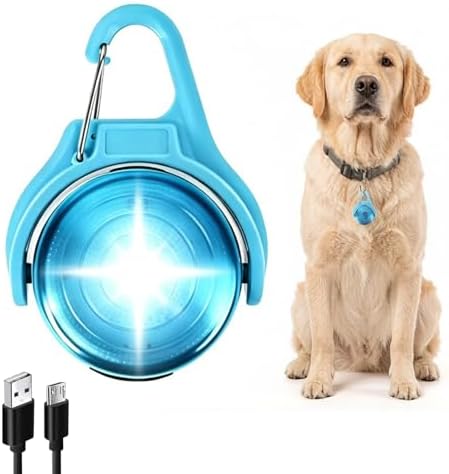
A dark dog on a dark site is a trip hazard for you and for neighbors walking to the bathhouse. A clip on collar light or an illuminated collar solves it for very little money and very little pack space, and it makes recall in a dispersed site far less stressful.
Cleanup and Waste
Pack out what your dog leaves, on the trail and at the site. A dedicated waste bag holder plus a sealed carry container keeps that manageable between trash runs. Leave No Trace guidance at lnt.org covers pet waste alongside human waste, and the disposal rules for the area come from the land manager.

What Each Piece Solves
If you are trimming the list, this is the order that matters. Containment and comfort prevent the problems that get you a complaint or a bad night. Water and visibility prevent the problems that get expensive. Everything else is convenience, and convenience can wait for the second trip.
| Item | Problem it prevents | Priority | Packing note |
|---|---|---|---|
| Zipline tie out | Wrapping, roaming, neighbor conflict | First | Needs two anchor points, check tree rules |
| Elevated bed or pad | Ground chill, restless nights | First | Bulky, goes in the soft duffel |
| Weighted bowl | Spilled water, dehydration risk | Second | Store inside the kitchen crate |
| Collar light | Trip hazards, losing sight at dusk | Second | Charge before you leave home |
| Waste kit | Site fouling, pack out failures | Always | Keep a sealed container in the car |
Sleeping Arrangements That Actually Work
A dog inside the tent is the default for most car campers, and the main cost is the floor. Claws find seams, wet paws find the sleeping area, and a dog that circles before lying down will scuff a coated floor over time. A dedicated mat under the dog, plus a footprint under the tent, absorbs most of that wear.
Dogs also change the condensation picture. Another warm body adds moisture to the air inside a closed tent, so the vents you would normally leave half open on a cold night should stay fully open. Our guide to tents for camping with dogs goes into floor materials and door layouts in detail.
Crate or Loose Inside the Tent
A soft crate helps dogs that are crate trained at home, because the familiar space travels with them. Dogs that are not crate trained usually do better with a defined mat and a person nearby. Either way, decide before the trip rather than experimenting at midnight in an unfamiliar campground.
Heat, Cold and Shade at the Site
Temperature management is mostly about the site layout rather than gear. A parked car heats up quickly and is not a holding spot, shade moves through the day, and a dog tied in full sun at two in the afternoon has no way to fix that. Plan the tie out so its whole arc has shade available.
On cold nights, an insulating pad under the dog does more than a blanket over it, for the same reason your sleeping pad matters more than your bag rating on frozen ground. If you have questions about what temperatures suit your particular dog, its coat and its age, that is a conversation for your veterinarian.
Campground Etiquette With a Dog
The unwritten rules are simple and they are the difference between welcome and unwelcome. Keep the dog on your own site and off the walking route between other sites, do not let the leash cross a neighbor’s guyline, pick up immediately rather than at the end of the day, and treat quiet hours as absolute.
Barking at every passing camper is the complaint that gets dogs banned from campgrounds. If your dog reacts to movement, position the tie out so its view of the loop road is partly blocked, and keep a chew or a puzzle feeder for the hours when everyone else is settling in.
Frequently Asked Questions
What gear do I need for camping with a dog? Containment, insulation and water first. A zipline style tie out, an elevated bed or insulating pad, a stable water bowl, a collar light and a waste kit cover almost every situation at a car camping site.
Can I leave my dog alone at the campsite? Often not. Many campgrounds and land managers prohibit leaving a dog unattended at a site, and the rule varies between agencies and individual parks. Check the regulations for the site you booked before you plan around it.
Should my dog sleep in the tent? For most car campers, yes, with a mat of its own to protect the floor and to block ground chill. Add ventilation, because an extra warm body raises the humidity inside a closed tent and worsens condensation.
How much water should I bring for a dog? Plan capacity rather than a per dog number, and ask your veterinarian about your dog’s needs in heat or at altitude. Practically, sizing your jug so nobody has to walk to the spigot after dark is what keeps the bowl full.
What do I do with dog waste when camping? Pack it out unless the campground provides specific disposal. Leave No Trace guidance covers pet waste, and the local land manager sets what is allowed at that site, so check both rather than assuming trail practice applies.
Are dogs allowed on all campgrounds and trails? No. Rules differ sharply between the National Park Service, US Forest Service, BLM areas, state parks and private campgrounds, including which trails allow dogs and what leash length is required. Verify before booking.
The Bottom Line
Camping with dogs goes well when the dog has a defined place to be, something insulating to lie on, water within reach and a light after dark. Buy for those four problems, confirm the local rules for leashes and unattended dogs before you go, and leave the health questions to your veterinarian. Etiquette does the rest: your own site, immediate cleanup, and real quiet during quiet hours. Read also our guide to tents that survive dogs and the camping checklist so the dog gear gets its own line instead of being remembered at the trailhead.