
Last updated: August 20, 2026
A cot is the piece of camp gear people either swear by or quietly leave at home after one trip. Getting off the ground solves the two things that ruin a night in a tent, the roots and rocks you did not notice at setup and the puddle that appears under the floor at three in the morning. What a cot does not solve on its own is cold, and that surprises a lot of first time buyers who assume being elevated automatically means being comfortable.
This guide covers what actually separates a cot you will keep using from one that ends up in the garage: the frame and its published weight limit, the deck fabric, the folded size relative to your trunk, and how the cot fits inside the tent you already own. The specs that matter are all published on the product page, so most of the decision is knowing which line to read.
This article contains affiliate links. If you buy through them, we may earn a commission at no extra cost to you. Learn more.
Quick Answer
Which camping cot should you buy?
- Start with the weight capacity printed in the listing and treat it as the number, not a suggestion.
- Measure your tent floor and your trunk, because cot length and folded length are the two dimensions that ruin purchases.
- An elevated deck sleeps colder than the ground unless you add a pad on top of it.
- Steel frames carry more and pack heavier; aluminum frames pack lighter and cost more.
Bottom line: match the published capacity and length to your body and your tent first, then add insulation on top before you judge the comfort.
What a Cot Actually Fixes
A cot lifts you off uneven ground and away from water that runs under a tent floor in heavy rain. For car campers that is usually the whole point, because the site you get assigned is rarely the flat, soft, root free rectangle the campground map suggests. It also puts a usable storage shelf under the bed, which matters in a crowded tent.
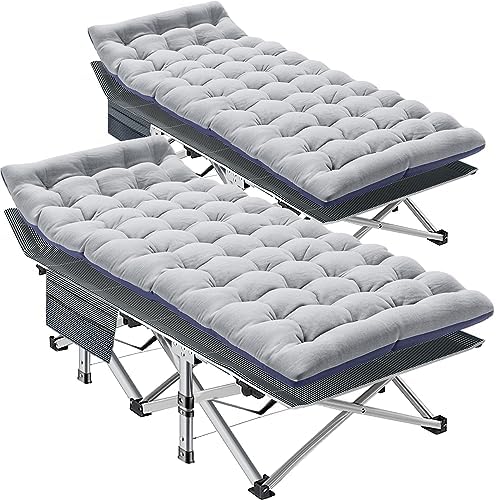
What a cot does not do is keep you warm. Air moves freely underneath an elevated deck, so on a cold night you lose heat downward through a thin layer of fabric instead of through insulated ground. That is why experienced campers treat a cot as a platform and always put a pad on it, a point covered in more detail in our guide to a camping cot with a mattress.
Weight Capacity Is the First Filter
Every reputable cot lists a maximum supported weight, and that figure is the fastest way to narrow a long product page down to a short list. Capacities in the car camping category range widely, from light folding models aimed at kids and occasional guests up to oversized frames such as the Teton Outfitter XXL, which Teton lists at 600 pounds.
Read the capacity for the exact model and size you are looking at rather than the brand as a whole, because manufacturers often sell a regular, an XL and an XXL version of the same cot with different frames and different published limits. If two adults will ever share the cot, or if you sit on the edge to put boots on, buy well above your own body weight rather than at the line.
Frame Material and Leg Count
Steel frames carry the highest published capacities and cost less, at the price of a heavier folded package. Aluminum frames drop the carry weight noticeably and are easier to move around a site alone, which suits campers who set up solo or who have to walk gear in from a parking area.
Leg design matters as much as material. More contact points spread the load and reduce the flex you feel in the middle of the deck, while cots with fewer legs pack smaller and set up faster. Look at how the legs meet the floor too, since narrow feet sink into soft ground and can wear on a tent floor over time.
Measure Before You Buy
Three measurements decide whether a cot works for you: the set up length, the set up width, and the folded package size. Compare all three against your tent floor and your trunk before you order, because a cot that fits your body perfectly and not your vehicle is still the wrong cot.
Tent floors taper more than people expect, especially in dome shaped tents where the wall curves inward at the head and foot. A cot that measures shorter than the floor on paper can still press against the inner wall, which pulls the fly against the mesh and creates a wet patch on a humid night. Set the cot up at home once, inside the tent if you can, so you find that problem in the yard rather than at the site.
Camping Cots by Situation
Best for a standard adult sleeping alone
A regular width steel cot with a taut polyester or canvas deck covers the majority of car camping use. It packs into a trunk alongside the rest of the gear, sets up in a couple of minutes, and holds a self inflating pad without sliding.

Best for a tall camper or anyone over the standard capacity
Oversized cots run longer and wider and publish much higher weight limits, which is the right category if the standard sizes leave your feet hanging off the end or if you want margin above your body weight.
Best for a low tent where headroom is tight
Low profile cots sit closer to the floor, which keeps you clear of a sloping tent wall and makes getting in and out easier for anyone who does not want to climb. The tradeoff is less storage space underneath.

Best when you want a side table and organizer built in
Some cots add a folding side table with a cup holder and a hanging pocket, which replaces a separate piece of furniture in a small tent and keeps a headlamp and a water bottle off the floor.

Comparing the Main Cot Types
| Cot type | Frame | Best for | Watch out for |
|---|---|---|---|
| Standard folding | Steel, multiple legs | One adult, most campgrounds | Heavy folded package |
| Oversized | Steel, reinforced | Tall or heavier campers | Needs a large tent floor |
| Low profile | Steel or aluminum | Dome tents, easy entry | Little storage underneath |
| Lightweight aluminum | Aluminum, few legs | Solo setup, tight trunks | Lower published capacity |
Common Mistakes When Buying a Cot
The most common mistake is buying on comfort claims and ignoring the two numbers that decide the outcome, published capacity and set up length. The second is assuming the cot alone will sleep warm, then blaming the cot when the night turns cold and the deck feels like a sheet of fabric stretched over open air.
A third mistake is skipping the trial setup. Cot legs are the most common tent floor casualty in this category, and the fix is simple: put a piece of old carpet, a foam tile or the cot’s own storage bag under each foot. Doing that at home means you notice which legs need protection before the fabric gets a hole.
Frequently Asked Questions
Is a camping cot more comfortable than an air mattress? It depends on what bothers you. A cot removes ground contact and stays firm all night, while an air mattress gives softer contour but loses pressure as the night cools. Our cot versus air mattress comparison works through both sides.
Do I need a pad on top of a camping cot? In anything but warm weather, yes. Air circulates freely under the deck, so a pad or a foam topper is what turns a cot from a platform into a bed.
Will a cot fit in my tent? Check the cot’s set up length and width against your tent floor dimensions, and remember the walls taper. Tents with near vertical walls, such as cabin style models, take cots more easily than sloped dome tents.
How much weight can a camping cot hold? That varies by model and is always published in the listing. Oversized frames go well past the standard sizes, and our guide to a cot for heavy adults explains how to read those figures.
Will cot legs damage a tent floor? They can, over time, especially on hard ground where the full load sits on small feet. Put something under each foot, and lift the cot rather than dragging it when you rearrange the tent.
Can two people share one camping cot? Only on a model built and rated for two sleepers. Standard single cots are not designed for it, and sharing one is the fastest way to exceed the published limit.
The Bottom Line
Buy the cot by its published weight capacity and its measured length, check the folded size against your trunk, and plan from the start to put a pad on top of it. That combination is what makes an elevated bed genuinely better than sleeping on the floor rather than just different. If you are still deciding between platforms, read our cot or air mattress comparison, and if the cot is already chosen, our guide to a camping cot with mattress covers what goes on top.