Last updated: August 20, 2026
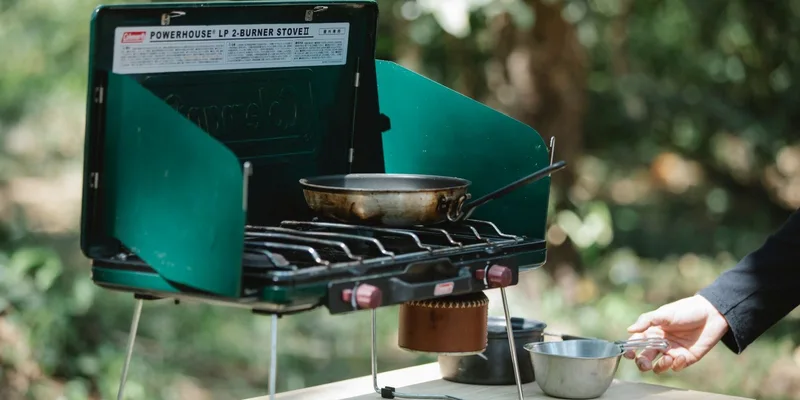
Camp cookware fails in two directions. Either you bring the pans from the kitchen at home, discover that nothing nests and the handles will not fold, and spend the drive listening to a trunk full of metal, or you buy a cheap set with pot grips that slip and a coating that flakes off in the first month. Neither outcome makes anyone want to cook at camp.
A proper camping cookware set solves both by nesting into one package with handles that fold or lock, in materials sized to feed the number of people you actually camp with. This guide covers what to look for, how the common materials behave on a camp burner, and how to size a set without buying pieces you never unpack.
This article contains affiliate links. If you buy through them, we may earn a commission at no extra cost to you. Learn more.
Quick Answer
What makes a good camping cookware set?
- Everything nests inside the largest pot, with a bag or bungee that stops the rattle in the trunk.
- Handles that fold or lock rather than stick out, because handles are what break the packing.
- Pot sizes matched to your group, with at least one pot big enough for pasta or a group soup.
- A separate pot gripper if the handles are removable, and a lid that vents or strains.
Bottom line: buy for how it packs and how it grips, then check that the largest pot actually feeds your group.
Nesting Is the Whole Point
A camping cookware set is defined by how it collapses. GSI Outdoors designs the Bugaboo Base Camper so both pots, the frying pan and the cutting board nest inside the largest pot, and Stanley packs its Adventure Base Camp set into a single pot secured with a locking bungee. That is the standard to measure against.
What nesting buys you is not just trunk space. It means the kitchen is one object rather than eight, so nothing gets left at the site and nothing rattles for four hours on a forest road. A set that half nests is a set that gradually spreads across the trunk.
The Rattle Test
Look at how the set is secured once packed. A stuff sack, a locking bungee or a lid that clamps down all do the job. A set that nests but relies on you to wedge a towel in there will eventually annoy you into repacking it every trip.
Materials on a Camp Burner
Hard anodized aluminum is the common choice for car camping sets because it heats fast, weighs little and resists the scratching that a camp kitchen inflicts. Stainless steel is heavier and slower to heat but shrugs off abuse and cleans easily, which matters when the washing up happens in a plastic tub.
Non stick coatings make eggs at camp genuinely easier and they are the first thing to fail if you use metal utensils or scrub them with a wire pad. If you buy coated pans, buy the matching silicone or nylon utensils at the same time and accept that the coating is a consumable.
Where Cast Iron Fits
Cast iron is not cookware set material, it is a separate decision. A skillet or a Dutch oven adds weight most sets are trying to avoid, but it does things aluminum cannot, particularly over coals. Most car campers end up with a nesting set for the everyday cooking and one cast iron piece alongside it.
Sizing a Set to Your Group
Pot volume is the specification that matters and the one most people skim. GSI lists the Bugaboo Base Camper with a three liter and a five liter pot, which is a useful benchmark: the smaller pot handles a side or coffee water, the larger one takes pasta or a soup for a group.
Piece count is a much weaker signal. Stanley’s Adventure Base Camp is listed at 19 pieces, but most of those are plates and bowls rather than cookware. Count the pots and pans first, then decide whether you want the tableware included or would rather choose it separately.
Cookware Sets by Situation
Four patterns cover most car camping kitchens. Find yours before comparing sets.
Two People Who Cook Simply
A compact nesting set with one pot, one pan and a gripper covers coffee, one pot meals and reheating without claiming trunk space.
A Family That Cooks Real Meals
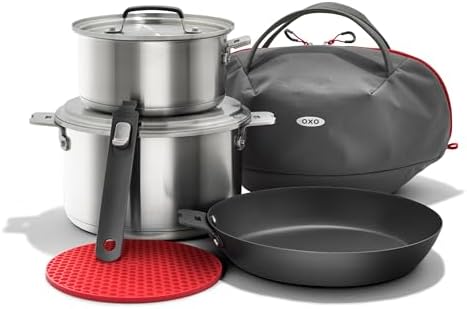
A base camp set with two pots in different volumes plus a frying pan handles a main and a side at the same time, which is what family camp dinners actually need.

Everything Including Plates and Bowls
All in one sets bundle tableware, utensils and a drying rack into the same pot, which is the fastest way to go from nothing to a complete camp kitchen.

Cooking Over Coals
A cast iron skillet or Dutch oven sits alongside a nesting set rather than replacing it, and it is what makes fire cooking and baking at camp possible.

What to Compare
Four specifications separate sets that get used from sets that get replaced.
| Feature | Why it matters | What to look for | Trap |
|---|---|---|---|
| Nesting | Trunk space and rattle | Everything inside the largest pot | Sets that only half nest |
| Handles | Packing and safe lifting | Fold, lock or a solid gripper | Grippers that slip on full pots |
| Largest pot volume | Whether it feeds the group | Around five liters for a family | Piece count instead of volume |
| Surface | Cleanup and lifespan | Anodized, stainless or coated | Metal utensils on non stick |
Washing Up Without a Sink
Camp dishes work best as a three step system: scrape into the trash, wash in one tub of hot soapy water, rinse in a second tub. Doing it in that order keeps food particles out of the rinse water and makes the whole job faster than improvising at a spigot.
Greywater has to go where the campground directs, and where there is no facility the guidance from Leave No Trace at lnt.org is the reference to follow rather than a rule of thumb. Strain out food solids and pack them out with the trash, and check the land manager’s rules for the site you are visiting.
Cleaning Non Stick at Camp
Warm water, a soft cloth and patience. Wire pads and gritty scrubbers take the coating off, and the damage does not show until eggs start sticking two trips later. If a pan needs aggressive cleaning, soak it rather than scour it.
Frequently Asked Questions
Can I just use my kitchen pans for camping? You can, but fixed handles do not pack, thin bases scorch on a camp burner and the set will not nest. It works for one trip and stops being appealing after that.
What size pot do I need for a family? Something in the range GSI uses for its base camp sets, around five liters, is enough for pasta or soup for four. A smaller second pot handles the side dish and coffee water.
Is non stick worth it for camp cooking? For eggs and pancakes, yes. Treat the coating as a consumable, use only soft utensils and never scour it.
Should I buy a set with plates and bowls included? If you are starting from nothing, it is the fastest route. If you already have camp tableware, buy cookware only and skip the duplication.
How do I stop cookware rattling in the car? Buy a set that nests fully and comes with a stuff sack or a locking bungee, and pack a cloth between the nested pieces if it still moves.
Do I need cast iron for camping? Not for everyday camp cooking, but it is what makes cooking over coals and Dutch oven baking possible. Most campers carry one piece alongside a nesting set.
The Bottom Line
Buy a camping cookware set for how it packs and how it grips, then confirm the largest pot feeds your group. Full nesting, handles that fold or lock, and a bag or bungee that kills the rattle matter more than a high piece count. If you want to add fire cooking, our cast iron at camp guide covers skillet versus Dutch oven, and the camping utensil set guide covers the tools that go with the pots.