Last updated: August 20, 2026
Almost every campfire failure is a tinder failure. The wood is fine, the fire ring is fine, and the person crouching over it has a lighter that keeps blowing out and a handful of damp pine needles. Twenty minutes later the newspaper is gone, the kindling is scorched, and somebody drives back to the camp store for a bundle of what they already had.
A fire starter is the small, unglamorous item that removes that whole scene. It gives you a flame that burns long enough and hot enough to dry and catch the kindling, which is the step wind and rain interfere with most. This guide covers the types that work, which one suits which conditions, and the local rules that decide whether you should be lighting anything at all.
This article contains affiliate links. If you buy through them, we may earn a commission at no extra cost to you. Learn more.
Quick Answer
Which fire starter works in wind and rain?
- Wet wood and damp evenings: fatwood or wax and shaving pucks, which burn long enough to dry kindling.
- Wind: a torch style lighter or stormproof matches, since a standard flame gets blown out.
- Backup that survives a soaking: a ferro rod, which works wet once you dry the striking surface.
- Speed with kids around: a pull string starter you place and light without kneeling over the ring.
Bottom line: carry one long burning tinder plus one ignition source that handles wind, and check the current fire restrictions before you light anything.
Check the Fire Restrictions First
Before any of this matters, find out whether a fire is permitted where you are going. Fire restrictions, stage one and stage two limits, and outright burn bans are set by the land manager and the county fire authority, they change through the season, and they can change on the day. Check the current status for that specific area rather than assuming.
Restrictions often distinguish between wood fires and appliances with a shutoff, which is why propane fire pits are frequently allowed when wood fires are not. That is a common pattern rather than a rule you can rely on, so confirm the current restriction with the land manager before you count on it. Our camping fire pit guide covers those appliances in detail.
Firewood Is Also Regulated
Many states and parks require you to buy firewood locally or to use certified heat treated wood, because moving untreated wood spreads invasive insects and disease. Look up the requirement for your destination and buy at or near the campground rather than bringing wood from home.
Tinder and Ignition Are Two Different Purchases
People shop for a fire starter and end up with only half a system. Tinder is the thing that burns for several minutes with a steady flame. Ignition is the thing that lights the tinder. Wind and rain attack them separately, and a good answer to one does nothing for the other.
The practical setup for car camping is one of each, kept together in a small sealed box in the kitchen bin.
What Makes Tinder Work When Wood Is Damp
Burn duration is the property that matters. A flame that lasts several minutes has time to drive moisture out of the kindling above it, while a flash of paper does not. Fatwood, the resin rich heartwood sold as fire starter sticks, works on exactly this principle, and Coghlan’s has sold fatwood sticks and fire starter sticks for camping for decades.
Compressed wax and wood shaving products do the same job in a tidier package. InstaFire, for example, describes its pouches as an all natural granulated starter made from recycled materials with a stated burn time of about twenty five minutes per pouch, which is far longer than any paper based tinder.
Fire Starters by Situation
The right starter depends on the conditions you actually camp in and on who is doing the lighting. Below are the five situations that cover almost every car camping trip: wet wood, wind, a soaked pack, a family with children nearby, and a minimal kit you keep in the car year round.
Best for Damp Wood and Cold Evenings
Fatwood sticks are resin rich pine heartwood that light readily and burn with a long, steady flame. Split one into slivers with a knife for a faster catch, then stand the rest around it. Coghlan’s sells them in multipacks sized for a camping bin.

Best Long Burning Starter in a Pouch
Granulated or wax based starter pouches burn for many minutes without needing to be split or shaved, which makes them the easiest option to hand to somebody who does not build fires often. They are also the tidiest thing to store, since nothing leaks and nothing splinters.

Best Ignition in Wind
A standard disposable lighter blows out and burns your thumb when held sideways. A refillable butane torch lighter puts out a directed jet flame that holds in a breeze, and the long neck versions let you reach into the fire lay without reaching into the heat.

Best Backup After a Soaking
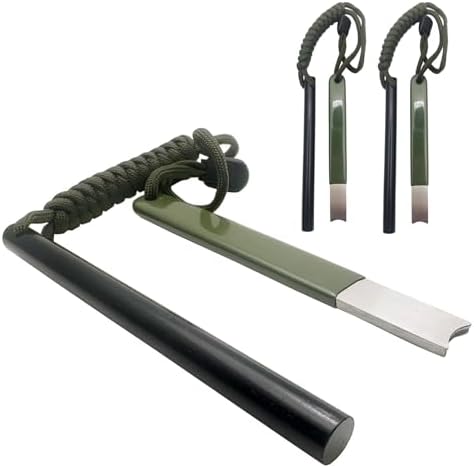
A ferrocerium rod throws sparks whether it is wet or dry, which is why it belongs in the kit even if you never plan to use it. Coghlan’s magnesium fire starter is the familiar version, combining a magnesium block you shave into a pile with a built in flint for the spark.
Best for Families and Quick Lighting
Pull string starters are placed in the fire ring and lit by pulling a cord, so nobody has to lean over the wood with a flame. They are popular with families for exactly that reason, and the manufacturer’s instructions for placement and clearance are worth reading before the first use.

Comparing the Types
The four categories below cover what is actually sold. What separates them is burn duration, whether they still work after getting wet, and how much skill they need. Most experienced campers carry one long burning tinder plus two ignition sources, on the principle that the second one is there for the night the first one fails.
| Type | Burn or spark | After a soaking | Suits |
|---|---|---|---|
| Fatwood sticks | Long steady flame | Usually still lights, resin repels water | Damp wood, cold nights |
| Wax or granule pouches | Longest burn per unit | Depends on packaging, keep sealed | Easy lighting, tidy storage |
| Torch lighter or stormproof matches | Ignition only | Dry the lighter, matches are sealed | Wind, reaching into a fire lay |
| Ferro rod | Sparks, no flame | Works wet once wiped | Backup, skill required |
Building the Lay So the Starter Can Work
A starter cannot rescue a badly built fire. Put the starter at the base with a small tepee or lean to of pencil thin kindling directly above it, and leave gaps for air. Air starvation, not damp, is what kills most fires that were lit successfully in the first place.
Feed upward in stages: pencil thickness, then thumb thickness, then wrist thickness. Adding a split log to a flame that is still working on kindling smothers it, and that is the point at which people usually reach for a second starter rather than for patience.
Getting a Fire Going in the Rain
In rain, split your wood and use the dry interior, keep the next stage of kindling under cover until the moment it goes on, and build on a platform of bark or split wood rather than on wet ground. A long burning starter buys the time this needs. Our camping in the rain guide covers the rest of the wet weather site routine.
Store the starter box somewhere dry, which usually means the vehicle rather than the tent vestibule.
Safety and Leaving the Site Right
Keep fire starters, fuel, and lighters where children cannot reach them, and never add liquid fuel to a fire that is already burning. Nothing in this category needs an accelerant, which is the entire reason to carry a proper starter rather than improvising with what is in the trunk.
Put fires fully out before you sleep and before you leave, following the method the campground or land manager posts. Ash and unburned wood stay in the ring, not in the woods, and any leftover firewood stays local rather than riding along to the next trip. Our firewood carrier guide covers moving and storing wood on site.
Frequently Asked Questions
What is the best fire starter for wet wood? A long burning tinder such as fatwood or a wax and shaving pouch, because it stays lit long enough to drive moisture out of the kindling. Ignition sources alone do not solve wet wood, no matter how hot the flame is.
Do I need a lighter and a fire starter? Yes, they are two different jobs. The starter is the tinder that burns for minutes, the lighter or matches are what light it. Carry one of each, plus a ferro rod as a backup that still works after a soaking.
Are pull string fire starters worth it? They are popular with families because you place them in the ring and light them from a distance by pulling a cord, without leaning over the wood. Follow the manufacturer’s placement and clearance instructions for the product you buy.
Can I use a fire starter during a fire ban? No. If a burn ban or fire restriction is in effect, that applies to the fire, not to the method of lighting it. Check the current status with the land manager or county fire authority for the area you are visiting.
Can I bring firewood from home? Often not. Many states and parks require locally sourced or certified heat treated firewood to limit the spread of invasive insects. Check the rule for your destination and buy at or near the campground instead.
How much fire starter should I pack for a weekend? Enough for at least two lights per evening plus a spare day, since damp conditions turn one light into three. A small sealed box with tinder, a torch lighter, stormproof matches, and a ferro rod covers a normal trip.
The Bottom Line
Buy one long burning tinder and one wind capable ignition source, keep them together in a sealed box, and add a ferro rod as the backup that survives a wet day. Build the lay so air can move, feed it upward in stages, and check the current fire restrictions and firewood rules for your destination before you plan an evening around a fire at all. For the appliance route when wood fires are restricted, see our camping fire pit guide.