
Last updated: August 20, 2026
Nobody buys a camping pillow first. It gets bought after the trip where you woke up three times chasing a slippery inflatable pillow that had migrated to the corner of the tent, or after the night you used a stuff sack full of fleece and woke with a neck that would not turn. It is the smallest item in the sleep system and the one people most often get wrong twice.
The problem is rarely the pillow itself. It is the combination of a slick pillow surface, a slick sleeping bag shell, and a slick pad, which together make a small frictionless ramp. This guide covers the four types of camp pillow, which one suits which sleeper, and the cheap fixes that stop any of them sliding away at two in the morning.
This article contains affiliate links. If you buy through them, we may earn a commission at no extra cost to you. Learn more.
Quick Answer
Which camping pillow should you buy?
- Compressible foam pillows feel closest to a pillow at home and do not slide, at the cost of packed bulk.
- Inflatable pillows pack tiny but slip unless the shell is brushed fabric or has a grip surface.
- Self inflating hybrids split the difference and are the safest choice if you are unsure.
- Side sleepers need loft to fill the shoulder gap; back sleepers usually want less.
Bottom line: for car camping, take the bulkier foam or hybrid pillow. Trunk space is free and a sliding pillow is not.
Why Camp Pillows Slide Off the Pad
The sliding problem is a friction problem between three surfaces. Most inflatable pillows use a smooth coated shell, most sleeping bags use a slick taffeta or ripstop face, and most sleeping pads are coated fabric too. Put all three together on a floor that is rarely perfectly level and the pillow has nowhere to grip.
Manufacturers solve this in three ways: a brushed or fleece top surface on the pillow, a textured grip pattern printed on the underside, or straps and loops that anchor the pillow to the pad. Any of the three works, and knowing which one a model uses is worth more than the loft number when you are comparing listings.
The Cheapest Fix of All
Put the pillow inside a regular cotton pillowcase from home. Cotton grips a sleeping bag shell far better than coated nylon, it feels better against your face, and it washes. Some campers instead use a pillowcase stuffed with the next day’s clothes as the whole pillow, which costs nothing and packs flat.
The Four Types of Camping Pillow
Inflatable pillows are a coated bladder you blow up, packing down to roughly the size of a fist. Compressible pillows are stuffed with foam or synthetic fill and squash into a stuff sack. Self inflating hybrids combine an open cell foam core with a valve. Stuffable pillowcases are an empty shell you fill with clothing.
For car camping the calculation is different from backpacking, because packed size is nearly free. That pushes the answer toward compressible and hybrid pillows, which feel more like a real pillow, do not slide as readily, and do not deflate slowly through the night the way a marginal inflatable can.
Camping Pillows by Sleeper
People Who Want It to Feel Like Home
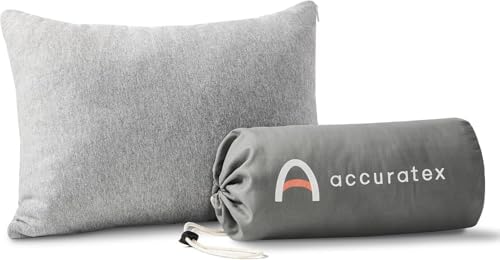
A compressible foam pillow with a soft brushed cover is the closest thing to your pillow at home that still packs into a stuff sack. It grips the sleeping bag rather than sliding on it, needs no setup at bedtime, and is the type most car campers end up settling on.
Side Sleepers Who Need Loft
Sleeping on your side leaves a gap between your ear and the pad the width of your shoulder, and a thin pillow lets your head drop into it. Look for adjustable loft, either an inflatable with a valve you can tune or a hybrid you can add air to, and check the stated thickness in the listing rather than guessing from a photo.

Anyone Short on Space
If the trunk is genuinely full, an inflatable pillow packs smaller than anything else and weighs almost nothing. Prioritize models with a brushed fabric top or a printed grip surface, because a bare coated bladder is the version that ends up in the corner of the tent by morning.

The No Cost Option
A stuffable pillowcase turns tomorrow’s fleece and spare clothes into a pillow, packs completely flat, and keeps those clothes warm and dry overnight into the bargain. The result is lumpier than a purpose built pillow, but for one or two nights it is genuinely fine.

Comparing the Types
| Type | Packed size | Sliding tendency | Best for |
|---|---|---|---|
| Compressible foam | Largest | Low, fabric grips | Car campers who want home comfort |
| Self inflating hybrid | Medium | Low to medium | Adjustable loft, side sleepers |
| Inflatable | Smallest | High unless it has a grip surface | Tight packing, warm weather trips |
| Stuffable case | Flat when empty | Low, cotton or fleece grips | Budget setups and short trips |
Loft, Firmness and Neck Position
Loft is the thickness of the pillow under load, and the right amount depends on how you sleep. Side sleepers need enough to fill the space between the ear and the pad so the neck stays in line with the spine. Back sleepers usually want noticeably less, and a tall pillow tips the head forward.
Firmness interacts with loft. An overinflated pillow is tall but also hard, and it pushes the head up rather than supporting it, which is why adjustable models are worth the valve. Let a little air out until your head settles rather than inflating it as far as it goes.
If Neck Pain Follows You Home
Waking with a stiff neck once after an awkward night is normal. Neck or back pain that persists across trips or into everyday life is worth raising with a doctor or a physical therapist rather than solving by buying pillows, since a camp pillow is a comfort item and not a treatment.
Making Any Pillow Work Better
Three habits help regardless of which pillow you buy. Put a cotton pillowcase over it for grip and comfort. Position it against something, the head end of a cot, a stuff sack, or a folded jacket, so it has a backstop when it does move. And check that the pad itself is level, since a pad on sloping ground sends everything downhill including you.
If you sleep on a cot, the head end rail gives you a natural anchor and cots tend to solve the pillow migration problem on their own. Our cot with mattress guide covers building that layer up, and the sleeping pad guide covers what goes under everything.
Frequently Asked Questions
Are camping pillows worth it? For anything longer than one night, yes. A rolled jacket compresses to nothing within an hour and leaves your head at the wrong angle, and poor sleep affects the whole trip more than most gear decisions do.
How do I stop my camping pillow from sliding? Use a cotton pillowcase over it, choose a model with a brushed top or a printed grip underside, and give it a backstop such as a stuff sack or the head rail of a cot. The slipping comes from three slick surfaces meeting, so changing any one of them helps.
Inflatable or foam camping pillow? Foam for car camping, inflatable when space is genuinely tight. Foam feels closer to a home pillow and stays put, while inflatable packs far smaller and lets you adjust the loft.
What pillow is best for side sleepers when camping? One with enough loft to fill the gap between your ear and the pad, ideally adjustable so you can tune it. A hybrid or an inflatable with a valve gives you that control; a thin compressible pillow usually does not.
Can I just use my pillow from home? At a campground, absolutely. It takes trunk space and it will get dirty, but nothing sleeps better than the pillow you are used to. Bring an old one rather than your good one.
How do you wash a camping pillow? Follow the care label. Compressible pillows usually machine wash and need full drying before storage, while inflatable shells are wiped down rather than washed. Store compressible pillows uncompressed so the fill keeps its loft.
The Bottom Line
A camping pillow is a small purchase that decides how the whole night goes, and for car camping the answer leans toward the bulkier options: a compressible foam pillow or a self inflating hybrid, both of which grip the sleeping bag instead of sliding off it. Match the loft to how you sleep, put a cotton pillowcase over whatever you buy, and give it a backstop at the head of the pad. If your head is warm and still and your hips are not sore, the sleep system is working. For the layer underneath, see our sleeping pad guide, and if you are getting off the ground entirely, the cot with mattress guide.