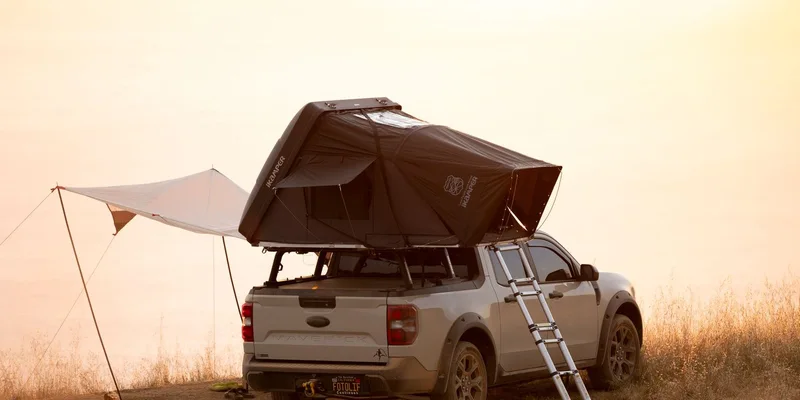
Last updated: August 20, 2026
Sleeping in a truck bed sounds like the simplest form of camping there is. You already own the platform, it is off the wet ground, and setup takes minutes instead of half an hour. Then the first cold night arrives, the steel under the mattress pulls heat out faster than anyone expects, condensation forms on the underside of the tent, and the whole thing feels less clever than it did in the driveway.
None of that is a reason to skip truck bed camping. It is a reason to set it up deliberately. This guide walks through parking and leveling, building the sleeping layer from the bed floor up, managing condensation, organizing the bed so you can actually find things at night, and packing down without dragging grit into the fabric.
This article contains affiliate links. If you buy through them, we may earn a commission at no extra cost to you. Learn more.
Quick Answer
How do you set up truck bed camping so it actually sleeps warm?
- Park cab uphill on the flattest spot you can find, and level side to side before anything comes out of the bed.
- Build the sleeping layer in three parts: a protective base on the ribbed floor, insulation, then the mattress.
- Vent the tent even when it is cold, because a closed bed tent with two people in it gets damp fast.
- Keep a headlamp, water and shoes in a fixed spot so a night exit does not turn into a search.
Bottom line: the parking spot and the layer between you and the steel decide how the night goes, not the tent itself.
Pick and Level the Spot First
Everything else follows from where the truck ends up. Walk the site before you back in, look for the flattest patch, and park with the cab slightly uphill so your head is not the low point. Side to side matters more than people expect, because a truck bed has no give and you will slide toward the low rail all night.
Once the truck is in position, check the slope by lying in the bed for a moment before you unpack anything. It is a five second test that saves a repark at eleven at night. Leveling blocks under one side of the tires fix a mild cross slope, and a slope you cannot fix with blocks is a signal to move.
Wind and Weather Direction
Point the tailgate away from the prevailing wind if you can. The tailgate end is the opening on most bed tents, and facing it into a breeze means every gust arrives in the sleeping space. Under trees, look up before you commit, and avoid parking under a dead limb.
Build the Sleeping Layer From the Floor Up
A truck bed floor is corrugated steel or a ribbed liner, and it conducts heat away from you far more aggressively than dirt does. The fix is layering. Start with something that protects the tent floor and smooths the ribs, add an insulating layer, then put the mattress on top of that rather than directly on the bed.
A closed cell foam pad or an interlocking foam mat works well as the middle layer, because foam keeps insulating even when it is compressed under a mattress. Air alone is a poor insulator against a cold surface, which is why an air mattress on bare steel feels cold no matter how thick it is.
Choosing the Mattress
Truck bed air mattresses are shaped for bed floors and notched to clear the wheel wells, which is the main reason they work better here than a household air bed. Whichever you use, inflate it inside the standing tent rather than outside it.
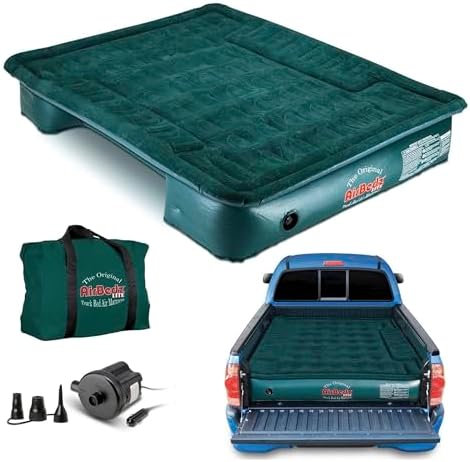
Insulation Under the Mattress
The layer between the mattress and the steel is doing the real insulating work. Sleeping pads carry an R value from the manufacturer, and a higher published R value means more resistance to heat loss into a cold surface.

Managing Condensation
Two adults breathing in a small enclosed space put a surprising amount of moisture into the air, and on a cold night that moisture condenses on the coldest surface it can find. In a truck bed tent that is usually the underside of the fly and the metal of the bed rails. Waking up to damp fabric is a ventilation problem, not a leak.
Keep at least two vents or mesh panels open on opposite sides so air moves through rather than sitting still. It feels wrong to open vents when you are cold, but a damp sleeping bag will cost you more warmth over the night than the draft does.
Wet Gear Stays Outside the Sleeping Space
Boots, rain shells and anything else that came in wet belong in the cab or under the awning, not next to your head. Every wet item in the tent evaporates overnight and lands back on the fabric as condensation.
Organize the Bed So You Can Find Things at Night
A truck bed is a shallow box with no shelves, so anything loose migrates under the mattress within an hour. Give a small number of items fixed homes, ideally in a hanging organizer or a bin that lives against the bulkhead: headlamp, water bottle, phone, keys, shoes. That is the night kit, and it should not move.
Everything else goes in bins that stay in the cab or come out onto a table at the site. The rule that saves the most frustration is loading in reverse order, so the last thing in is the first thing you need when you arrive.
Arriving After Dark
Kill the headlights as you pull into a campground at night and finish on parking lights or a headlamp, since a set of high beams sweeping across occupied sites is the fastest way to annoy every neighbor you have. A headlamp with a red mode is worth having for the same reason.

Truck Bed Camping Compared With the Alternatives
Truck bed sleeping sits between a ground tent and sleeping inside the vehicle. Each has a clear strength, and the honest comparison is about site conditions rather than about which is better overall.
| Setup | Strength | Weak spot | Best when |
|---|---|---|---|
| Truck bed with tent | Off the ground, fast setup | Cold floor, no leveling options | Sites with hard or wet ground |
| Ground tent beside the truck | Room to stand, level ground | Longer setup, needs a flat pad | Groups and longer stays |
| Sleeping inside the cab or SUV | Weatherproof, no setup | Cramped, condensation on glass | Overnight stops in bad weather |
Breaking Camp Without Wrecking the Tent
Pack down in reverse order and get the grit out first. Sweep or shake the bed floor before the tent floor goes back in the bag, because sand trapped between fabric and steel is what wears a truck tent out early. Deflate the mattress inside the tent, then remove it, then drop the poles.
If the fly is wet and you have to leave, pack it and then spread it out to dry the same day you get home. Fabric packed damp develops a smell and a sticky coating that does not come back out.
Frequently Asked Questions
Is truck bed camping warmer than a ground tent? Only if you insulate the floor. Being off wet ground helps, but a steel bed floor pulls heat away quickly, so the layer between you and the bed does more for warmth than the height off the ground does.
Do I need a truck tent, or can I sleep in an open bed? An open bed works in dry, bug free, warm conditions and nothing else. A tent adds weather protection and a bug screen, which is what makes the setup usable across a season rather than on perfect nights only.
How do I stop condensation in a truck bed tent? Open vents on opposite sides so air can move through, keep wet gear out of the sleeping space, and avoid sealing the tent up tight on a cold night. Condensation is moisture from breathing, not a leak.
Can I sleep in a truck bed with a tonneau cover instead of a tent? Some people do, but a hard cover leaves no ventilation path and no bug screen, and getting in and out is awkward. If you go this route, treat airflow as the problem to solve first.
What about camping in the bed at a trailhead or rest area? Overnight parking rules vary by land manager, by city and by individual lot, so check the rules for the specific place rather than assuming. Dispersed camping rules on public land differ between agencies and districts too.
Do I need to remove the bed liner? No. A spray in liner is fine and adds a little grip. A drop in liner adds ridges that make the base layer more important, and can complicate strap routing on some tents.
The Bottom Line
Truck bed camping rewards a little planning and punishes improvisation. Level the truck, build the sleeping layer in three parts instead of throwing an air bed on bare steel, keep air moving, and give the night kit a fixed home. If you are still choosing the shelter itself, our truck bed tent sizing guide covers how to measure your bed, and the air mattress for car camping guide works through the sleeping surface in more detail.