Last updated: August 20, 2026
A toilet tent has one job, and it fails in one predictable way. It blows over. These are tall, narrow, high-sided boxes with almost no weight in them, which makes them the most wind-sensitive item on a campsite even though nobody thinks of them as a tent at all.
The second failure is subtler. A pop-up privacy shelter that folds back into its disc in ten seconds at home turns into a wrestling match in a breeze at the site, and once one has been shoved into the bag wrong it never quite goes back. Both problems come down to design choices you can check before you order.
This article contains affiliate links. If you buy through them, we may earn a commission at no extra cost to you. Learn more.
Quick Answer
What makes a toilet tent stay standing?
- Guylines on all four upper corners, not just stakes at the base, are what keep a tall privacy shelter upright.
- Pole-and-sleeve shelters handle wind better than sprung pop-ups; pop-ups win on speed.
- Interior height matters more than floor area, since you stand up in one and sit down in the other.
- A removable floor lets you use it over a bucket toilet and then hose it out later.
Bottom line: buy the shelter you can guy out properly, then pick the pitch spot with the wind in mind.
Pop-Up or Poles: The Choice That Decides Everything Else
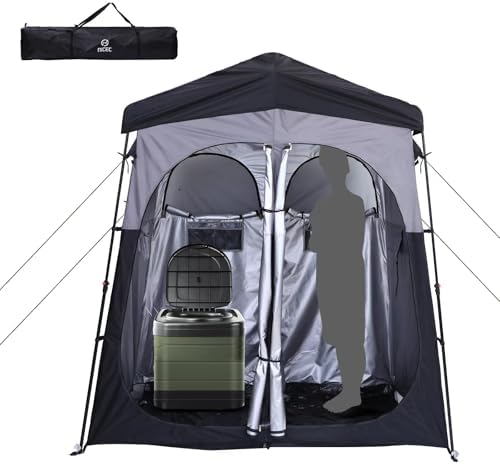
Toilet tents come in two constructions. A pop-up uses a sprung steel hoop frame sewn into the fabric and opens itself; a pole shelter uses separate fiberglass or steel poles that thread into sleeves. Pop-ups are quicker to pitch and slower to pack; pole shelters are the reverse and take wind noticeably better.
For a campground weekend with the car ten steps away, the pop-up usually wins because the setup happens once and speed matters when you arrive after dark. For an exposed site, a shoreline or anywhere with an afternoon wind, the pole version is the safer purchase.
Wind Anchoring Is the Whole Game
A privacy shelter is a sail with a very small footprint. Staking the four base corners is the minimum, and it is not enough on its own, because the force sits high up where the walls catch the gust. The upper guylines are what convert that push into tension in the ground instead of a tumble across the site.
Most shelters ship with guylines and thin wire stakes. The lines are usually fine and the stakes usually are not, so plan to replace them for the ground you camp on. Add weight inside too: a water jug or a full sand bag standing in one corner does more than another stake.
Ground makes the stake, not the other way round
Hard packed ground wants a steel pin or a nail style stake. Sand and loose soil want a long, wide anchor with surface area. If you camp on both, carry both, because a shelter this light will pull a short stake straight out of sand while you are inside it.
Floor, Drain and What Happens Underneath
Some privacy shelters have a sewn-in floor, some have a removable floor and some have none. A removable floor is the most flexible: leave it in for changing clothes, take it out when a bucket toilet is standing on the ground, so nothing pools where you cannot rinse it.
If the shelter doubles as a shower stall, look for a floor that either drains through a grommet or lifts out entirely. A sealed bathtub floor traps water, and a shelter that has held water overnight goes back into the bag wet, which is how privacy tents end up with musty fabric after one season.
Toilet Tents by Situation
Best all-round pop-up for a campground
A single-room pop-up with a ventilation panel high on the back wall covers the standard case: park, unfold, stake, use for three nights. Look for a model tall enough to stand fully upright in, because getting dressed in one that is too short is where people give up.

Best when the same shelter has to do shower duty
A privacy tent sold as a shower and toilet combination usually adds a shower head hook, a mesh floor option and better drainage. That combination saves you carrying two shelters for a family trip.

Best for exposed and windy sites
A pole-and-sleeve shelter with proper guy points on every corner is the version that survives an afternoon on an open site. It takes a few minutes longer to put up, and it is still standing when the pop-ups are being chased across the field.

Best for a group sharing one site
A two-room privacy shelter separates the toilet side from the changing side, which stops the queue that forms when six people share one cubicle. It is bulkier in the car, so only worth it for larger groups.
Comparing Shelter Types
| Type | Pitch time | Wind behavior | Best use |
|---|---|---|---|
| Sprung pop-up | Seconds, once you know the fold | Needs full guying, sheds gusts poorly | Sheltered campground sites |
| Pole and sleeve | A few minutes | Stiffer frame, better in gusts | Open ground, coastal, longer stays |
| Two-room shelter | Longer, more stakes | Larger sail area, guy every corner | Groups and families |
| Shower and toilet combo | Similar to single room | Same as its frame type | Sites with no facilities at all |
Where to Pitch It on the Site
Site the privacy shelter downwind of the kitchen and the sleeping tents, out of the direct sightline of neighboring sites, and on ground that drains. Fifteen to twenty steps from the tent is the usual compromise: far enough for privacy, close enough that nobody hesitates to use it at two in the morning.
Check the campground rules before you pitch, since some sites limit how many structures a site may hold and where they may stand. A quick word with the camp host at check-in avoids being asked to move it after everything is staked out.
The small things that make it get used
A carabiner and a battery lantern hung from the ceiling loop, a hook for a towel, and a mat outside the door make the difference between a shelter people use and one they avoid. Most models include a few interior loops, so use them rather than resting things on the floor.
Frequently Asked Questions
What size toilet tent do I need? Tall enough to stand and turn in with your arms bent, which for most adults means checking the peak height in the listing rather than the floor size. A tall, narrow shelter is more usable than a short, wide one.
Can a toilet tent be used as a shower tent? Yes, if the floor drains or lifts out. Sealed floors hold water and get slippery, so a mesh or removable floor and a hook for the shower head make a shelter usable for both jobs.
How do you fold a pop-up privacy tent back up? By twisting the frame into three overlapping loops rather than forcing it flat. Every brand includes the fold sequence in the instructions, and doing it once at home before the trip saves a lot of frustration at the site.
Will a toilet tent blow away? It will if it is only staked at the base. Guy out the upper corners, use stakes suited to the ground, and keep something heavy inside. A shelter left empty and unguyed on an open site is the one that travels.
Do toilet tents keep the smell in? No, and you do not want them to. Ventilation panels are there so the shelter airs out. Odor control comes from the toilet itself, whether that is a sealed bag or a closed slide valve.
Is a privacy tent allowed at every campground? Not always. Some sites limit the number of shelters per pitch or restrict where they can be placed. Check with the campground or land manager rather than assuming, especially at busy state park campgrounds.
The Bottom Line
Choose a toilet tent by how it anchors and how tall it stands, then decide between a fast pop-up and a stiffer pole shelter based on how exposed your usual sites are. A removable floor keeps the same shelter useful for both toilet and shower duty. Pair it with the right unit inside by reading our guide to choosing a camping toilet by type, our take on a portable toilet that actually seals, and the companion piece on the shower tent details that matter.