Last updated: August 20, 2026
The pitch for an instant tent is simple and mostly true. The poles are already attached to the tent body, so you pull it out of the bag, unfold it, extend the legs until they click, and the tent is standing. Coleman, CORE and Ozark Trail all publish setup times of roughly one to two minutes for their instant cabin models, and anyone who has threaded a pole through a wet sleeve in the dark understands why that number sells tents.
The questions worth asking are the ones the marketing skips. What do you give up in exchange for the speed, how does an instant frame behave when the wind picks up, and how does the tent pack down once it is dirty and damp? This guide covers how the frames work, where they hold up, where they do not, and which situations genuinely justify buying one.
This article contains affiliate links. If you buy through them, we may earn a commission at no extra cost to you. Learn more.
Quick Answer
Is an instant tent worth buying?
- Yes if you arrive late, move sites often, or camp with kids who will not wait through a pole assembly.
- The frame is heavier and packs longer than a comparable pole tent, so check your trunk first.
- Speed does not remove the staking and guying step, which is what keeps it standing in wind.
- Many instant models ship with a partial fly, so check fly coverage if you camp in real rain.
Bottom line: an instant tent buys time at the site and costs you packed size, weight and some storm performance.
How an Instant Frame Actually Works
An instant tent uses a telescoping frame permanently attached to the tent body. The poles fold in on themselves like a folding table leg rather than separating into shock corded sections, so nothing has to be threaded or clipped. You unfold the frame, extend each leg until the locking button engages, and the tent takes its shape.
That construction is why the bag is longer and heavier than a comparable pole tent. The frame does not break down into short sections, so packed length is set by the longest folded segment. It is also why instant tents rarely come in small sizes; the concept suits cabin bodies where the frame can be simple and boxy.
Instant Is Not the Same as Pop Up
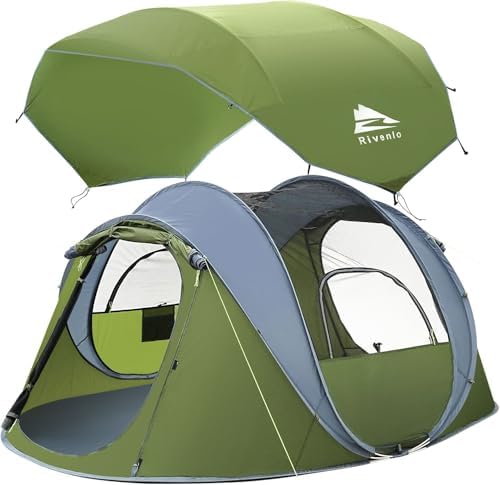
A pop up tent uses sprung hoops that spring open on their own and fold down with a specific twist. An instant tent has a rigid, extendable frame you operate deliberately. Pop ups are faster still and far less stable; instant tents sit in between.
What You Give Up for the Speed
Three things, mostly. Packed size, because the frame does not disassemble. Weight, because telescoping steel or thick fiberglass legs weigh more than shock corded poles. And in many models, fly coverage, since a number of instant tents ship with a roof fly rather than one that reaches down the walls.
None of those matter on a dry weekend at a sheltered campground. All of them matter on an exposed site in October. Read the fly description carefully, because that single feature separates the instant tents that handle weather from the ones that do not.
Repairs Are Harder
A broken shock corded pole section can be splinted at the site with a repair sleeve. A bent telescoping leg on an integrated frame usually cannot, and the fix is a manufacturer replacement part. That is a real argument for treating the legs gently and never forcing a stuck section.
Instant Tents by Situation
The right instant tent depends less on brand than on how many people you are covering and how much weather you expect. These are the cases that come up most.
Family Weekend, Four to Six People
A six person instant cabin is the volume seller in this category, with pre attached poles and enough floor for two air mattresses. It is the default answer for a family campground trip.

Larger Groups or Two Families
Instant cabins scale up well because the frame concept stays the same. Larger models often include a divider, which turns one big box into two sleeping areas.

You Camp in Real Weather
Look specifically for an instant model sold with a full coverage rainfly rather than a roof panel. That single feature is what makes an instant tent workable in shoulder season.
Two or Three People Who Want Speed Without the Bulk
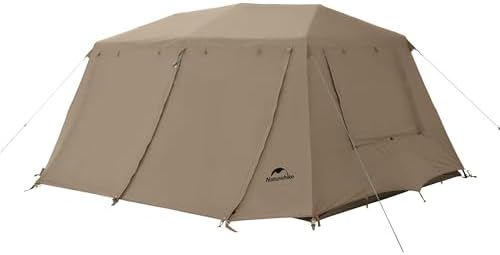
Smaller instant models exist and pack shorter, which suits couples and solo campers who want a quick pitch without a cabin sized bag in the trunk.
Summer Trips Where the Tent Heats Up Early
Some instant cabins are sold with dark wall fabric that blocks a large share of daylight. Coleman publishes a figure for how much light its Dark Room fabric blocks compared with a standard Coleman tent.

Instant, Pop Up or Conventional Poles
All three pitch a tent. They differ in how fast, how stable and how small they pack, and the honest comparison puts each one where it belongs.
| Type | Setup | Wind behavior | Packed size |
|---|---|---|---|
| Instant cabin | Unfold and extend legs, minutes | Good once staked and guyed | Long bag, heavier |
| Pop up | Springs open on its own, seconds | Weakest of the three | Large flat disc |
| Conventional poles | Thread or clip, longer | Strongest, especially domes | Smallest and lightest |
Pitching and Packing an Instant Tent Properly
Speed makes it tempting to skip the staking, and that is the mistake that ends weekends. Extend the frame, then stake all four corners, then run the guylines out and tension them. An unstaked instant cabin is a large box with nothing holding it down.
Packing down is where most people struggle the first time, because the frame has to fold in the order it unfolded. Retract the legs fully before folding, work around the tent rather than across it, and never force a section that will not slide, since grit in a telescoping joint is usually the cause.
Keeping the Frame Working
Rinse and dry the legs if you camp on sand or at the coast, and store the tent dry and loosely rather than compressed. Salt and grit in the joints are what turn a smooth frame into a stiff one over a couple of seasons.
Frequently Asked Questions
How fast is an instant tent really? Coleman, CORE and Ozark Trail publish setup times of roughly one to two minutes for their instant cabin models. That covers raising the tent, not staking it out, so add a few minutes for corners and guylines.
Are instant tents waterproof? The fabric and floor are built to the same standards as the maker’s other tents, but fly coverage varies a lot within the category. A roof only fly is fine in a shower and weak in a storm, so check the fly before assuming the tent handles rain.
Can one person set up an instant tent? Usually yes, which is one of the strongest arguments for the format. Larger models are awkward alone mainly because of the reach across the frame, not because of the mechanism.
Do instant tents hold up in wind? Once staked at every corner and guyed out, they do reasonably well for a cabin shape. Left unstaked they do not, and a large cabin body catches more wind than a dome regardless of how the poles attach.
Why is the bag so long? The frame never separates into short sections, so packed length is set by the longest folded segment. Measure your trunk before ordering, since this is the most common surprise with instant tents.
What happens if a leg bends? Integrated frames are harder to repair in the field than shock corded poles, and the usual route is a replacement part from the manufacturer. Avoid forcing a stuck section, which is the most common way legs get damaged.
The Bottom Line
An instant tent is a straight trade: minutes at the site in exchange for a longer, heavier bag and, in some models, less fly coverage. If you arrive after work, move often, or camp with kids, that trade is usually worth making, and a model with a full coverage fly closes most of the weather gap. Our pop up tent guide covers the faster and flimsier end of the spectrum, and the cabin tent guide looks at the same body shape with conventional poles.