Last updated: August 20, 2026
This argument runs at every campsite where somebody shows up with a propane fire pit. One side says it is not a real fire. The other side points at the county restriction notice on the bulletin board and asks what the alternative is on a Saturday night in August.
Both are making a fair point about a different thing. Wood and propane do not do the same job, and neither one is better in general. What decides it is where you camp, how often the local restriction rules out wood, how much mess you are willing to deal with, and whether you enjoy tending a fire or just want to sit near one. This comparison lays out those differences honestly.
This article contains affiliate links. If you buy through them, we may earn a commission at no extra cost to you. Learn more.
Quick Answer
Propane fire pit or wood, which should you take?
- Propane wins on convenience: instant on, instant off, no smoke, no ash, nothing to extinguish before bed.
- Wood wins on the experience and on cost per evening, if you have the time and the wood is legal to burn.
- Gas appliances are often permitted when wood fires are restricted, but only the land manager can tell you what applies today.
- Plenty of campers carry both, because the restriction decides for them once they arrive.
Bottom line: let the local rule and your tolerance for cleanup decide, not which one feels more authentic.
What Is Actually Being Compared
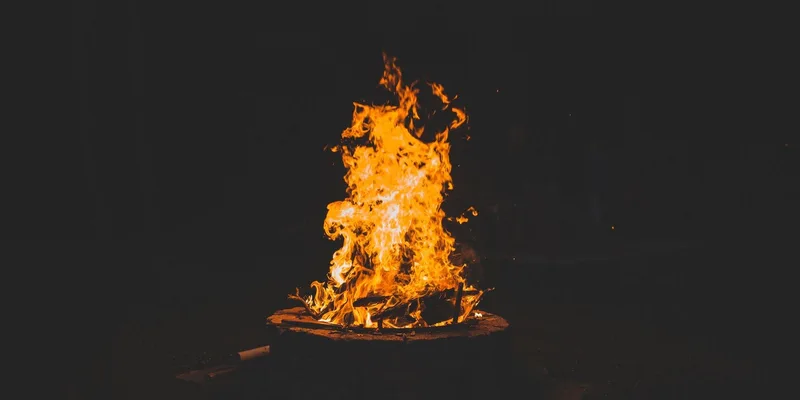
A propane fire pit is a burner under lava rock or fire glass, fed by a hose from a tank, producing a controlled flame you turn on and off with a knob. A wood fire is combustion you build, feed and extinguish yourself, contained in a ring, a fire pan or a portable pit. They look similar at dusk and behave nothing alike for the rest of the evening.
The important difference is not heat output, which overlaps substantially, but everything around the flame: what you carry, what you tend, what you clean up, and what the agency managing your campsite permits on the day you arrive.
Differences at a Glance
The table compares the two on the four factors that actually change your evening. Nothing here is about which fire is more authentic, because that question does not have a useful answer and it will not help you pack the car.
| Factor | Propane fire pit | Wood fire | Who cares most |
|---|---|---|---|
| Setup and shutdown | Knob on, knob off, done | Build it, tend it, fully extinguish it | Families with early bedtimes |
| Mess | No ash, no embers, no smoke smell | Ash to pack out, smoke in everything | Anyone sharing a tent afterward |
| What you carry | The unit plus a propane tank | Wood bought locally, plus a pit or pan | Small vehicles and long drives |
| Restriction season | Often permitted when wood is not | First thing to be prohibited | Western campers in late summer |
Where Propane Genuinely Wins
Propane wins any evening where the fire is a means rather than an end. It lights in seconds, needs no tending, throws no embers onto a tent fly, produces no smoke to chase around the circle, and shuts off completely when the last person goes to bed. Nobody stands over a bucket at eleven at night.
It also wins in fire restriction season across much of the West. Gas appliances are often permitted when wood fires are prohibited, precisely because the flame can be shut off instantly, though you have to check the current restriction with the land manager or county fire authority before you count on it. Our propane fire pit guide covers certification and sizing.

Where Wood Genuinely Wins
Wood wins on the thing people are actually buying when they buy a fire pit, which is the experience. The sound, the changing light, the smell, the fact that tending it gives everyone something to do with their hands. It also wins on cost per evening once you own the pit, since a bundle of local firewood is cheap and propane is not free.
It wins on cooking too. Coals do things no gas burner can, and most propane fire pit makers state plainly that theirs is not for cooking, because drippings foul the burner and the rock. If someone in your group wants to cook over a fire, that decides it.
Which Camper Are You?
Most people can pick in one sentence once they see themselves described. The question is not which fire is better, it is which set of chores and constraints you would rather live with on a Friday night after a long drive.
Take Propane If
You camp in fire restriction country, you have young kids and a bedtime, your vehicle is full, or you simply want to sit down within a minute of arriving. Also take propane if you are the person who always ends up being responsible for putting the fire out.
Take Wood If
You camp mostly outside restriction season, you like the ritual, you want to cook over coals, or you camp somewhere with cheap local firewood and a proper ring. Wood also makes more sense for long stays, where the fuel cost of running gas every evening adds up.
Take Both If
You travel across states or seasons and cannot predict what will be allowed. Plenty of car campers keep a compact gas unit in the vehicle year round and buy wood on site when it is permitted, which is the least frustrating way to handle a restriction you learn about at the entrance station.
The Mistake to Avoid
The common mistake is buying a large propane fire pit for the heat and then discovering it is not the fire you wanted, so it lives in the garage. If the experience is what you are after, buy a wood pit and accept the ash. If instant convenience is what you are after, buy gas and stop apologizing for it.
The second mistake is planning a trip around a wood fire without checking the restriction. Bringing firewood from home compounds it, since many states require locally sourced or certified heat treated wood to limit invasive insects. Buy on site, check the rule for your destination, and pack fire starters so that damp local wood is not the reason the evening fails.

Frequently Asked Questions
Is a propane fire pit allowed when wood fires are banned? Often, because the flame can be shut off instantly, but this varies by stage of restriction and by agency. Confirm the current status with the land manager or county fire authority before you rely on it.
Which throws more heat? They overlap, and the honest comparison is the published BTU rating of a specific gas unit against how big a wood fire you are willing to build and feed. A large gas bowl warms a circle of chairs, and so does a well built wood fire.
Can you cook over a propane fire pit? Only if that manufacturer says so, and most say not to, since drippings clog the burner and foul the lava rock. Wood coals remain the better option for cooking, or use a camp stove built for the job.
Which is cheaper over a season? Wood, once you own a pit, assuming local firewood is available and permitted. Propane costs something every evening you run it, and larger units at high output go through a tank faster than people expect.
Does a propane fire pit smell like a campfire? No, and for some people that is the point. There is no smoke smell in clothing, hair or the tent afterward, which is a genuine advantage the night before a long drive home.
Do I still need to check rules for a gas fire pit? Yes. Certification and gas fuel do not equal permission, and campgrounds sometimes set stricter rules than the county. Ask specifically about gas appliances rather than about fires in general.
The Bottom Line
Propane buys convenience and a fire you can have during many restrictions, wood buys the experience and cooking coals, and neither is the better answer in the abstract. Decide from where you camp and what you are willing to clean up, then confirm the current rule with the land manager before every trip in fire season. Read next: our portable propane fire pit guide and the rundown of portable camp fire pit designs.