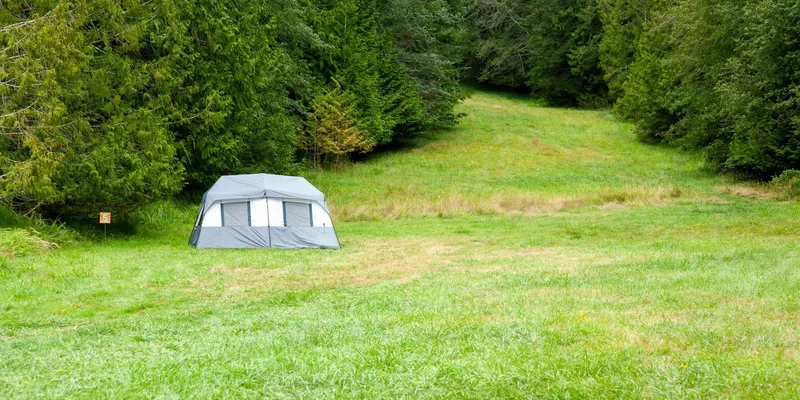
Last updated: August 20, 2026
The first time you stand up straight inside a tent to pull on a pair of pants, the appeal of a cabin tent stops being theoretical. Dome tents slope away from you at exactly the height where your shoulders are, so everyone crouches, and on a rainy afternoon with four people inside that slope turns a large tent into a small one. Cabin tents put near vertical walls where a dome puts a curve, and the usable volume changes dramatically as a result.
The catch is that the same vertical walls that give you headroom also give the wind something to push against. That is the entire trade, and it is worth understanding properly rather than being talked out of a cabin tent by people who camp in different places than you do. This guide covers what the shape buys, where it struggles, and how to pitch one so a windy night is uneventful.
This article contains affiliate links. If you buy through them, we may earn a commission at no extra cost to you. Learn more.
Quick Answer
Is a cabin tent the right shape for you?
- Yes if you value standing room, longer stays and rainy day space over storm performance.
- Near vertical walls give usable floor right out to the edges, which a dome does not.
- The same walls catch wind, so staking every corner and tensioning the guylines is not optional.
- Check the peak height and the wall height separately, since a tall peak can still slope early.
Bottom line: cabin tents win on sheltered campground sites and lose on exposed ones, and correct pitching closes most of the gap.
What the Cabin Shape Buys You
A cabin tent uses a frame that holds the walls close to vertical, so the floor area printed on the box is roughly the floor area you can actually use. In a dome, the outer edge of the floor sits under a curve too low to sit up in, which is why a dome always feels smaller inside than its dimensions suggest.
That difference compounds with time. On an overnight it barely registers. On a five day trip with two rainy afternoons, being able to stand, change clothes, and put a chair inside is the difference between the tent being shelter and the tent being a living space.
Peak Height Versus Wall Height
Peak height is the number every listing shows, and it only describes the highest point. What matters more is how far out the walls stay vertical before they start to angle. Look at the product photos from the side rather than the front, and read the floor dimensions together with the peak height instead of on their own.
The Wind Trade Off, Honestly
Vertical walls present a flat face to the wind, and a large cabin tent has a lot of that face. A dome sheds wind around its curve; a cabin resists it. On a sheltered campground site with trees or a hedge this rarely matters. On an open bluff, a beach, or a high desert site it matters a great deal.
The mitigation is straightforward and most people skip half of it. Orient the smallest face into the prevailing wind, stake every corner, and run out and tension every guyline the tent came with. Cabin tents that fail in wind are usually cabin tents that were pitched with four stakes and no lines.
Reading a Site Before You Pitch
Look at the trees and the grass to see which way the wind usually comes from, then place the tent so a wall rather than the door faces into it. Avoid the top of a rise and avoid a low spot that collects water, and aim for the middle ground with something upwind of you.
Cabin Tents by Situation
Cabin bodies come with conventional poles or with instant frames, in sizes from four person up to very large group models. These are the cases that come up most.
Family Base Camp for a Week
A large cabin tent with a divider and a full coverage fly is the classic long stay setup, with room for beds on one side and gear on the other.

You Want the Headroom Without the Long Pitch
Instant cabin models keep the vertical walls and pre attach the poles to the frame, so you unfold and extend rather than assemble.

Rain Is Likely
Look for a fly that reaches down the walls rather than covering the roof only, plus a covered entry where wet boots can live outside the sleeping area.
Two Or Three People Who Just Want to Stand Up
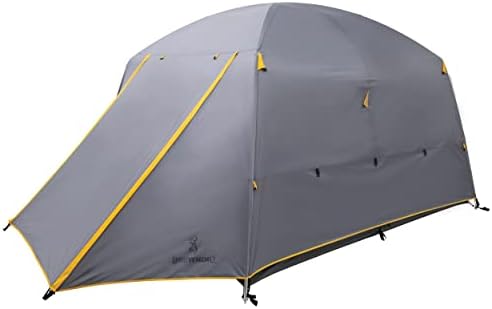
Smaller cabin models exist and pack considerably shorter than the family sizes, which suits couples who want headroom without a huge bag.
Screened Porch for Bug Season
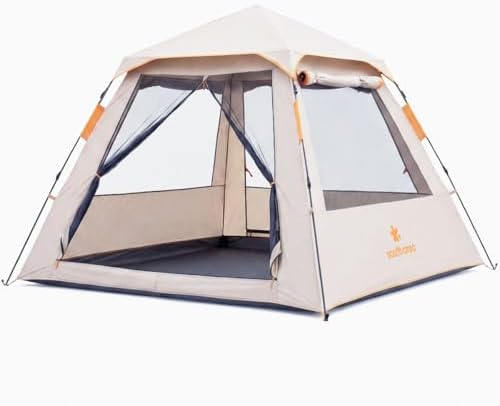
Some cabin tents add a screened front room that works as a bug free sitting area, which is worth a lot in summer near water.

Cabin Versus Dome, Set Side by Side
Neither shape is better in the abstract. They are optimized for different sites and different trip lengths, and the table below is the short version of the choice.
| Factor | Cabin tent | Dome tent | Who should care |
|---|---|---|---|
| Usable floor | Almost all of it | Center only for sitting up | Longer stays, rainy climates |
| Wind | Needs full staking and guying | Sheds wind naturally | Exposed or coastal sites |
| Packed size | Longer, heavier | Smaller, lighter | Small trunks, walk in sites |
Living in a Cabin Tent
The vertical walls change how you organize the inside. Gear lofts and wall pockets become genuinely useful because there is a wall to hang them on, and a small folding table or a couple of chairs fit in a corner in a way they never do in a dome.
Ventilation deserves attention too. A big volume of air with several people breathing in it produces condensation on cold nights, and cabin tents have plenty of wall area for that moisture to land on. Keep vents open on opposite sides so air moves, even when the temperature makes that feel counterintuitive.
Storage Habits That Keep It Alive
Dry the tent completely at home after every trip, store it loosely rather than compressed in the stuff sack, and sweep the floor before folding. Packing a large tent away damp is the fastest way to ruin the coating on a tent that would otherwise last many seasons.
Frequently Asked Questions
Are cabin tents good in the rain? They can be, provided the fly reaches down the walls rather than covering only the roof. Fly coverage varies more between models than between shapes, so read that spec specifically rather than judging by the body style.
Do cabin tents blow over? Not when staked at every corner with the guylines run out and tensioned. Most failures involve a tent pitched with corner stakes only, which leaves a large flat wall with nothing resisting a gust.
How tall are cabin tents inside? Peak height varies by model and is published on every listing. Read the peak height together with the floor dimensions, since a tall peak in a small footprint still slopes away quickly at the edges.
Is a cabin tent harder to set up than a dome? A conventional cabin usually takes longer because there are more poles and more of them are long. Instant cabin versions reverse that, since the frame is pre attached and simply extends.
Can you use a heater in a cabin tent? That is a question about the specific appliance, not the tent. Combustion appliances belong outside unless the manufacturer publishes an explicit indoor rating for that model, and a carbon monoxide alarm is a sensible addition to any camp where a fuel burning device is used.
Do cabin tents fit in a normal trunk? Family sized models pack long rather than bulky, and packed length is what defeats a trunk. Measure the longest straight run in your cargo area with the seats up and compare it to the packed dimensions on the listing.
The Bottom Line
A cabin tent is the right call when your sites are sheltered, your trips are long enough for rainy afternoons to matter, and standing headroom would change how the tent gets used. Pitch it with every corner staked and every guyline tensioned and the wind objection mostly goes away. For the wider shortlist, our family camping tent guide covers rain features and sizing, and the instant tent guide looks at the same shape with a faster frame.