Last updated: August 20, 2026
Not every seat at camp needs a backrest. Cooking at a two burner stove, lacing boots, sitting at a low table, keeping an eye on a fire that needs feeding: these are all things people do for ten minutes at a time, and a full quad chair is a lot of trunk space for ten minute jobs. A stool covers them and disappears into a gap beside the cooler.
Stools are also the seat that gets handed to the extra person who turned up. They stack, they cost little, and nobody minds if one lives in the car permanently. The catch is that a stool is only as good as its base, and the folding designs differ more than they look.
This article contains affiliate links. If you buy through them, we may earn a commission at no extra cost to you. Learn more.
Quick Answer
When is a camping stool better than a chair?
- For short sits, cooking, and any time trunk space is the limiting factor.
- Three legged stools sit level on uneven ground, four legged ones are steadier when you lean.
- Telescoping stools pack smallest, folding fabric stools are the most stable of the compact designs.
- Without a backrest, seat height and stability do all the comfort work, so check both.
Bottom line: a stool is a task seat rather than an evening seat, and most camp kitchens are better with one.
What a Stool Is Actually For
A stool is the seat you use while doing something else. It suits cooking at stove height, sitting at a low table, working on gear, and giving a guest somewhere to sit without unpacking another chair. It is not the seat for a three hour evening, because nothing supports your back.
Understood that way, the comparison against a chair stops being a competition. Most car campers who own a stool own chairs as well, and the stool earns its place by taking almost no room in the car.
Three Legs or Four
Three legged stools always find the ground, because three points define a plane, which is why they feel steady on tree roots and lumpy pads. They also tip more easily if you lean past the edge, since there is no fourth leg in the direction you are leaning.
Four legged stools and fabric folding designs give a wider, more forgiving base and let you shift weight around without thinking. On flat ground they are the more comfortable choice, and on rough ground they may need a leg propped or a stone moved.
Seat Height for the Job
Low stools suit a low table and a fire ring. Taller stools suit cooking at a camp kitchen table, where a low seat leaves you reaching up at the pan. If the stool is mainly for the kitchen, measure your table height first and choose accordingly.
Folding Designs and Pack Size
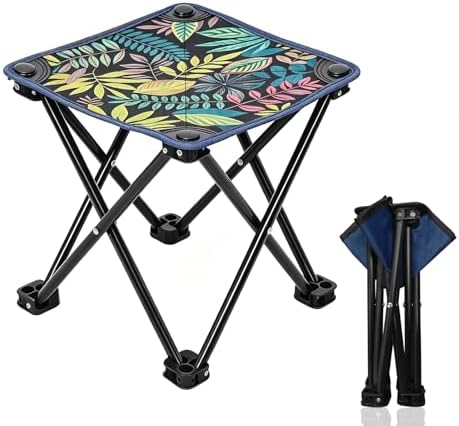
Three shapes dominate. Telescoping stools collapse into a disc and pack smallest. Tripod stools with a fabric seat fold into a thin bundle. Fabric folding stools with a scissor frame fold flat and give the widest, most stable seat of the three.
Which one suits you follows from where it will live. A stool kept in a day bag argues for the telescoping design; a stool that rides loose in the trunk with the chairs may as well be the wider, sturdier folding type.
Camping Stools by Situation
Four cases cover most of it: the kitchen stool at working height, the compact stool for a packed car, a wide stool that doubles as a side table, and a small one for a child.
Best Stool for the Camp Kitchen
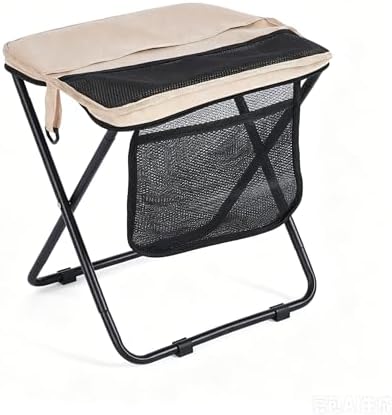
A taller folding stool with a wide fabric seat puts you at a workable height beside a camp kitchen table.
Best Compact Stool for a Full Car
A telescoping or tripod stool collapses to a fraction of a chair’s pack size and slides into any gap left in the trunk.

Best Wide Stool That Doubles as a Surface
A flat topped folding stool takes a lantern, a plate or a stove pot when nobody is sitting on it.

Best Stool for a Child
A small stool suits children who perch between activities rather than settling in for the evening.
Comparing Stool Designs
The table sorts the common designs by stability, pack size and how they behave on the uneven ground most campsites actually have.
| Design | Stability | Pack size | Best for |
|---|---|---|---|
| Tripod fabric stool | Level on rough ground | Thin bundle | Roots, uneven pads |
| Folding scissor stool | Widest base | Flat and wide | Camp kitchen work |
| Telescoping stool | Moderate, small footprint | Smallest | Packed cars, day bags |
| Hard top stool | Good, doubles as a surface | Bulkier | Lantern or plate stand |
Where a Stool Fits in the Camp Routine
The stool lives at the kitchen end of the site, next to the stove and the water jug, where somebody is always standing for a few minutes at a time. Keeping it there rather than in the chair circle is what stops it disappearing into the evening seating and never coming back.
It also earns its place during setup and pack down, which is when nothing else is unfolded yet. A stool is out of the bag in a second, so it is the seat you use while sorting the cooler, feeding a fire that has just caught, or waiting for water to boil before anything else is unpacked.
The Spare Seat Nobody Planned For
Camping trips gain people. Neighbors come over, a kid brings a friend, someone from the next site drops by while the coffee is on. Two stools stacked in the trunk cover that without anyone giving up a chair, and they take less room than one folded quad chair does.
Mistakes People Make With Camp Stools
The first is buying a stool as the only seat. Without a backrest an evening gets uncomfortable, and the family will migrate to the tailgate or the picnic table bench instead. Stools work alongside chairs, not instead of them.
The second is ignoring the feet. Small tube ends on soft ground sink faster under a stool than under a chair, because the same weight rests on a smaller base. Wide caps or a flat board under the legs keep it level.
Frequently Asked Questions
Are camping stools comfortable? For short sits, yes. Without a backrest, comfort comes from seat height and a stable base, so choose a height that matches the job and a base that does not rock on the ground you camp on.
How much weight can a camp stool hold? Published figures vary widely between the light telescoping designs and heavier folding stools, so check the capacity in the listing for the exact model rather than assuming stools are interchangeable.
Is a three legged stool stable? It sits level on any surface, which is its advantage, but it tips more readily if you lean past a leg. On flat ground a four legged or scissor folding stool is more forgiving.
Can a stool double as a side table? A flat topped folding stool can hold a lantern, a plate or a pot when nobody is sitting on it, which is a reason to pick that style over a fabric seat.
Do stools work on sand? Only with wide feet or something under the legs, since a stool concentrates weight onto a smaller base than a chair does. A flat board under the legs is the simple fix.
The Bottom Line
A stool is the seat for the jobs a chair is too big for, and the camp kitchen is where it earns its keep. Pick the height for the task, the base for your ground, and the folding style for where it will be stored. If you want a backrest without the bulk, look at a lightweight camp chair instead, and for the evening seat see our camping chair guide.